

">

Showing 1–12 of 27 results
-
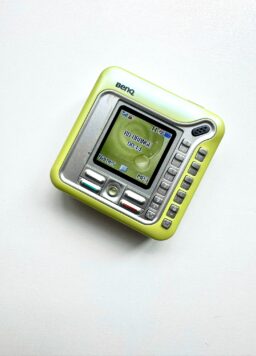
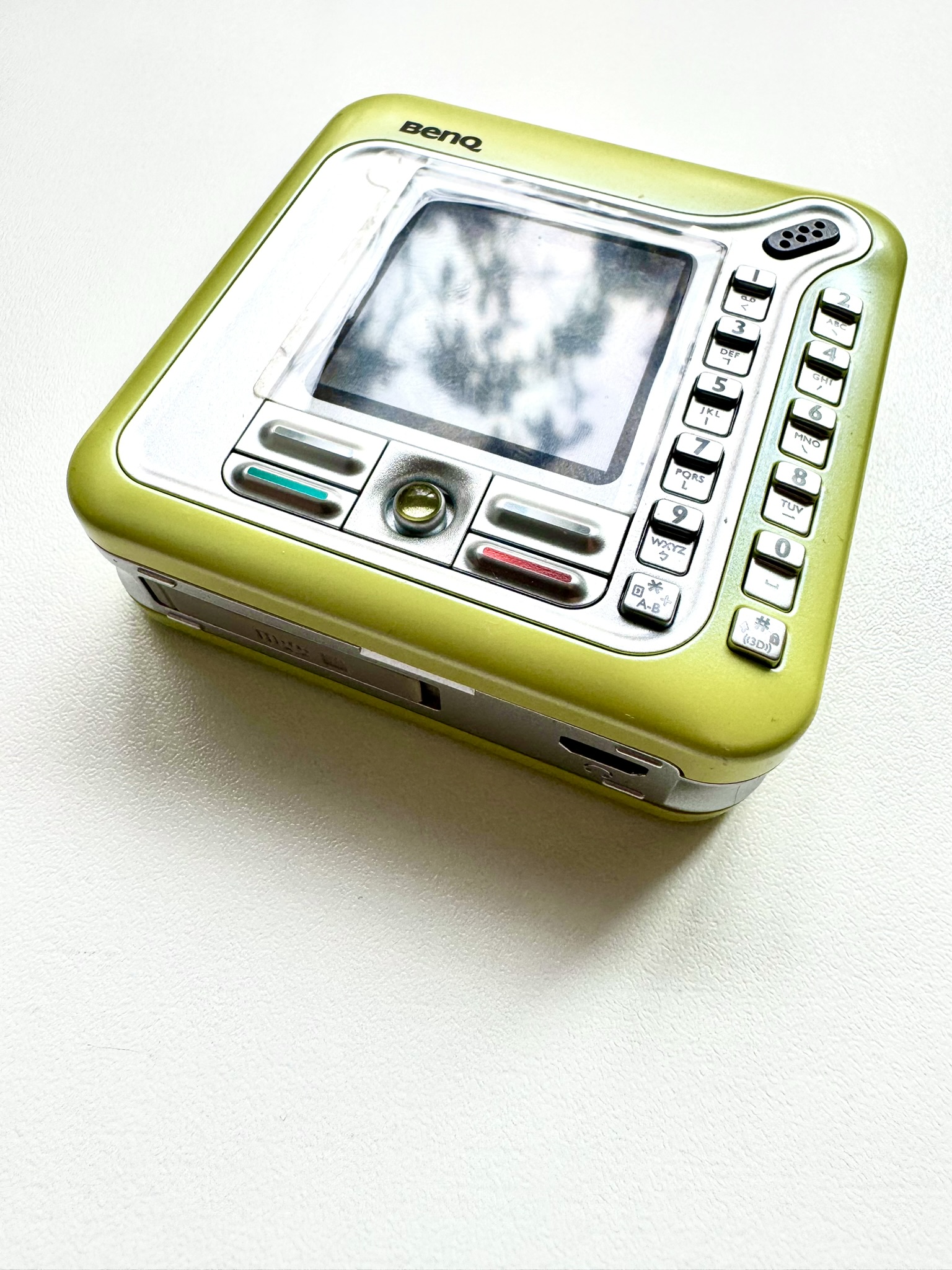
Benq Z2: Compact music phone
Quick View💎 Rarity Index: A (Rare)
⭐ WOW Factor: Designed as a music player and mini-game console first, and only secondly as a phone
👁 Evaluation in my collection: New – 10/10
⏱ Life timer: 0 | 📦 Boxed: NO
📅 Release Year: 2005 | 💰 Release Price: N/A
📊 Units Sold: ~250k
📰 Why this phone matters: BenQ-Siemens Z2 – Ultra-Rare Square Music Phone (Made in Taiwan) – New, No BoxThe BenQ-Siemens Z2 is one of the most unconventional and hard-to-find mobile phones ever produced by the brand. Released in very limited quantities around 2005, it features a distinctive square body, a side-mounted alphanumeric keypad, and a design language inspired more by early MP3 players and mini handheld consoles than by traditional phones.
Manufactured in Taiwan and introduced during the transition period just before the full BenQ-Siemens merger branding shift, the Z2 stands apart as a niche, short-lived model that never saw broad distribution. Today it is considered one of the rarest commercial BenQ / BenQ-Siemens devices.
This unit is new, showing no signs of prior use, but comes without its original box.
📝 Reviews when released: Engadget.com 🔗
-


LG F3000
Quick View💎 Rarity Index: B (Uncommon)
👁 Evaluation in my collection: Very Good – 9/10
⏱ Life timer: N/A | 📦 Boxed: YES
📅 Release Year: 2005 | 💰 Release Price: N/A
📊 Units Sold: ~400k
📰 Why this phone matters: The LG F3000 is a vaguely Porsche-looking cameraphone that not only emits some engine revs every time you flip it open, it actually honks at you when you receive a text message.📝 Reviews when released: Engadget 🔗
-


Motorola V3
Quick View💎 Rarity Index: D (Very Common)
👁 Evaluation in my collection: Great – 9.0/10
🕵 Motorola Codename: Siliqua
⏱ Life timer: N/A | 📦 Boxed: YES
📅 Release Year: 2005 | 💰 Release Price: ~450 $
📊 Units Sold: ~130M
📰 Why this phone matters: The Motorola Razr (styled RAZR codenamed Siliqua) was a series of mobile phones by Motorola, part of the 4LTR line. The V3 was the first phone released in the series and was introduced in July 2004 and released in the market in the third quarter of 2004.The V3 model was followed soon thereafter by the improved V3i, including a collaboration with Apple Inc. for iTunes to be built-in. It was launched in 2005.Because of its unique appearance and thin profile, it was initially marketed as an exclusive fashion phone. However, within a year, its price was lowered and as a result, it sold over 50 million units by July 2006. Leading up to the release, Motorola’s cell phone division sales were stagnant and losing money. The success of the Razr made the division profitable again. Over the Razr’s four-year run, the V3 model sold more than 130 million units, becoming the best-selling clamshell phone in the world to date.
The Razr series was marketed until July 2007, when the succeeding Motorola Razr2 series was released. The succeeding models were the V8, the V9, and the V9m. However, Razr2 sales were not as good as the original V3 series, with consumers moving to competing products. Because Motorola relied so long upon the Razr and its derivatives and was slow to develop new products in the growing market for feature-rich touchscreen and 3G phones, the Razr appeal declined, leading Motorola to eventually drop behind Samsung and LG in market share for mobile phones. Motorola’s strategy of grabbing market share by selling tens of millions of low-cost Razrs cut into margins and resulted in heavy losses in the cellular division.
In October 2011, Motorola resurrected the Razr brand for a line of Android smartphones: the Droid Razr for Verizon Wireless (known simply as the “Motorola RAZR” on other networks) and an improved variant, the Droid Razr Maxx. The new “Razr” line shares the trademark thinness and stylized tapered corners with the original. The series was marketed until 2013.
On November 14, 2019, Motorola again revived the Razr brand, this time for an Android-based foldable smartphone styled after the original Razr, which carried the same name.
📝 Reviews when released: Mobile Review 🔗
-


Nokia 3230
Quick View💎 Rarity Index: C (Common)
👁 Evaluation in my collection: Great – 9.5/10
⏱ Life timer: N/A | 📦 Boxed: NO
📅 Release Year: 2005 | 💰 Release Price: 350 €
📊 Units Sold: ~5M
📰 Why this phone matters: The Nokia 3230 is a Symbian Series 60 smartphone announced on November 2, 2004. It was billed as the first Series 60 phone aimed at the mass-market rather than the higher-end Series 60 devices with a relatively low cost of 350 eur;os when released in Q1 2005.This phone was designed as a replacement for two previous youth-oriented Nokia phones – the Nokia 3660 Series 60 smartphone and the Nokia 3220 feature phone. No variant of this phone was released for the United States market.It runs on Series 60 2nd Edition Feature Pack 1 (Version 2.1), based on Symbian OS 7.0s. It features several games (including multiplayer Bluetooth games), a 1.23-megapixel camera, Nokia Lifeblog, a 32 MB RS-MMC to store extra images and applications, Push to Talk, a 176×208 pixel 65,536-colour screen, multimedia messaging, and RealPlayer.
The Nokia 3230 is one of the first with Push to Talk over Cellular (PoC), a walkie-talkie style method of communicating, and also Visual Radio, which enhances a normal radio receiver with extra info about artists and songs delivered over GPRS.
For data transfer, the phone can use EDGE to upload up to 35.2 kbit/s and download up to 178.6 kbit/s, and is a GPRS multislot class 10, up to 80 kbit/s.
Known issues
It has been frequently reported that fine dust get into the space between the LCD screen and the transparent plastic cover. The dust can be manually removed by opening the plastic case.In common with many phones of this type, the battery life is not as much as you would expect on older models of phones. Less than 2 days is typical whereas older ‘mono screen’ phones can often manage a week between recharging.
Users also reported that before the call ringtone sound, the 3230 would give a loud “beep” sound, with no way to turn it off or control its volume. The device would beep even on silent mode. This issue was most common in the early models of the phone.
Other users have reported slow response times for the camera, sudden screen blackouts and random reboots.
📝 Reviews when released: Trusted Review 🔗
-


Nokia 6111
Quick View💎 Rarity Index: C (Common)
👁 Evaluation in my collection: Great – 9/10
🕵 Nokia Codename: Munich
⏱ Life timer: N/A | 📦 Boxed: NO
📅 Release Year: 2005 | 💰 Release Price: ~350 $
📊 Units Sold: ~2M
📰 Why this phone matters: It was being one of first devices running Nokia Series 40 3rd Edition, along with Nokia 6233, Nokia 6270 and Nokia 6280 which also offers even QVGA display resolution and better multimedia support.📝 Reviews when released: Mobile Review 🔗
-


Nokia 6230i
Quick View💎 Rarity Index: C (Common)
👁 Evaluation in my collection: Great – 9/10
🕵 Nokia Codename: MatrixII
⏱ Life timer: 131h | 📦 Boxed: NO
📅 Release Year: 2005 | 💰 Release Price: ~400 $
📊 Units Sold: ~15M
📰 Why this phone matters: In early 2005 Nokia released an updated 6230i model (RM-72) which includes a 1.3-megapixel camera instead of a 0.3, 208×208 screen resolution (65,536 colours), a slightly larger display, a raised selection button in the midst of the scroll key, and a modern redesigned menu.
It is also standard UMS (USB mass storage device class) compliant, i.e. no proprietary drivers are required to transfer data to and from the device’s memory card. It weighs 99 g (including battery BL-5C) and the dimensions are 103 mm x 44 mm x 20 mm, 76 cc.
📝 Reviews when released: Mobile Review 🔗
-
Nokia 6255i
Quick View💎 Rarity Index: B (Uncommon)
⭐ WOW Factor: A CDMA flip phone so far ahead of its time that it packed Bluetooth, MP3, FM radio, video recording, PTT, and MMC expansion into a single device – something no competitor came close to in 2005.
👁 Evaluation in my collection: New – 9.9/10
🕵 Nokia Codename: Dora
⏱ Life timer: 0m | 📦 Boxed: NO
📅 Release Year: 2005 | 💰 Release Price: ~350 $
📊 Units Sold: ~1M
📰 Why this phone matters: A beautifully preserved Nokia 6255i (RM-19) – one of the most technically ambitious CDMA flip phones ever released by Nokia. Manufactured in Brazil, this variant represents a rare production batch from a period when Nokia was aggressively pushing innovation into the CDMA market alongside Qualcomm.The 6255i stood out as an all-in-one multimedia device at a time when its competitors were still offering basic clamshells. It combined features that were nearly unheard of in CDMA handsets of 2004-2005: Bluetooth, MP3 playback, FM radio, MMC card expansion, video recording, Push-to-Talk, infrared, and Nokia’s iconic Pop-Port – all wrapped inside a compact, elegant flip design.
Its collector appeal lies not only in its hardware density, but also in the fact that clean, intact units from Brazil’s production run are becoming genuinely difficult to source. For Nokia enthusiasts, it represents the exact moment when the company tried to carry its Symbian-era multimedia DNA into the CDMA world – and succeeded more boldly than any other manufacturer.
📝 Reviews when released: cNet 🔗
-


Nokia 6708: Nokia’s Only BenQ-Engineered Touchscreen Anomaly
Quick View💎 Rarity Index: A (Rare)
⭐ WOW Factor: The only Nokia-branded smartphone ever made by BenQ.
👁 Evaluation in my collection: BNIB – 10/10
🕵 Nokia Codename: Pearl
⏱ Life timer: 0 | 📦 Boxed: YES
📅 Release Year: 2005 | 💰 Release Price: 500
📊 Units Sold: ~300k
📰 Why this phone matters: The Nokia 6708 (RM-139) is a China-market smartphone released in 2005 during Nokia’s experimental touchscreen era. Unlike any other Nokia device, the 6708 is not built on Nokia’s own S60/S40 architecture – instead, it is based on the BenQ P31, using UIQ 2.1 on Symbian 7.0, a TI OMAP processor, and a stylus-driven 2.7″ resistive touchscreen.Nokia redesigned the exterior, adjusted the UI elements, and released it exclusively to the Chinese market, where both Nokia and BenQ already had strong local footprints. Because of this limited and unusual partnership, the 6708 never appeared in eur;ope or the US and is extremely rare outside Asia.
With its hybrid DNA – Nokia branding + BenQ internals + UIQ touchscreen – the 6708 stands out as a one-off anomaly in Nokia’s entire catalog and is highly sought after by collectors who focus on prototypes, regional exclusives, and crossover devices.
📝 Reviews when released: Mobile Review 🔗
-


Nokia 7360 (3x)
Quick View💎 Rarity Index: C (Common)
⭐ WOW Factor: One of the first cell phones to implement the use of materials such as metal and leather in mass production
👁 Evaluation in my collection: Great – 9.8/10
🕵 Nokia Codename: Sofix
⏱ Life timer: 24h | 📦 Boxed: YES
📅 Release Year: 2005 | 💰 Release Price: ~200 €
📊 Units Sold: ~3M
📰 Why this phone matters: Part of the “L’Amour Collection”, along with the 7370, 7373, 7380 and the 7390. The 7360 was designed at Nokia’s Design Center in California and was one of the first cell phones to implement the use of materials such as metal and leather in mass production📝 Reviews when released: Mobile Review 🔗
-


Nokia 7370
Quick View💎 Rarity Index: C (Common)
👁 Evaluation in my collection: Great – 10/10
🕵 Nokia Codename: Soho
⏱ Life timer: 137H | 📦 Boxed: NO
📅 Release Year: 2005 | 💰 Release Price: ~330 €
📊 Units Sold: ~1M
📰 Why this phone matters: The Nokia 7370 is a mobile phone made by Nokia, announced in October 2005. It was part of the company’s fashion-focused L’Amour Collection and came in two colours: Coffee Brown and Warm Amber.The Nokia 7370 has leather and metallic components and is a “swivel” design that reveals a hidden keypad.📝 Reviews when released: Mobile Review 🔗
-


Nokia 7380
Quick View💎 Rarity Index: B (Uncommon)
👁 Evaluation in my collection: Great – 9.8/10
🕵 Nokia Codename: Paris
⏱ Life timer: 01m | 📦 Boxed: NO
📅 Release Year: 2005 | 💰 Release Price: ~500 €
📊 Units Sold: ~400k
📰 Why this phone matters: The Nokia 7380 fashion phone was released in 2005, as part of the “L’Amour Collection”, along with the 7360, 7370, 7373 and 7390. The 7380 was designed at Nokia’s Design Center in California, led by Miki Mehandjiysky. What distinguishes this phone from others is its sensory navigation key which differs greatly from a conventional keypad and functions similarly to the touch-sensitive navigation wheel of the iPod. The display of the phone is another point if interest, measuring approximately 1.5 cm by 7 cm. The screen also becomes highly reflective in power saving mode, so it can double as a mirror.
The Nokia 7380 has a 2-megapixel camera, up to 52 MB built-in memory (non-expandable), FM radio and Bluetooth and sports Pop-Port connectivity.
The “L’Amour Collection” was awarded the 2006 IDEA Award (Silver) by the Industrial Designers Society of America (IDSA).📝 Reviews when released: Mobile Review 🔗
-
Nokia 7710 Full Box: Future Ahead of Its Time
Quick View💎 Rarity Index: A (Rare)
⭐ WOW Factor: The first Nokia released phone with touch screen
👁 Evaluation in my collection: Great – 9.5/10
🕵 Nokia Codename: Remix
⏱ Life timer: N/A | 📦 Boxed: YES
📅 Release Year: 2005 | 💰 Release Price: N/A
📊 Units Sold: ~500k
📰 Why this phone matters: The Nokia 7710 is a smartphone announced on 2 November 2004.It was the first Nokia device with a touchscreen, and first device with 2:1 aspect ratio display.The 7710 is based on the Nokia 7700 which was never released. It is Nokia’s only smartphone to run the Series 90 interface atop Symbian OS v7.0s.📝 Reviews when released: Mobile Review 🔗