

">

Showing all 7 results
-
Nokia 3128 Prototype F5.0 : Codename Kirin| Unreleased Colour (Orange)
Quick View💎 Rarity Index: S (Ultra Rare)
⭐ WOW Factor: Represents a short-lived moment when BenQ attempted to showcase its ability to deliver a complete UI solution, hoping to convince Nokia that full software outsourcing for low-cost devices was feasible.
The existence of this device is proof of a BenQ-driven initiative, briefly evaluated and ultimately rejected by Nokia.
Only a handful of such BenQ UI?on?Nokia hardware identity samples were ever created, making surviving units exceptionally rare.👁 Evaluation in my collection: New – 10/10
🕵 Nokia Codename: Kirin
⏱ Life timer: 0 | 📦 Boxed: NO
📅 Release Year: 2003 | 💰 Release Price: ~300 $
📊 Units Sold: ~15M (final units)
📰 Why this phone matters: A remarkably rare piece of Nokia’s China-market CDMA history, the Nokia 3128 (Type RH-72) stands apart from the brand’s mainstream lineup.
Developed during Nokia’s short-lived collaboration with BenQ/Qisda for ODM CDMA devices, the 3128 blends Nokia’s software customisation with a hardware platform originating from BenQ’s Kirin F5.0 design family – a handset architecture that BenQ itself never released commercially.This prototype unit, finished in an unreleased Orange colourway, represents a pre-production stage never intended for the public market. The colour scheme follows BenQ’s design language rather than Nokia’s, making it instantly identifiable among collectors familiar with early-2000s ODM manufacturing. Hardware elements – including the casing geometry, battery interface and Qualcomm-based CDMA internals – further underline its BenQ lineage while still carrying official Nokia branding, labels and firmware.
The device offered compact CDMA 1X connectivity, a lightweight clamshell form factor and the simplified user interface typical of Nokia’s China-exclusive CDMA portfolio of the era.
This example is preserved brand new, never used in the collection – a highly desirable state for a model whose production numbers were already extremely small.
A rare convergence of two major manufacturers’ design philosophies, the Nokia 3128 prototype in Orange stands as one of the most distinctive and least-known ODM Nokia variants ever created.
📝 Reviews when released: N/A 💔
-
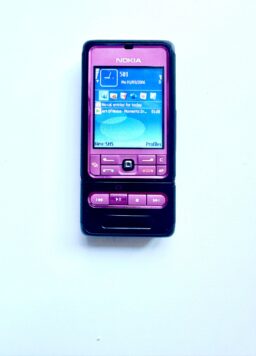
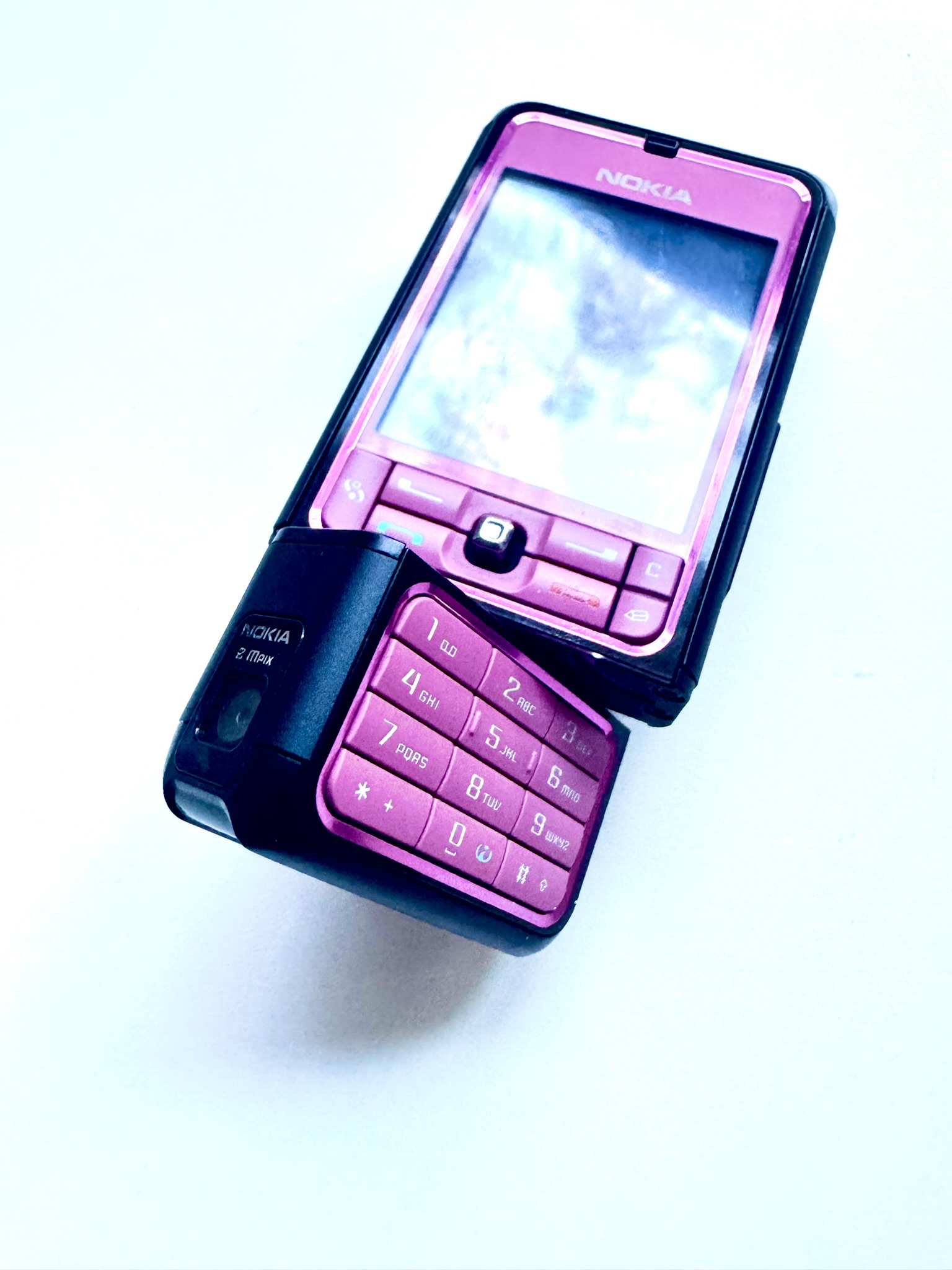
Nokia 3250 Prototype F5.0: Black & Pink
Quick View💎 Rarity Index: S (Ultra Rare)
👁 Evaluation in my collection: Great – 9.8/10
🕵 Nokia Codename: Thunder
⏱ Life timer: 0 | 📦 Boxed: NO
📅 Release Year: 2006 | 💰 Release Price: ~300 €
📊 Units Sold: ~1.5M (final units)
📰 Why this phone matters: Rare Nokia 3250 RM-38 engineering prototype featuring Nokia’s F5/NCT/BDA validation markings. Labeled Prototype – Not for Sale – Property of Nokia and built with pre-production hardware, prototype IMEI, and internal test circuitry. Although the Black & Pink shell reached retail, this device is a true R&D unit used for field testing (F5), Nokia Compatibility Testing (NCT – accessory, firmware, Bluetooth, and sync compatibility validation), and Board Design Assessment (BDA – PCB layout, electrical stability, and radio integrity evaluation). A prototype with NCT + BDA validation tags is exceptionally rare, as these were normally destroyed after evaluation, making this one of the few surviving engineering-stage 3250 units-a remarkable piece of Nokia’s swivel-phone development history.📝 Reviews when released: cNET 🔗
-


Nokia 7700 Prototype F5.0 Black | Unreleased
Quick View💎 Rarity Index: X (Mystical Prototype)
⭐ WOW Factor: The first Nokia unreleased phone with touch screen and Symbian S90
👁 Evaluation in my collection: Great – 9.5/10
🕵 Nokia Codename: MX
⏱ Life timer: N/A | 📦 Boxed: NO
📅 Release Year: 2003 | 💰 Release Price: N/A
📊 Units Produced: ~1k
📰 Why this phone matters: A true piece of Nokia history – the Nokia 7700 F5.0 Prototype, Type RAL-2, made in Finland and never released commercially. This is one of the most ambitious devices Nokia ever built: a full-touch “media communicator” years before the 7710 and long before modern smartphones adopted the concept.This listing includes two fully working prototypes, one in black and one in white, both belonging to the late engineering stage (F5.0) and carrying the internal Model: M designation. These units were intended for final validation and software testing, featuring the hardware configuration closest to what a retail 7700 would have been – had it reached the market.
The 7700 became legendary precisely because it never launched, making functional prototypes extremely rare. To find two, in different colours, in working condition, is virtually unheard of and places this set among the top-tier collector items of early smartphone history.
Whether displayed as design icons or preserved as engineering artifacts, these devices stand as one of Nokia’s boldest steps toward the touchscreen era.
📝 Reviews when released: Mobile Gazette 🔗
-


Nokia 7700 Prototype F5.0 White | Unreleased
Quick View💎 Rarity Index: X (Mystical Prototype)
⭐ WOW Factor: The first Nokia unreleased phone with touch screen and Symbian S90
👁 Evaluation in my collection: Great – 9.5/10
🕵 Nokia Codename: MX
⏱ Life timer: N/A | 📦 Boxed: NO
📅 Release Year: 2003 | 💰 Release Price: N/A
📊 Units Produced: ~1k
📰 Why this phone matters: The Nokia 7700 (Model – M Type RAL-2) is a smartphone produced by Nokia, announced in October 2003 but never released. It was produced as a prototype unit between 2003-2004 It was expected to be the first smartphone running the Series 90 GUI on Symbian OS and Nokia’s first pen-based device, intending to compete against handsets like Sony Ericsson P800. At announcement Nokia dubbed it a “media device.” Compatible with GSM/HSCSD/GPRS/EDGE 900/1800/1900 MHz networks, the 7700 featured a wide, 3.5-inch touch-screen colour LCD with a resolution of 640 x 320 pixels which is the first smartphone with 2:1 aspect ratio and supporting 65,000 colours. It had 64 MB of internal memory and a MultiMedia Card (MMC) slot. It also included an integrated VGA camera with a maximum resolution of 640 x 480 pixels, an integrated FM radio, Bluetooth, USB and Nokia’s proprietary Pop-Port interface for connectivity purposes.The 7700 was to include a comprehensive application suite (such as a complete PIM suite, ‘full’ web browser, email client and an office suite comprising Word Processor, Spread-Sheet and a PowerPoint viewer) and supported Java MIDP 2.0 applications. It was also to be the first phone to support Visual Radio, and the first Nokia phone to support DVB-H mobile television with the addition of the Nokia Streamer SU-6 accessory. The Nokia 7700 was cancelled in mid-2004. Several theories for the cancellation were put forward at the time: Nokia was refocusing on ‘normal’ phones due to decreasing market share; the phone would be too late to market; and the phone was unattractive and bulky. It also featured ‘sidetalking’ like the N-Gage, a feature that had attracted a great deal of negative publicity. The Nokia 7710 followed shortly later with increased memory, a different design, no ‘sidetalking’ and other improvements. However, the 7700 was nevertheless used for further trials of DVB-H. As stated above, the Nokia 7700 was never released to the public. It was only released to Nokia’s R&D (Research and Development) groups. A few models, estimated 20, were distributed prior to Nokia’s decision to discontinue the model before full-on production. However as they were preparing to make the move into stores, the final product prototypes were available in every Nokia Dealer store for display and show-off, so an estimate on how many pieces there actually were is impossible to make, or how many remained in factories and services that were testing them. Pricing is thus very difficult to assess due to lack of official sales. Nevertheless, a few models were sold on eBay since Nokia’s announcement of discontinuation. The lack of independent data to verify the sale records on eBay has caused some to overestimate the actual cost of the model. The phone is nevertheless considered by a number of Nokia collectors to be a rare piece.
📝 Reviews when released: Mobile Gazette 🔗
-


Nokia E60 Prototype F5.0
Quick View💎 Rarity Index: S (Ultra Rare)
👁 Evaluation in my collection: Great – 9.5/10
🕵 Nokia Codename: Mars
⏱ Life timer: 0m | 📦 Boxed: NO
📅 Release Year: 2006 | 💰 Release Price: N/A
📊 Units Sold: ~500k (final units)
📰 Why this phone matters: The Nokia E60 is a traditional candybar style smartphone from the Eseries business phone range, an S60 3rd Edition Symbian device. It was introduced on 12 October 2005 along with Nokia E61 and Nokia E70📝 Reviews when released: Mobile Review 🔗
-
Nokia N71 Prototype F5.0 | Unreleased white and purple colour
Quick View💎 Rarity Index: X (Mystical Prototype)
⭐ WOW Factor: The first Nokia joint-first clamshell smartphone
👁 Evaluation in my collection: Great – 9.5/10
🕵 Nokia Codename: Isetta
⏱ Life timer: 0m | 📦 Boxed: NO
📅 Release Year: 2005 | 💰 Release Price: ~400 €
📊 Units Sold: ~500k (final units)
📰 Why this phone matters: The Nokia N71 is a smartphone announced by Nokia on November 2, 2005 and released in June 2006. It was Nokia’s joint-first clamshell smartphone, like the N92 announced on the same day. The N71 runs on Symbian OS v9.1 (S60 3rd Edition).📝 Reviews when released: Mobile Review 🔗
-
Nokia N90 Prototype NPI-2 F5.0
Quick View💎 Rarity Index: S (Ultra Rare)
⭐ WOW Factor: The first Nokia phone with unique swivel design
👁 Evaluation in my collection: Great – 9.8/10
🕵 Nokia Codename: Gromit
⏱ Life timer: 0 | 📦 Boxed: NO
📅 Release Year: 2005 | 💰 Release Price: ~250 €
📊 Units Sold: ~500k (final units)
📰 Why this phone matters: Nokia N90 Prototype – RM-42 (Proto NPI-2)
A rare engineering prototype from Nokia’s golden era, this RM-42 NPI-2 unit represents an early pre-production stage of the iconic Nokia N90, the first smartphone in history built around a full Carl Zeiss Tessar autofocus camera module.Hand-assembled in Finland and labeled “Proto NPI-2 – Not For Sale,” this device belongs to an internal batch reserved exclusively for Nokia’s imaging and mechanical engineering teams. It features the trademark twist-and-shoot camcorder design, the Tessar 2.9/5.5 AF lens, and the unmistakable dual-hinge architecture that made the N90 one of the most advanced camera phones of its time.
Carrying a prototype IMEI and early hardware IDs, this device offers a rare glimpse into Nokia’s development process during a period when mobile imaging innovation was at its peak. A true collector’s highlight – a milestone device in its pure, pre-release form.
📝 Reviews when released: Mobile Review 🔗