

">

Showing 13–24 of 51 results
-
Hagenuk F10 Ferrari Edition – Rosso Corsa
Quick View💎 Rarity Index: S (Ultra Rare)
⭐ WOW Factor: A phone built for a network the rest of the world never used, in a market sealed off from global designs, with features and styling that existed nowhere else on Earth.
👁 Evaluation in my collection: Great – 9.5/10
⏱ Life timer: N/A | 📦 Boxed: YES
📅 Release Year: 1998 | 💰 Release Price: N/A
📊 Units Sold: ~3k
📰 Why this phone matters: This special Ferrari edition where only given to people who bought a Ferrari back in the day. The phone operates on GSM 900MHz.📝 Reviews when released: N/A 💔
-


Hitachi CRD 500
Quick View💎 Rarity Index: A (Rare)
👁 Evaluation in my collection: Good – 8.5/10
⏱ Life timer: 16h | 📦 Boxed: YES
📅 Release Year: 1995 | 💰 Release Price: N/A
📊 Units Sold: ~80k
📰 Why this phone matters: Similar to Nokia 2140 but branded as Hitachi📝 Reviews when released: N/A 💔
-


HP Ipaq – HW6915
Quick View💎 Rarity Index: C (Common)
👁 Evaluation in my collection: As New – 9.9/10
⏱ Life timer: N/A | 📦 Boxed: NO
📅 Release Year: 2006 | 💰 Release Price: N/A
📊 Units Sold: ~1.2M
📰 Why this phone matters: The iPAQ is a Pocket PC and personal digital assistant, first unveiled by Compaq in April 2000; the name was borrowed from Compaq’s earlier iPAQ Desktop Personal Computers. Since Hewlett-Packard’s acquisition of Compaq, the product has been marketed by HP. The devices use a Windows Mobile interface. In addition to this, there are several Linux distributions that will also operate on some of these devices. Earlier units were modular. “Sleeve” accessories, technically called jackets, which slide around the unit and add functionality such as a card reader, wireless networking, GPS, and even extra batteries were used. Later versions of iPAQs have most of these features integrated into the base device itself, some including GPRS mobile-telephony (sim-card slot and radio).📝 Reviews when released: N/A 💔
-


John’s 1 snow
Quick View💎 Rarity Index: S (Ultra Rare)
⭐ WOW Factor: The first world simplest mobile phone
👁 Evaluation in my collection: Good – 8.5/10
⏱ Life timer: N/A | 📦 Boxed: YES
📅 Release Year: 2010 | 💰 Release Price: ~80 €
📊 Units Sold: ~10k
📰 Why this phone matters: John’s Phone is a mobile phone that is made in the Netherlands and sold by John’s (Phone From The Supermarket BV). It claims to be the world’s most basic cell phone, allowing the user only to make and receive calls, with none of the features of modern smartphones such as a camera, Internet access and text messaging; the address book is a paper pad and a pen, built into the back of the device. It is built around the Keep It Simple concept.It was designed and developed by Hein Mevissen and Diederiekje Bok of Dutch advertising and design agency John Doe Amsterdam.It is marketed as being ideal for children, the elderly, and technophobes.📝 Reviews when released: Engadget 🔗
-
Jphone J-PE02 by Pioneer: Early Touch Era Legend
Quick View💎 Rarity Index: S (Ultra Rare)
⭐ WOW Factor: J-PE02 is one of the earliest touch interaction phones ever sold commercially
👁 Evaluation in my collection: New – 10/10
⏱ Life timer: 0 | 📦 Boxed: YES
📅 Release Year: 1999 | 💰 Release Price: N/A
📊 Units Sold: ~60k
📰 Why this phone matters: The Pioneer J-PE02 is one of the most unusual and forward-thinking handsets ever released on the Japanese market. Built by Pioneer Corporation and sold under the J-Phone Group in November 1999, this device represents a rare moment in phone history when non-telecom consumer electronics giants dabbled in mobile innovation. The result was a handset decades ahead of its time.Unlike the compact keypad phones of its era, the J-PE02 centered around a large front display designed for touch-style navigation, making it one of the very earliest commercially sold phones to experiment with stylus and screen-based input. This concept predates mainstream touch devices by years and shows how aggressively the Japanese market was pushing the boundaries of mobile interaction.
The design reflects Pioneers background in multimedia and in-car navigation: a clean silver housing, oversized screen, minimalist buttons, and an interface tailored for J-Sky internet services, early emoji support, and primitive web portals. Internally, the phone uses Pioneers PI-A4 platform, with full Japanese radio and telecom certifications confirming the unit as a late 1999 retail model.
This unit is fully working and BNIB, an exceptionally rare combination given Japans strict device recycling laws that eliminated most PDC-era phones from circulation. Having both pristine physical condition and functional electronics makes it an extraordinary survivor of a forgotten technological branch. It also stands as one of the few Pioneer-branded phones ever made, giving it a unique place in mobile history.
With its experimental touch-driven design, oversized screen, and deep ties to the pre-camera-phone era of J-Phone, the Pioneer J-PE02 remains a landmark collectible. It captures a pivotal moment before Sharp released the worlds first camera phone, reflecting the bold innovation race that defined Japans mobile golden age.
📝 Reviews when released: N/A 💔
-


LG F3000
Quick View💎 Rarity Index: B (Uncommon)
👁 Evaluation in my collection: Very Good – 9/10
⏱ Life timer: N/A | 📦 Boxed: YES
📅 Release Year: 2005 | 💰 Release Price: N/A
📊 Units Sold: ~400k
📰 Why this phone matters: The LG F3000 is a vaguely Porsche-looking cameraphone that not only emits some engine revs every time you flip it open, it actually honks at you when you receive a text message.📝 Reviews when released: Engadget 🔗
-
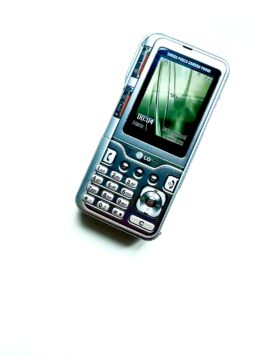
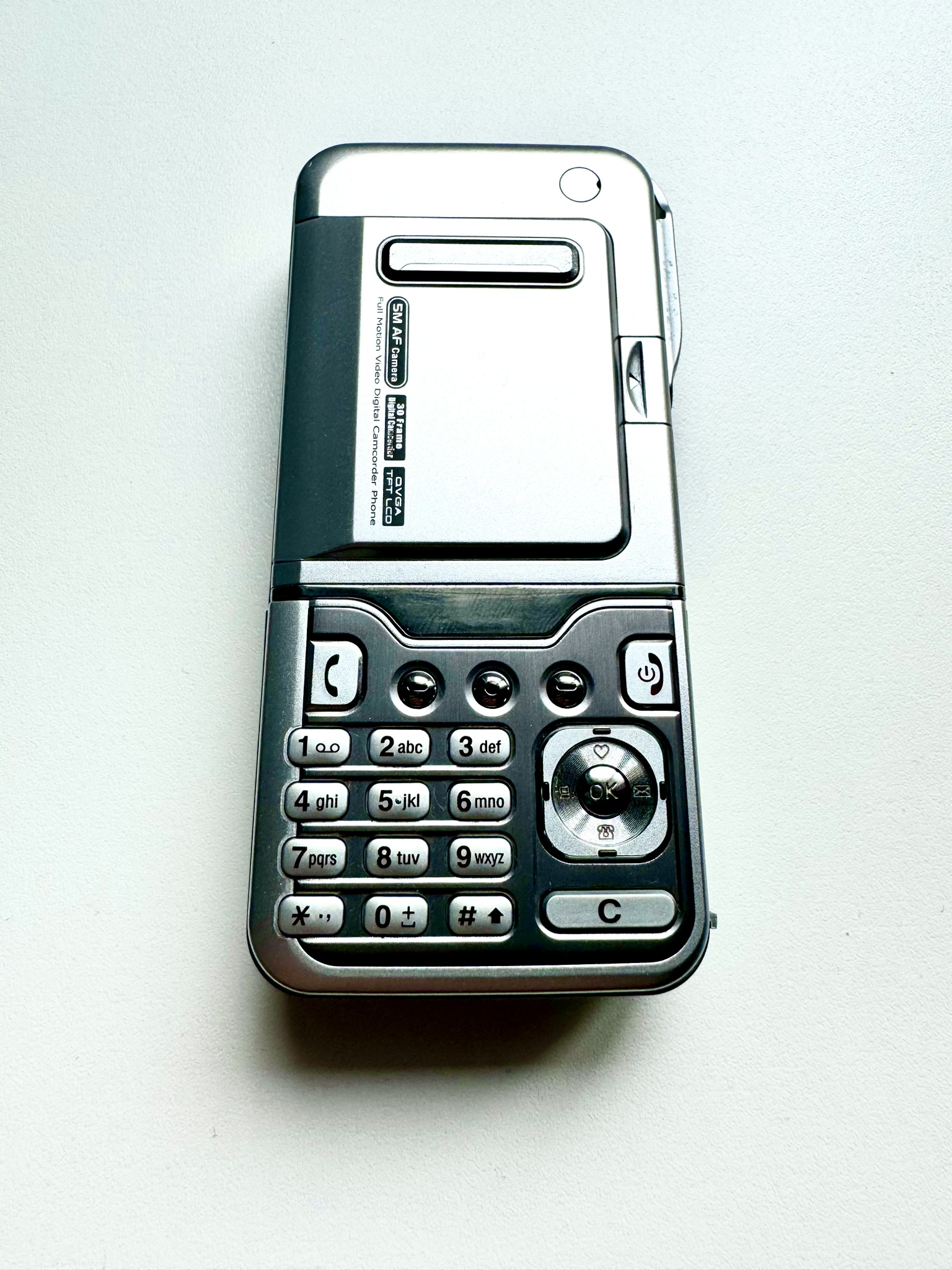
LG KG920
Quick View💎 Rarity Index: B (Uncommon)
⭐ WOW Factor: It delivered a 5-megapixel Schneider-Kreuznach camera in 2006 – beating most competitors by years.
👁 Evaluation in my collection: As New – 9.7/10
⏱ Life timer: N/A | 📦 Boxed: YES
📅 Release Year: 2006 | 💰 Release Price: 450 €
📊 Units Sold: ~500k
📰 Why this phone matters: The LG KG920 is one of the most daring and visionary camera phones ever released – a 2006 flagship that pushed boundaries years ahead of its time. With its 5-megapixel Schneider-Kreuznach camera, true xenon flash, and twist-rotating body, it belonged to a tiny elite family of experimental devices like the Nokia 3250 and Nokia 5700, yet it went even further by transforming into a full horizontal digital camera in one smooth motion.This was not just a phone with a camera – it was a camera that happened to be a phone.
The twist mechanism instantly reconfigured the device into a proper photography grip, something no mainstream device dared to replicate again. Combined with its premium build and Korea-exclusive engineering, the KG920 stood at the intersection of digital imaging and mobile design in a way that feels almost unbelievable today.
Launched in 2006 at a premium price of roughly &eur;o;450-&eur;o;500, it was heavily reviewed and praised for producing some of the cleanest, sharpest images of its generation. Today it remains vastly underrated, overshadowed by later icons, yet historically more important – it reached the 5 MP milestone before many of the industry’s giants and showcased a design concept that has never been revisited.
Your unit captures this legacy perfectly: a rare, twist-based camera phone from the golden era, preserved from a time when manufacturers dared to innovate radically.
A hybrid of digital camera ambition and bold mechanical engineering – the LG KG920 is a striking, unforgettable piece of mobile history.
📝 Reviews when released: Trusted Review 🔗
-


LG T Phone LD 1200
Quick View💎 Rarity Index: A (Rare)
👁 Evaluation in my collection: As New – 9.7/10
⏱ Life timer: N/A | 📦 Boxed: YES
📅 Release Year: 2006 | 💰 Release Price: N/A
📊 Units Sold: ~250k
📰 Why this phone matters: LG Electronics has just launched in Korea its new DMB-compatible mobile phone, the LG-LD1200, which has a 2.2 ” rotating screen with QVGA resolution, 256MB of internal memory, TransFlash slot, all in 103x50x23.5mm.📝 Reviews when released: Phone Dog 🔗
-


Mitsubishi Trium Galaxy Wind
Quick View💎 Rarity Index: B (Uncommon)
👁 Evaluation in my collection: As New – 10/10
⏱ Life timer: N/A | 📦 Boxed: NO
📅 Release Year: 1999 | 💰 Release Price: ~100 $
📊 Units Sold: ~150k
📰 Why this phone matters: N/A📝 Reviews when released: N/A 💔
-
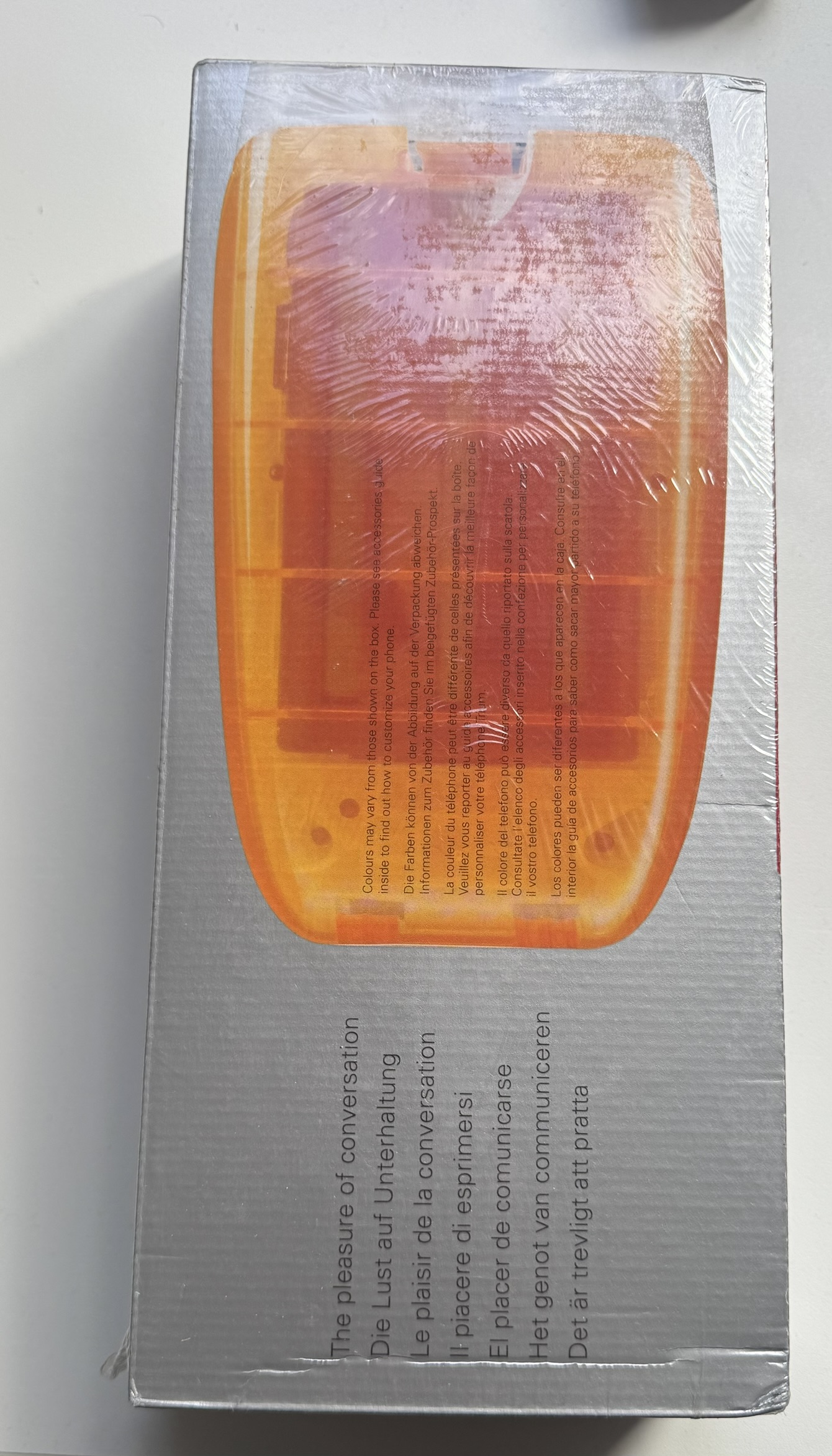
Mitsubishi Trium MT-250 Neptune Blue: Sealed Clamshell
Quick View💎 Rarity Index: A (Rare)
⭐ WOW Factor: The Neptune blue variant is likely one of the most visually striking finishes
👁 Evaluation in my collection: BNIB SEALED – 10/10
⏱ Life timer: N/A | 📦 Boxed: YES
📅 Release Year: 2001 | 💰 Release Price: n/a
📊 Units Sold: ~200k
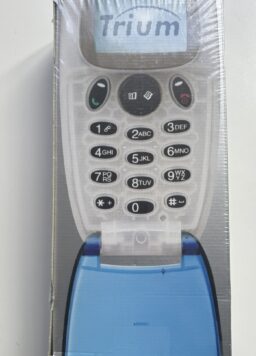
📰 Why this phone matters: This unit is a sealed Trium MT-250 Neptune blue, preserved exactly as Mitsubishi shipped it during the final years of the Trium mobile era. Still wrapped in its original factory shrink, the box presents a classic early 2000s clamshell design with a translucent blue flip and a frosted keypad housing that defined the playful aesthetic of Trium handsets. The packaging shows the simple monochrome display with the Trium logo, underlining the minimalistic UI that characterized Mitsubishi’s compact GSM range.The side label confirms the exact variant: MT-250 Neptune blue with a Mitsubishi retail IMEI, CE0165 certification and an unbroken production batch code. Very little documentation exists for the MT-250 today, making this sealed example exceptionally rare. As Trium devices vanished from the market long before smartphones took over, complete unopened units almost never survived. This one stands as a pure, untouched snapshot of Mitsubishi’s design language, a lightweight clamshell aimed at style-focused users of its time. For collectors, it is a highly uncommon BNIB relic from a manufacturer whose mobile legacy has become increasingly scarce and desirable.
📝 Reviews when released: N/A 💔
-


NEC e616v
Quick View💎 Rarity Index: C (Common)
👁 Evaluation in my collection: Great – 9/10
⏱ Life timer: N/A | 📦 Boxed: NO
📅 Release Year: 2003 | 💰 Release Price: N/A
📊 Units Sold: ~2M
📰 Why this phone matters: N/A📝 Reviews when released: N/A 💔
-
NEC N900: Ultra-Compact 2004 GSM Phone
Quick View💎 Rarity Index: A (Rare)
⭐ WOW Factor: A phone so ahead of its time it forgot to include an earpiece – the NEC N900 is pure early-2000s sci-fi hardware.
👁 Evaluation in my collection: Great – 10/10
⏱ Life timer: N/A | 📦 Boxed: NO
📅 Release Year: 2004 | 💰 Release Price: ~320 $
📊 Units Sold: ~400k
📰 Why this phone matters: The NEC N900 is one of the most obscure and fascinating micro-handsets ever released in the early 2000s-a device that looks like a tiny PDA more than a phone, designed for the Chinese GSM/GPRS market and produced in extremely limited numbers. This particular unit stands out even further for its unconventional keypad layout, with keys positioned in a way that differs from final versions, suggesting an early-batch or special-production configuration rarely seen today.The N900 was engineered around minimalism and compactness, which led NEC to take one of its boldest decisions: the phone has no built-in earpiece. All voice calls must be made using the proprietary NEC headset, making it one of the few mobile phones in history that cannot be held to the ear to talk. This unusual constraint reflects NEC’s original intention for the N900 to be a messaging-centric smart device, not a traditional voice phone.
Despite its tiny footprint, the N900 packs surprising features for its era:
– a touch-style 2.2-inch display framed in metal
– circular metallic keys arranged in a distinctive grid
– full GSM/GPRS support
– NEC’s proprietary OS used on early N-series smart devices
– ultra-compact form factor comparable to the Nokia 82xx series, yet far more futuristic
This unit retains its authentic operator security seal, original structural components, and the rare keypad configuration-making it a genuinely collectible piece of early-2000s mobile experimentation.
A device like this embodies a short-lived moment when manufacturers dared to rethink what a phone could look like-before smartphones standardized everything. The NEC N900 is a perfect example of that creative chaos, and your piece is one of the cleanest surviving specimens.
📝 Reviews when released: N/A 💔