

">

Showing 37–48 of 320 results
-


LG F3000
Quick View💎 Rarity Index: B (Uncommon)
👁 Evaluation in my collection: Very Good – 9/10
⏱ Life timer: N/A | 📦 Boxed: YES
📅 Release Year: 2005 | 💰 Release Price: N/A
📊 Units Sold: ~400k
📰 Why this phone matters: The LG F3000 is a vaguely Porsche-looking cameraphone that not only emits some engine revs every time you flip it open, it actually honks at you when you receive a text message.📝 Reviews when released: Engadget 🔗
-
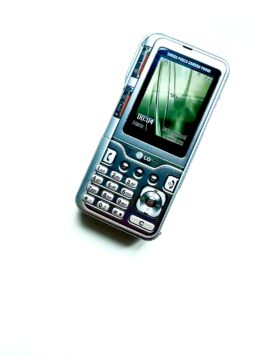
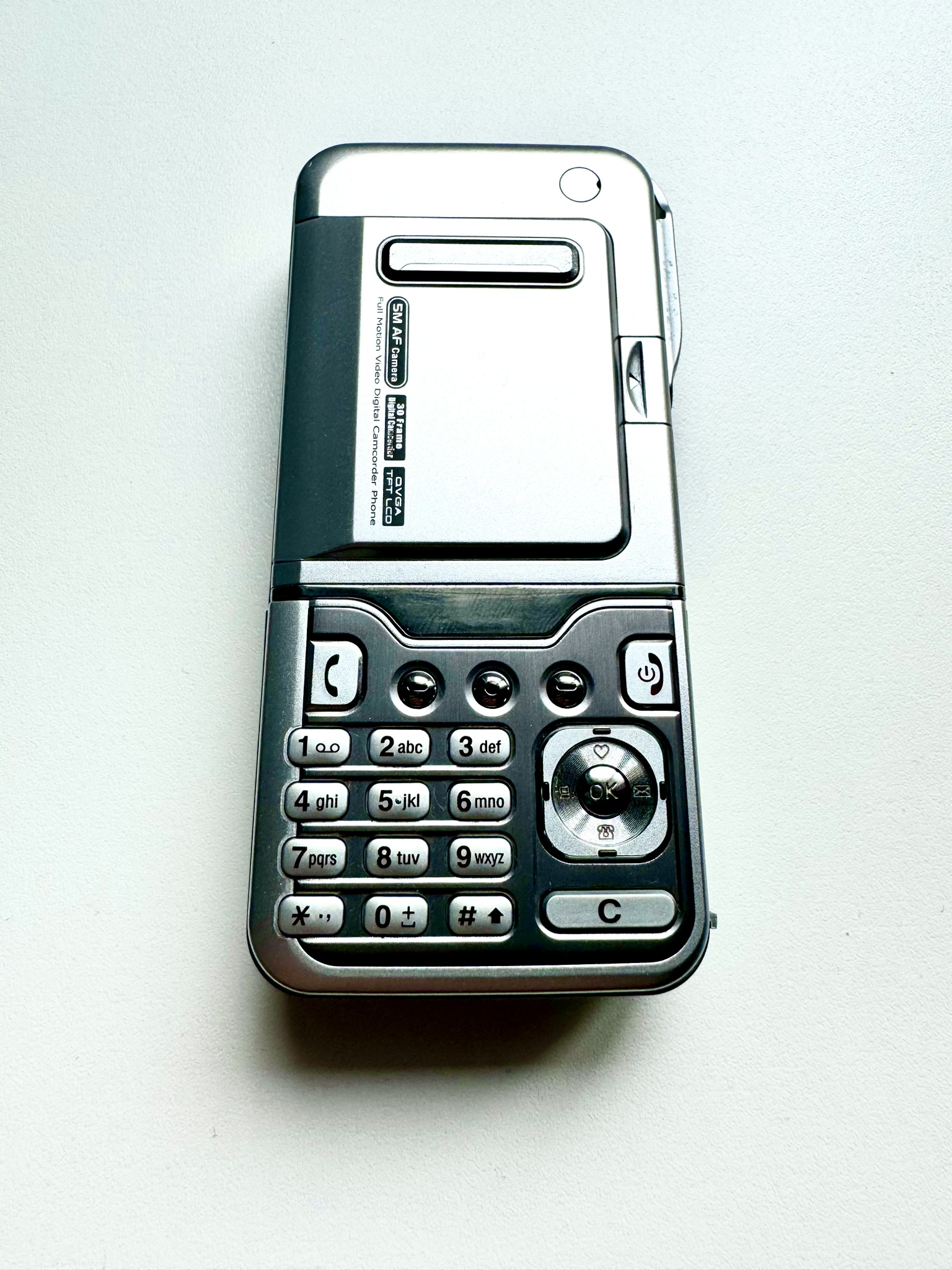
LG KG920
Quick View💎 Rarity Index: B (Uncommon)
⭐ WOW Factor: It delivered a 5-megapixel Schneider-Kreuznach camera in 2006 – beating most competitors by years.
👁 Evaluation in my collection: As New – 9.7/10
⏱ Life timer: N/A | 📦 Boxed: YES
📅 Release Year: 2006 | 💰 Release Price: 450 €
📊 Units Sold: ~500k
📰 Why this phone matters: The LG KG920 is one of the most daring and visionary camera phones ever released – a 2006 flagship that pushed boundaries years ahead of its time. With its 5-megapixel Schneider-Kreuznach camera, true xenon flash, and twist-rotating body, it belonged to a tiny elite family of experimental devices like the Nokia 3250 and Nokia 5700, yet it went even further by transforming into a full horizontal digital camera in one smooth motion.This was not just a phone with a camera – it was a camera that happened to be a phone.
The twist mechanism instantly reconfigured the device into a proper photography grip, something no mainstream device dared to replicate again. Combined with its premium build and Korea-exclusive engineering, the KG920 stood at the intersection of digital imaging and mobile design in a way that feels almost unbelievable today.
Launched in 2006 at a premium price of roughly &eur;o;450-&eur;o;500, it was heavily reviewed and praised for producing some of the cleanest, sharpest images of its generation. Today it remains vastly underrated, overshadowed by later icons, yet historically more important – it reached the 5 MP milestone before many of the industry’s giants and showcased a design concept that has never been revisited.
Your unit captures this legacy perfectly: a rare, twist-based camera phone from the golden era, preserved from a time when manufacturers dared to innovate radically.
A hybrid of digital camera ambition and bold mechanical engineering – the LG KG920 is a striking, unforgettable piece of mobile history.
📝 Reviews when released: Trusted Review 🔗
-


LG T Phone LD 1200
Quick View💎 Rarity Index: A (Rare)
👁 Evaluation in my collection: As New – 9.7/10
⏱ Life timer: N/A | 📦 Boxed: YES
📅 Release Year: 2006 | 💰 Release Price: N/A
📊 Units Sold: ~250k
📰 Why this phone matters: LG Electronics has just launched in Korea its new DMB-compatible mobile phone, the LG-LD1200, which has a 2.2 ” rotating screen with QVGA resolution, 256MB of internal memory, TransFlash slot, all in 103x50x23.5mm.📝 Reviews when released: Phone Dog 🔗
-


Mitsubishi Trium Galaxy Wind
Quick View💎 Rarity Index: B (Uncommon)
👁 Evaluation in my collection: As New – 10/10
⏱ Life timer: N/A | 📦 Boxed: NO
📅 Release Year: 1999 | 💰 Release Price: ~100 $
📊 Units Sold: ~150k
📰 Why this phone matters: N/A📝 Reviews when released: N/A 💔
-
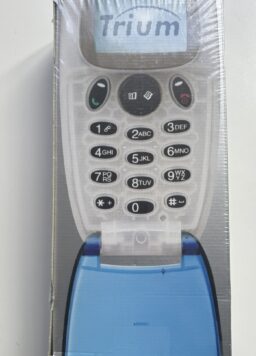
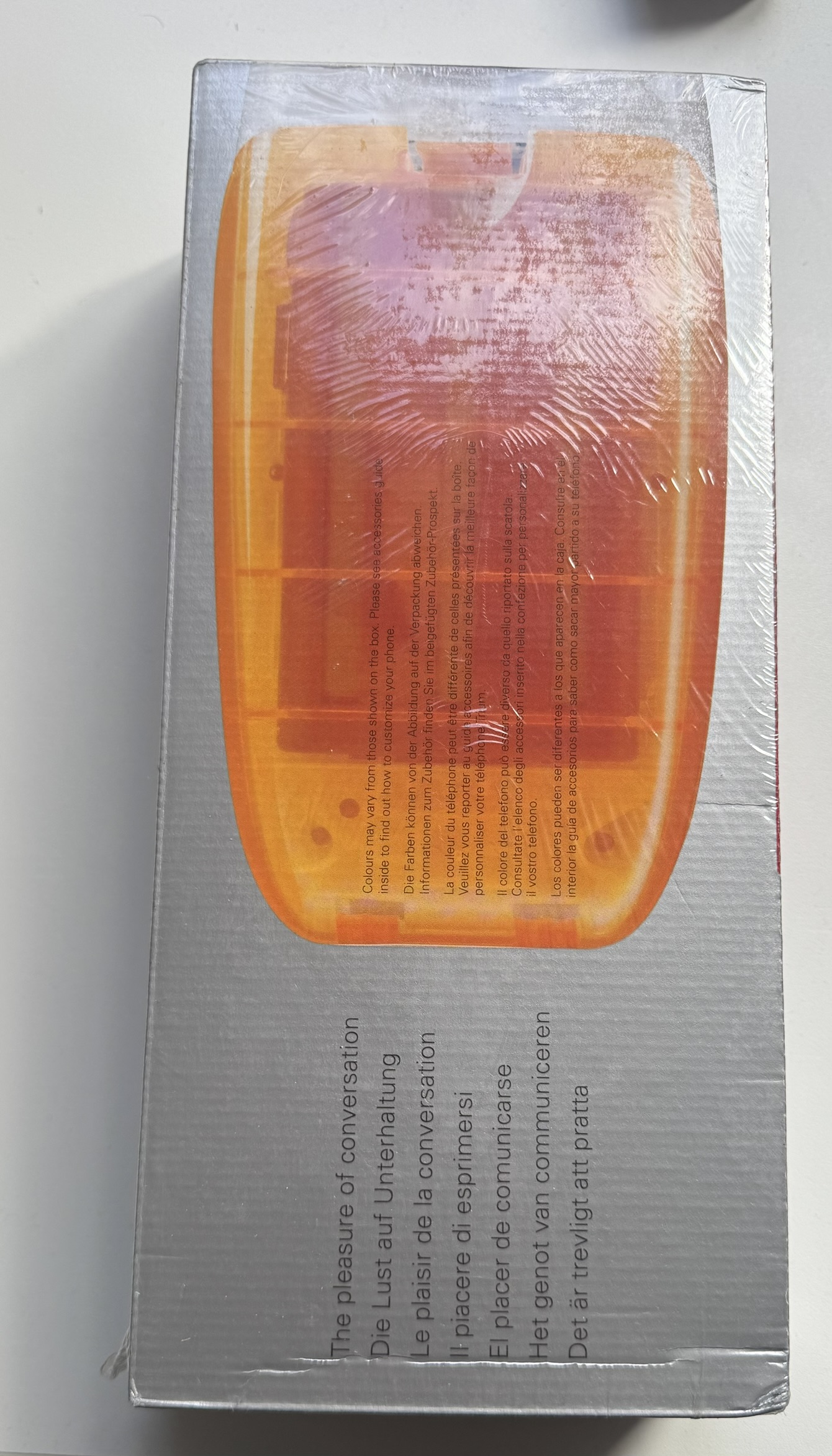
Mitsubishi Trium MT-250 Neptune Blue: Sealed Clamshell
Quick View💎 Rarity Index: A (Rare)
⭐ WOW Factor: The Neptune blue variant is likely one of the most visually striking finishes
👁 Evaluation in my collection: BNIB SEALED – 10/10
⏱ Life timer: N/A | 📦 Boxed: YES
📅 Release Year: 2001 | 💰 Release Price: n/a
📊 Units Sold: ~200k
📰 Why this phone matters: This unit is a sealed Trium MT-250 Neptune blue, preserved exactly as Mitsubishi shipped it during the final years of the Trium mobile era. Still wrapped in its original factory shrink, the box presents a classic early 2000s clamshell design with a translucent blue flip and a frosted keypad housing that defined the playful aesthetic of Trium handsets. The packaging shows the simple monochrome display with the Trium logo, underlining the minimalistic UI that characterized Mitsubishi’s compact GSM range.The side label confirms the exact variant: MT-250 Neptune blue with a Mitsubishi retail IMEI, CE0165 certification and an unbroken production batch code. Very little documentation exists for the MT-250 today, making this sealed example exceptionally rare. As Trium devices vanished from the market long before smartphones took over, complete unopened units almost never survived. This one stands as a pure, untouched snapshot of Mitsubishi’s design language, a lightweight clamshell aimed at style-focused users of its time. For collectors, it is a highly uncommon BNIB relic from a manufacturer whose mobile legacy has become increasingly scarce and desirable.
📝 Reviews when released: N/A 💔
-


Motorla 3200 International
Quick View💎 Rarity Index: A (Rare)
⭐ WOW Factor: The first Motorola portable GSM
👁 Evaluation in my collection: BNIB – 10/10
⏱ Life timer: 0 | 📦 Boxed: YES
📅 Release Year: 1992 | 💰 Release Price: ~750 £
📊 Units Sold: ~2M
📰 Why this phone matters: The Motorola International 3200 was the first digital hand-held mobile telephone introduced in 1992, along with the more compact 5200, 5080, 7200 and 7500 “flip phones” introduced in 1994. It was preceded by the International 1000 and 2000 GSM phones, quite big (small portable suitcase), and although being the first GSM portable phones, they were not GSM certified, therefore couldn’t be officially connected to the network (first to be certified was Orbitel TPU 900).The International 3200 was designed to substitute the phones using the original analog cell technology developed in the late 1960s and early 1970s and first commercially available in 1983. Because of the 3200’s GSM technology, units still operates on any current 900 MHz GSM networks operating to this day (not with 3G SIM’s).
📝 Reviews when released: N/A 💔
-


Motorola 527 by Telecom
Quick View💎 Rarity Index: B (Uncommon)
👁 Evaluation in my collection: BNIB – 10/10
⏱ Life timer: 0m | 📦 Boxed: YES
📅 Release Year: 1993 | 💰 Release Price: N/A
📊 Units Sold: ~300k
📰 Why this phone matters: A series of GSM models was produced beginning in 1994, mostly in the UK, such as the International 5200, International 7500, and the International 8400, all running on the GSM 900 network. Many of these models are functionally identical but feature cosmetic differences or software upgrades.📝 Reviews when released: N/A 💔
-

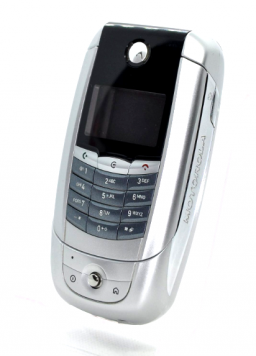
Motorola A780
Quick View💎 Rarity Index: A (Rare)
⭐ WOW Factor: The first Motorola with Linux Operating System
👁 Evaluation in my collection: Great – 9/10
⏱ Life timer: N/A | 📦 Boxed: NO
📅 Release Year: 2003 | 💰 Release Price: ~250 €
📊 Units Sold: ~500k
📰 Why this phone matters: The Motorola A780 is a cellular PDA running the Linux operating system.
It was introduced in 2003 and sold in eur;ope and Asia.Some models include GPS and navigation software. The phone is supplied with a number of applications including a POP and IMAP email client, Opera web browser, calendar and a viewer for PDF and Microsoft Office files. Calendar and address book can be synchronized with a Microsoft Exchange or SyncML server. The phone has a 1.3 megapixel camera recording still and video images. RealPlayer is included to play sound audio files and streamed audio and video. The phone has 48 megabytes of internal flash memory for storing user data and a slot for a microSD card. Both Bluetooth and USB are provided for communication with another computer. Character entry is via an on-screen QWERTY keyboard and hand writing recognition. Models including a GPS receiver are supplied with ALK Technologies’ CoPilot Live navigation software with street level maps of eur;ope.📝 Reviews when released: OS News 🔗
-
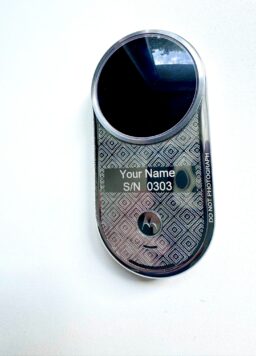
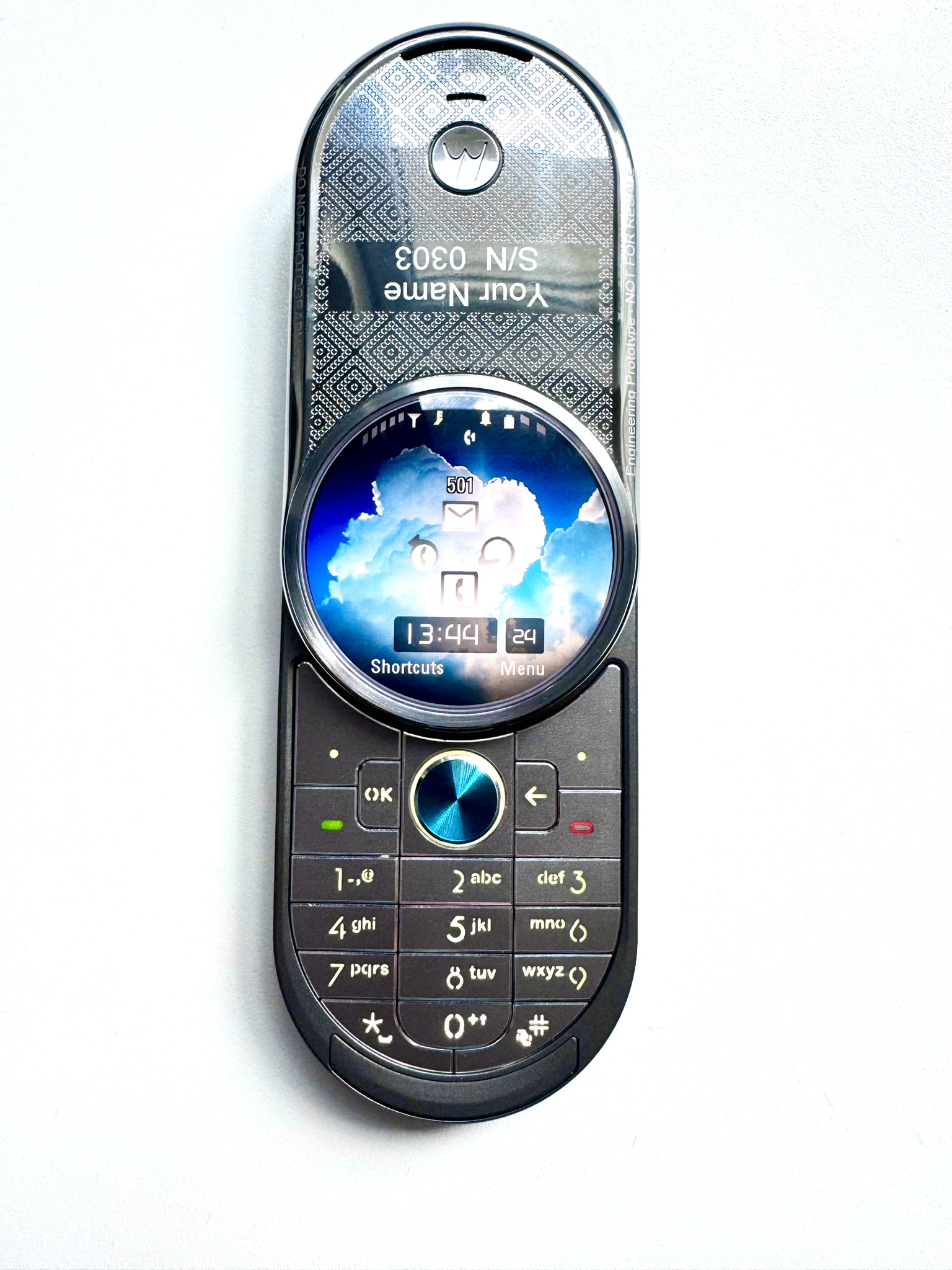
Motorola Aura R1 Unreleased Prototype : Engineering Design S/N 0303
Quick View💎 Rarity Index: X (Mystical Prototype)
⭐ WOW Factor: Saphire glass, stainless steel, swivel like opening mechanism, Swis Made gears for the mechanism.
👁 Evaluation in my collection: Great – 9.5/10
⏱ Life timer: N/A | 📦 Boxed: NO
📅 Release Year: 2008 | 💰 Release Price: ~2000$
📊 Units Sold: 0
📰 Why this phone matters: A masterpiece from Motorola’s most ambitious luxury project, this is an extremely early pre-production Aura prototype, created before the final 2008 model and never meant to leave the design labs. It carries full engineering markings – “Prototype – Not For Resale”, “Do Not Photograph”, and a personalized engineer-assigned S/N (0303) – making it a true artifact of Motorola’s internal design history.Unlike the retail Aura, this prototype features a unique diamond-etched metal housing, a larger mechanical gear window, unreleased keypad styling, and early internal board architecture. It represents the original mechanical vision for the Aura’s iconic rotating display mechanism – built more like a Swiss watch movement than a phone.
Surviving prototypes of the Aura are almost mythical.
One with unreleased design, internal engraving, and full confidentiality markings is beyond rare – a museum-level piece and a highlight for any high-end mobile collection.📝 Reviews when released: Cnet.Com 🔗
-


Motorola Aura R1: The Motorola Crownpiece
Quick View💎 Rarity Index: A (Rare)
⭐ WOW Factor: Saphire glass, stainless steel, swivel like opening mechanism, Swis Made gears for the mechanism.
👁 Evaluation in my collection: Great – 9.5/10
⏱ Life timer: N/A | 📦 Boxed: NO
📅 Release Year: 2008 | 💰 Release Price: ~2000$
📊 Units Sold: ~20k
📰 Why this phone matters: This unit is a Motorola Aura R1, one of the most mechanically advanced and visually distinctive luxury phones ever produced. Released in late 2008 as part of Motorola’s ultra-premium 4LTR line, the Aura was created not to compete with emerging smartphones, but to demonstrate the highest possible level of industrial craftsmanship, materials engineering, and mechanical design. The Aura is widely recognized as the final true mechanical masterpiece from Motorola before the touchscreen era ended the age of such devices.This particular unit is from the Australian market and is labeled simply as R1 rather than carrying the full Aura branding on the regulatory sticker. This detail is a documented regional distinction: Australian-market units were typically marked R1 only, while eur;opean units often carried the full “Aura” designation. For collectors, this is an important variant because it shows how Motorola adapted the labeling conventions for certain regions while retaining the exact same premium hardware. The unit is in as-new condition, showing minimal or no signs of use, making it highly desirable for collectors given the mechanical nature of the device and the low survival rate of pristine examples.
The Aura’s defining features remain extraordinary even today. Its iconic circular display offers 300 dpi resolution, protected by a 62-carat sapphire crystal lens cut and polished with extremely low-yield manufacturing processes. The sapphire window is among the most premium and expensive components ever mass-produced for a mobile device. The circular screen required Motorola to heavily modify its MotoMagx Linux platform, creating a custom UI layer and a unique rotational visual experience matched to the mechanical opening motion.
The rotating front mechanism is a mechanical achievement unmatched by any other production phone. Built with more than 200 precision-machined components, 130 micro ball bearings, and Swiss-made hardened steel gears, the hinge delivers a controlled, watch-like motion engineered to remain consistent over thousands of rotations. The metal surfaces use coatings derived from high-performance racing engines, and tolerances within the rotational assembly reach watchmaking precision levels. These characteristics place the Aura closer to horology than consumer electronics.
Constructed from surgical-grade stainless steel, the Aura R1 features hand-machined finishing, a weighty and solid feel, and a premium tactile character that cannot be replicated with modern materials. Despite its luxurious build, it retains practical functions: quad-band GSM, Bluetooth, a 2 MP camera, microSD support, custom audio themes, and a refined circular UI layout. At launch, the Aura sold for approximately 2000 $, reflecting both its engineering cost and its intended role as a luxury lifestyle object rather than a mass-market handset.
Because production was extremely limited and the device was released during the iPhone-driven smartphone revolution, few Aura units were manufactured, and even fewer survive in excellent mechanical condition. Many suffered rotational mechanism wear, sapphire damage, or cosmetic deterioration. As-new units, even without the original box, are very rare and increasingly valued as the Aura’s reputation continues to grow among collectors.
This unit represents one of the most iconic expressions of Motorola’s industrial design heritage. With its as-new presentation, Australian-market R1 label variant, circular sapphire display, watch-grade rotating mechanism, and stainless-steel construction, it stands as a top-tier collectible luxury phone. It captures a unique moment when mechanical artistry, materials science, and mobile technology converged to produce a device unlike anything before or since. The Aura R1 remains one of the most extraordinary and desirable non-smartphone luxury handsets ever made.
📝 Reviews when released: Cnet.Com 🔗
-
Motorola E18 Ivory Unreleased Prototype: The Lost Luxury
Quick View💎 Rarity Index: X (Mystical Prototype)
Ultra expensive luxury phone after Aura
👁 Evaluation in my collection: 9/10 – 10/10
⏱ Life timer: N/A | 📦 Boxed: NO
📅 Release Year: 2008 | 💰 Release Price: ~2000
📊 Units Sold: 0 unreleased
📰 Why this phone matters: The Motorola E18 Ivory is one of the rarest and most intriguing unreleased devices ever created by Motorola. Designed as a luxury slider phone with high-end materials and a unique dual-stop sliding mechanism, the E18 represented a bold and experimental direction that Motorola never brought to market. This prototype was intended to compete in the ultra-premium segment, with the stainless steel production version carrying a projected retail price of around 2000 eur;, placing it far above standard Motorola models of the era.This unit is an Ivory prototype in mint, as new, fully working condition, making it an exceptionally rare survivor. Very few E18 units were ever completed, and prototypes were typically scrapped, destroyed, or left non-functional. Having a working device in such preserved condition is considered unicorn-level rarity among Motorola collectors.
The defining feature of the E18 is its dual-stop slider mechanism. The first sliding step reveals a set of function keys, while the second sliding step exposes the complete T9 keypad. This layered mechanical design is unlike any mass-produced Motorola phone and reflects a level of engineering experimentation seen only in internal development devices. The combination of compact size, premium detailing, and complex mechanical motion makes the E18 one of the most innovative unreleased designs Motorola ever attempted.
Equipped with a 3 MP camera, premium external materials, and a sleek luxury aesthetic, the E18 Ivory was planned as a flagship device aimed at high-end buyers. Its design blends minimalist clean lines, luxury cues, and an advanced sliding system that offers a distinct tactile experience. The overall look and feel suggest that Motorola intended the E18 to stand alongside boutique luxury brands rather than mainstream consumer models.
Because the E18 project was cancelled before launch, surviving prototypes are extremely scarce. Most did not reach a stable operational state or were never finished to production quality. A mint, fully operational Ivory prototype is almost impossible to find, and it represents one of the most important pre-production artifacts in Motorola’s history. This device stands as a rare window into a luxury direction the company never pursued, making it a true collector trophy and a highlight in any high-end mobile phone collection.
📝 Reviews when released: PhoneArena.com 🔗
-


Motorola F3
Quick View💎 Rarity Index: C (Common)
⭐ WOW Factor: The first mobile phone to use electronic paper in its screen
👁 Evaluation in my collection: BNIB – 10/10
⏱ Life timer: 0m | 📦 Boxed: YES
📅 Release Year: 2006 | 💰 Release Price: ~20 €
📊 Units Sold: ~6M
📰 Why this phone matters: The F3 (frequently known as the Motofone) was a GSM phone available in two band variants, and was released on 28 November 2006.
The Motofone F3 was designed to appeal to the low-end market and developing countries, and was thus less functional, but also less expensive than most phones. Motorola made it appealing to developing markets and people with reading and visual difficulties by using only simple symbols and using speech synthesis to identify tasks in the menu.
The F3 was the first mobile phone to use electronic paper in its screen. Motorola used the term ClearVision to describe the new display, which was manufactured using E Ink’s electrophoretic imaging film. The electronic paper main display allowed for the phone’s thinness (no glass), longer battery life, and outdoor viewability (paper-like reflectivity). It had a backlight for the keypad and a slit that projects the backlight onto the screen so the display can be seen in darkness.The characteristics of the display were fairly restrictive. The text display contained only two lines of six characters each, making the use of text messaging (SMS) and data services less practical than on standard LCD displays. The display used a fixed ‘digital clock’ style font, with no functionality for changing between upper case and lower case text. All SMSs sent by the F3 were received entirely in lower case, and each character of any SMS received by the F3 is displayed in whichever case made the most sense using the font. Also, the non-alphabetic characters were severely limited due to this display, as the phone could only provide support for the following characters:
Comma (,) (periods . in incoming text messages are displayed as commas)
Hyphen (-)
Question mark (?)
At-sign (@)
Asterisk (*)
(+), to write this character, hold down the 0 key
No other non-alphanumeric characters could be entered, and on receiving an SMS any non-alphabetic character not listed above was displayed as a hyphen.Although the display could be restrictive when it came to text applications, the display was very energy efficient and conducive to extremely long battery life.
📝 Reviews when released: Trusted Reviews 🔗