

">

Showing 25–36 of 74 results
-


Nokia 6101
Quick View💎 Rarity Index: C (Common)
👁 Evaluation in my collection: As New – 9.9/10
🕵 Nokia Codename: Ediphix
⏱ Life timer: 1m | 📦 Boxed: NO
📅 Release Year: 2006 | 💰 Release Price: ~280 $
📊 Units Sold: ~10M
📰 Why this phone matters: The Nokia 6101, 6102, and 6102i are a line of popular Nokia mid-level clamshell cellphones that operate on GSM-850/1800/1900 MHz (some markets are GSM-900/1800/1900 MHz) frequencies released between middle 2005 and early 2006. The line was given the nickname Ediphix by Nokia employees.The differences between the 6101 and 6102 are very small and the only visible differences are the style of the keypads and front bezel plate. The 6102i is an updated version of the 6102 featuring Bluetooth capabilities and increased memory space. Another updated version of the 6101/6102 is the Nokia 6103.
Announced in 2005, the Nokia 6101 was also one of the last Nokia phones that still had an external antenna.
Its direct successor is the Nokia 6131, which includes microSD card slot and native USB connectivity.
📝 Reviews when released: Mobile Review 🔗
-
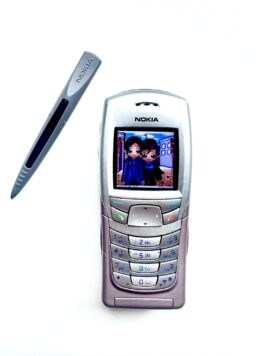
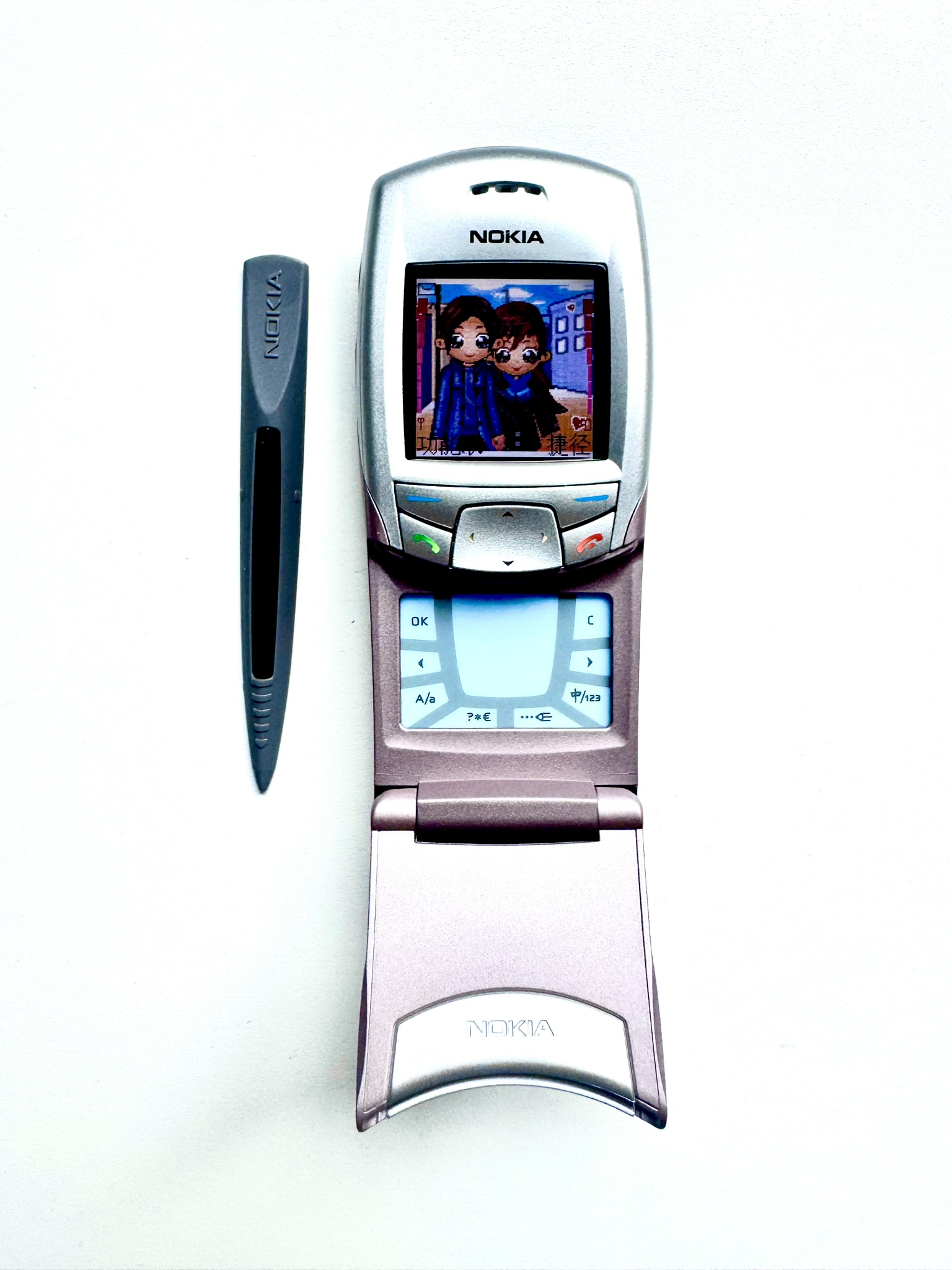
Nokia 6108 Prototype B5.0: Early Engineering Sample in Pink
Quick View💎 Rarity Index: S (Ultra Rare)
⭐ WOW Factor: Handwriting Recognition
👁 Evaluation in my collection: Good – 9/10
🕵 Nokia Codename: Libai
⏱ Life timer: 3 | 📦 Boxed: NO
📅 Release Year: 2003 | 💰 Release Price: 200 €
📊 Units Sold: ~300k (final units)
📰 Why this phone matters: A striking Nokia 6108 Prototype B5.0, internal codename “LiBai”, built under Type RH-4 and marked with the unmistakable Model: XXYY placeholder – one of Nokia’s classic signatures for true pre-production devices. The PROTO B5.0 designation places this unit in the late engineering stage, where final hardware refinements, handwriting-input validation and UI stability testing were performed before the model was green-lit for production.The pink housing paired with this prototype label makes it highly distinctive: while certain pink variants were later released in select Asian markets, the internal markings on this unit – early production codes, non-consumer label structure, and the development codename printed directly on the shield – confirm it as part of Nokia’s controlled R&D chain rather than a retail batch.
With its clean prototype identifiers, engineering-phase hardware and the unique “LiBai” project naming, this 6108 B5.0 proto stands as a rare and desirable example of Nokia’s experimental era, capturing the device exactly as it passed through the company’s internal development process.
📝 Reviews when released: N/A 💔
-
Nokia 6108: The First Handwriting Classic
Quick View💎 Rarity Index: A (Rare)
⭐ WOW Factor: Handwriting Recognition
👁 Evaluation in my collection: As New – 9.9/10
🕵 Nokia Codename: Libai
⏱ Life timer: 0 | 📦 Boxed: YES
📅 Release Year: 2003 | 💰 Release Price: 200 €
📊 Units Sold: ~300k
📰 Why this phone matters: The Nokia 6108 is one of the most unusual and innovative mass-released Nokia phones, designed specifically for the Chinese market and built around a unique flip-down handwriting input system. Released in the early 2000s, it combined a traditional candybar keypad with a dedicated handwriting pad hidden beneath the keys. The included stylus, neatly stored on the back of the device, enabled users to write Chinese or English characters directly onto the phone, making the 6108 a remarkably advanced hybrid device for its era.This full box example is extremely rare. Most 6108 units were heavily used in China and Southeast Asia, where handwriting input was a daily necessity. As a result, surviving phones usually show significant wear and often lack the stylus, manuals, or original packaging. A complete, intact full box with all accessories is very hard to find today and greatly increases the collectible value of this model.
With GPRS, MMS, email, Java applications, SyncML support, a two-way English/Chinese dictionary and speakerphone, the 6108 offered a feature set far beyond standard Series 40 devices of its time. Its IR port enabled early PC synchronization long before modern wireless standards became common.
Internally known as LiBai, the 6108 reflects Nokias experimental phase, merging conventional keypad use with stylus-driven handwriting input long before capacitive touchscreens became mainstream. Its distribution was limited to Asia-Pacific markets, and because it was heavily used for educational, business and translation purposes, complete boxed units like this one are exceptionally hard to source.
With its flip-down handwriting pad, integrated stylus, region-specific firmware and fully intact accessory set, this Nokia 6108 stands as a distinctive and rare piece of Nokia innovation, showcasing the company’s creative engineering during the early 2000s.
📝 Reviews when released: N/A 💔
-


Nokia 6111
Quick View💎 Rarity Index: C (Common)
👁 Evaluation in my collection: Great – 9/10
🕵 Nokia Codename: Munich
⏱ Life timer: N/A | 📦 Boxed: NO
📅 Release Year: 2005 | 💰 Release Price: ~350 $
📊 Units Sold: ~2M
📰 Why this phone matters: It was being one of first devices running Nokia Series 40 3rd Edition, along with Nokia 6233, Nokia 6270 and Nokia 6280 which also offers even QVGA display resolution and better multimedia support.📝 Reviews when released: Mobile Review 🔗
-
Nokia 6208c
Quick View💎 Rarity Index: B (Uncommon)
⭐ WOW Factor: Website-Ready Description
👁 Evaluation in my collection: Good – 8.5/10
⏱ Life timer: N/A | 📦 Boxed: YES
📅 Release Year: 2009 | 💰 Release Price: 200 $
📊 Units Sold: ~200k
📰 Why this phone matters: Nokia 6208c (RM-458) – China-Exclusive Handwriting EditionThe Nokia 6208c is a rare China-market exclusive released in 2009, designed around Nokia’s handwriting-recognition platform. Built for users who preferred writing Chinese characters by hand, it combines a resistive touchscreen with a stylus elegantly integrated into the back cover – a design found on almost no other Nokia model worldwide.
Its construction features metal structural elements, a solid chassis, and a clean, premium industrial look. Running Series 40 (Touch & Type variant), the 6208c delivers a unique blend of traditional keypad control and touchscreen handwriting input, offering a very specific user experience tailored to the Chinese market.
With its limited regional release, short production window, and distinctive hardware concept, the 6208c stands out today as one of the most uncommon and collectible touchscreen feature phones from Nokia’s late-2000s era.
📝 Reviews when released: N/A 💔
-


Nokia 6300 Bronze
Quick View💎 Rarity Index: B (Uncommon)
👁 Evaluation in my collection: Very Good – 8.5/10
⏱ Life timer: 26h | 📦 Boxed: NO
📅 Release Year: 2007 | 💰 Release Price: ~250 €
📊 Units Sold: ~35M
📰 Why this phone matters: The Nokia 6300 is a mobile telephone handset produced by Nokia. It was announced on 28 November 2006 and released in January 2007. This model was assembled in several factories, including Jucu plant, near Cluj, in Romania.
The Nokia 6300 is a mid-ranger combining a classic candybar design with a durable stainless steel and slim (11.7 mm thick) body.It runs on Series 40. The 6300 was a hit and became one of the top-selling Nokia models on the market during its time. Slightly improved models Nokia 6301 and Nokia 6300i were launched later in 2007 and 2008 respectively.
The 6300 was considered to have been the successor of several models, including 6230i, and 6310i.📝 Reviews when released: Mobile Review 🔗
-


Nokia 6303 Classic
Quick View💎 Rarity Index: C (Common)
👁 Evaluation in my collection: Great – 9.7/10
⏱ Life timer: 0m | 📦 Boxed: NO
📅 Release Year: 2009 | 💰 Release Price: ~120 €
📊 Units Sold: ~10M
📰 Why this phone matters: The Nokia 6303 classic is a mobile telephone handset produced by Finnish manufacturer Nokia. The Nokia 6303 classic was announced in December 2008, it has been in production since May 2009. It is the successor to the Nokia 6300 (even though PhoneArena claims the Nokia 6700 classic was the successor ).
The Nokia 6303 classic was being produced in Hungary as well as in Jucu, Romania.📝 Reviews when released: N/A 💔
-


Nokia 6303 Classic: Betty Barclay Edition
Quick View💎 Rarity Index: A (Rare)
👁 Evaluation in my collection: Great – 9.7/10
⏱ Life timer: 45h | 📦 Boxed: NO
📅 Release Year: 2009 | 💰 Release Price: ~120 €
📊 Units Sold: ~2k
📰 Why this phone matters: The Nokia 6303 classic is a mobile telephone handset produced by Finnish manufacturer Nokia. The Nokia 6303 classic was announced in December 2008, it has been in production since May 2009. It is the successor to the Nokia 6300 (even though PhoneArena claims the Nokia 6700 classic was the successor ).
The Nokia 6303 classic was being produced in Hungary as well as in Jucu, Romania.📝 Reviews when released: N/A 💔
-


Nokia 6500 classic
Quick View💎 Rarity Index: C (Common)
⭐ WOW Factor: The thinest Nokia phone when released
👁 Evaluation in my collection: Great – 9/10
⏱ Life timer: 16h | 📦 Boxed: NO
📅 Release Year: 2007 | 💰 Release Price: ~320 €
📊 Units Sold: ~15M
📰 Why this phone matters: The Nokia 6500 classic is a mobile phone from Nokia announced on May 31, 2007. The phone runs the Series 40 platform. The case is made of brushed aluminium. At just 9.5 mm thick, the 6500 classic was Nokia’s thinnest phone when released in October 2007. It is notable for being Nokia’s few Series 40 phones with a large internal memory, 1 GB (along with the Nokia 7900 and others). It also had a similar sliding variant called Nokia 6500 slide. Both of them were the first Nokia phones where the miniUSB port was replaced by microUSB.📝 Reviews when released: Mobile Review 🔗
-


Nokia 6600 Fold
Quick View💎 Rarity Index: C (Common)
👁 Evaluation in my collection: Brand New Swap – 10/10
⏱ Life timer: 0m | 📦 Boxed: NO
📅 Release Year: 2008 | 💰 Release Price: ~270 €
📊 Units Sold: ~1M
📰 Why this phone matters: There’s no denying that Nokia’s 6600 Fold is eye-catching. Its glossy metal surface and two-tone colouring are bound to stand out on the wall of a mobile phone store amongst the masses of cloned black-plastic handsets. Unlike many flip phones, the Fold is spring loaded and held in place by magnets. On the left side is a ‘one-touch’ opening key that disengages the magnets and flings the top half of the phone upwards. As ridiculous as this sounds there is something genuinely satisfying about answering a call this way.📝 Reviews when released: Mobile Review 🔗
-


Nokia 6600i Slide
Quick View💎 Rarity Index: C (Common)
👁 Evaluation in my collection: Brand New Swap – 10/10
⏱ Life timer: 0m | 📦 Boxed: NO
📅 Release Year: 2009 | 💰 Release Price: ~250 €
📊 Units Sold: ~1.5M
📰 Why this phone matters: The Nokia 6600 slide is a mobile phone series by Nokia. It includes the original 6600 slide (released April 2008) and the updated 6600i slide (released May 2009). The phone runs the Series 40 5th edition platform, including Feature Pack 1. This is the slide version of updated Nokia 6600 series.📝 Reviews when released: Mobile Review 🔗
-


Nokia 6610i
Quick View💎 Rarity Index: C (Common)
👁 Evaluation in my collection: Brand New Swap – 10/10
🕵 Nokia Codename: Jacqueline
⏱ Life timer: 0m | 📦 Boxed: NO
📅 Release Year: 2004 | 💰 Release Price: ~250 $
📊 Units Sold: ~15M
📰 Why this phone matters: The Nokia 6610i mobile telephone is an improved version of the Nokia 6610 with a built-in digital camera, launched in 2004. The phone’s internals are taken from the Nokia 7250i, and use the same software, both supporting XHTML. The Nokia 6610i is aimed at business users, while the Nokia 7250i is intended more to be a fashion phone.📝 Reviews when released: Mobile Review 🔗