Showing 85–96 of 353 results
-


Nokia 2110i Snow White
Quick ViewThe Nokia 2110 is a cellular phone made by the Finnish telecommunications firm Nokia, first announced in February 1994. It was the first Nokia phone with the famous Nokia tune ringtone.The phone can send and receive SMS messages, and lists 10 dialed calls, 10 received calls and 10 missed calls. At the time of the phone’s release, it was considerably smaller than others of its price and had a bigger display, so it became very popular. It also featured a “revolutionary” new user interface featuring with two dynamic softkeys, which would later lead to the development of the Navi-key on its successor, the Nokia 3110, as well as the Series 20 interface. A later version, the Nokia 2110i, released in 1994, came with more memory and a protruding antenna knob.
-


Nokia 2110i: Special Festival de Cannes 1995 No. 0929 of 1000
Quick ViewThe Nokia 2110i Special Festival de Cannes 1995 edition is one of the earliest officially numbered Nokia limited editions ever created. Produced in a run of only 1000 units for the French operator Itineris, this handset features a unique multi-color artistic design celebrating the Cannes film festival, with the official serial number printed directly on the housing. This unit is number 0929 of 1000, making it a rare and collectible piece of Nokia history.
Based on the Nokia 2110i platform, this special edition includes all the technological milestones that made the 2110 series one of Nokia’s most important early models. It was the first Nokia phone to feature the now iconic Nokia tune ringtone, and introduced the dynamic softkey interface that later evolved into the Navi-key concept used across Nokia’s Series 20 devices. The 2110i version expanded memory and improved performance, making it one of the most popular business-class handsets of the mid 1990s.
What sets this edition apart is the custom Festival de Cannes artwork. The bright, artistic color scheme and festival-themed illustrations stand in sharp contrast to the conservative designs of the era. Each handset in the series features the Itineris branding and the printed inscription Special Festival de Cannes 1995 followed by its official number in the 0001 to 1000 range. Few promotional Nokia models were as bold or as culturally connected as this one.
Because these phones were used in real-world promotional campaigns, most surviving units show heavy wear or faded artwork. A well-preserved, fully functional unit with vibrant colors and a clearly legible serial number is rare. As one of the earliest limited editions ever produced by Nokia, and one tied directly to a global cultural event, the Festival de Cannes 1995 edition is a highly desirable collector item and an important part of Nokia’s pre-smartphone legacy.
-
Nokia 2260 AT&T
Quick ViewA basic phone for the American Market and AT&T, back in 2003. It has a very nice dark blue light and looks similar to 3x series
-


Nokia 2300 Purple
Quick ViewNokia presented the Nokia 2300 model back in last year, in Moscow; however this model went for sale only now. This phone is targeted for the youth, and is presented in two colors – pink and grey. If the first one is obviously made for females, then the second one is made for men. The design once again became the company’s main target, the keyboard is made of smooth plastic, it pleasant when you touch it, the keys are oval and get crossed between each other. The keyboard looks unusual, but when you are actually use it no problems are encountered. I believe that this is the seldom exception when unusual keyboard design is actually convenient. The backlight is not even, the keys get highlighted differently, depending on the plastic’s color. For some reason this causes dissonance, typing without any source of light around is not as pleasant, as doing the same operation during the day.
-
Nokia 2626
Quick ViewEntry Level from Nokia – There are many pluses to this phone. It is about 91gms in weight and has a phonebookwhich can hold 300 entries. It has a four way navigation key which makes the phone easy to use. It also has a FM radio which can be played on speaker while listeningthrough headphones. I really like the voice recording facility as well which can be used on and off calls.
-


Nokia 2650 Gray
Quick ViewThe Nokia 2650 was first made public in the second quarter of 2004. The model was one of Nokia’s few clamshell releases at that time, and being an entry-level phone, it became popular largely due to its low price.
-


Nokia 2650 Red
Quick ViewThe Nokia 2650 was first made public in the second quarter of 2004. The model was one of Nokia’s few clamshell releases at that time, and being an entry-level phone, it became popular largely due to its low price.
-


Nokia 2652
Quick ViewThe Nokia 2650 was first made public in the second quarter of 2004. The model was one of Nokia’s few clamshell releases at that time, and being an entry-level phone, it became popular largely due to its low price.
-

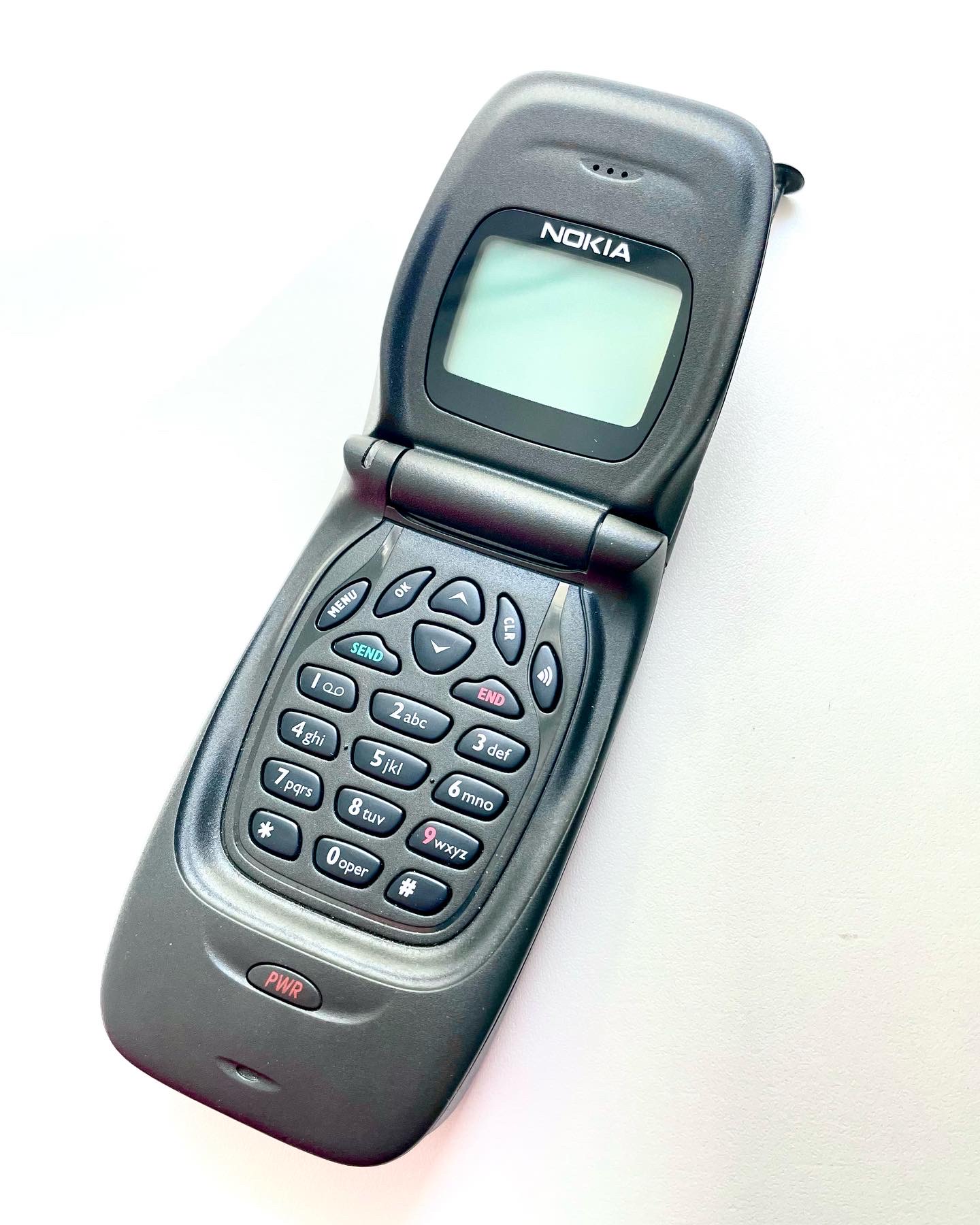
Nokia 282 – The First Style Flip
Quick ViewThe Nokia 282 is the latest example of style from the company that first introduced fashion to the world of cellular phones. And, since good looks are only half the solution, the Nokia 282 also includes all the features and performance that people have come to expect from a Nokia phone.
This lightweight folding phone weighs only 130 g and comes in a range of sophisticated colours, including Brushed Pewter, Ruby Red, Velvet Indigo and Satin Silver. With a standard battery you’ll be able to talk for up to 100 minutes, or leave your phone on standby for up to 24 hours. You can also select from 12 ringing tune, and where carrier supported, you can even assign a special ringing tune to any number which will allow you to easily recognize a VIP caller.
The Nokia 282 has plenty of shortcuts to save you time, including one-touch access to your phone book and voicemail, and even one-touch dialing. And, with the profiles key, it is easy to change your ring settings to fit your environment. When you’re in a meeting, choose the discrete vibrating alert, or if you’re someplace noisy, switch to loud.
-


Nokia 3100
Quick ViewThe Nokia 3100 is a triband-GSM mobile phone announced on 17 June 2003 as an entry-level phone from Nokia and released in September 2003, designed primarily for the newer generation of marketing audience. The Nokia 3100 was developed from the Nokia 6100 as a successor to the Nokia 3510. The phone was Nokia’s first in the youth-oriented 3000-series to be equipped with a 128×128 pixel passive colour display (4096 colors/12-bit), and included Java MIDP 1.0, XHTML and WAP browser, GPRS, Pop-Port connectivity and Lithium-ion battery. It is also capable of playing polyphonic MIDI files, which can be used as ringtones. It is compact in size and lightweight, and also features special lighting effects.
-


Nokia 3100 Orange Gaming
Quick ViewThe Nokia 3100 is a triband-GSM mobile phone announced on 17 June 2003 as an entry-level phone from Nokia and released in September 2003, designed primarily for the newer generation of marketing audience. The Nokia 3100 was developed from the Nokia 6100 as a successor to the Nokia 3510. The phone was Nokia’s first in the youth-oriented 3000-series to be equipped with a 128×128 pixel passive colour display (4096 colors/12-bit), and included Java MIDP 1.0, XHTML and WAP browser, GPRS, Pop-Port connectivity and Lithium-ion battery. It is also capable of playing polyphonic MIDI files, which can be used as ringtones. It is compact in size and lightweight, and also features special lighting effects.
-


Nokia 3100b
Quick ViewThis version intended to be used in American GSM networks. It works in GSM 850/1800/1900.
Differences from the basic 3100:
The Grid (originally the Line), an additional main menu interface in the settings menu TTY/TTD option in Menu > Settings > Enhancement settings that appears only if the phone has been connected to a headset, TTD, or similar device Voice recording during an active call, up to 1 minute World clock that displays the time for various time zones. The Nokia 3100 is a triband-GSM mobile phone announced on 17 June 2003 as an entry-level phone from Nokia and released in September 2003, designed primarily for the newer generation of marketing audience. The Nokia 3100 was developed from the Nokia 6100 as a successor to the Nokia 3510. The phone was Nokia’s first in the youth-oriented 3000-series to be equipped with a 128×128 pixel passive colour display (4096 colors/12-bit), and included Java MIDP 1.0, XHTML and WAP browser, GPRS, Pop-Port connectivity and Lithium-ion battery. It is also capable of playing polyphonic MIDI files, which can be used as ringtones. It is compact in size and lightweight, and also features special lighting effects.