Showing 169–180 of 353 results
-


Nokia 6510
Quick ViewThe Nokia 6510 is a mobile phone launched in the first quarter of 2002. It was an improved version of the Nokia 8310.It featured a higher resolution screen with teal, instead of white, backlit illumination, and blue keypad illumination. It also featured several new applications, such as the electronic wallet, used to store password protected information, and an upgraded calendar. As a business-oriented product, it incorporated a more restrained look, although the covers were interchangeable with the 8310.
-


Nokia 6600
Quick ViewThe Nokia 6600 is a smartphone introduced on June 16, 2003 by Nokia, costing approximately &eur;o;600 when released in October 2003. It was Nokia’s high-end model of the 6xxx Classic Business Series. At the time of release, it was the most advanced product ever launched by Nokia, and it runs on Symbian OS 7.0s (Series 60 2nd Edition). It also featured a VGA camera, a music player and video player, Bluetooth and extended storage by memory card, being the second non-Communicator to do so (after the Nokia 3650). The model is still in use in many parts of the world and has proved to be a durable product. By many users it is considered as the trend setter phone which proved to be a bright milestone for its manufacturer. The phone was intended to replace the popular 6310i as the predominant business class model in the Nokia range. It should not be confused with the newer Nokia 6600 fold, Nokia 6600 slide and Nokia 6600i phones which have little resemblance to the original 6600. A variant of the Nokia 6600 was launched in the U.S. market as the Nokia 6620. During its lifespan, the 6600 sold 150 million units (along with Nokia 1200, Nokia 5230, Samsung E1100), making it one of the most successful phones to date.
-


Nokia 6600 Fold
Quick ViewThere’s no denying that Nokia’s 6600 Fold is eye-catching. Its glossy metal surface and two-tone colouring are bound to stand out on the wall of a mobile phone store amongst the masses of cloned black-plastic handsets. Unlike many flip phones, the Fold is spring loaded and held in place by magnets. On the left side is a ‘one-touch’ opening key that disengages the magnets and flings the top half of the phone upwards. As ridiculous as this sounds there is something genuinely satisfying about answering a call this way.
-


Nokia 6600i Slide
Quick ViewThe Nokia 6600 slide is a mobile phone series by Nokia. It includes the original 6600 slide (released April 2008) and the updated 6600i slide (released May 2009). The phone runs the Series 40 5th edition platform, including Feature Pack 1. This is the slide version of updated Nokia 6600 series.
-


Nokia 6610i
Quick ViewThe Nokia 6610i mobile telephone is an improved version of the Nokia 6610 with a built-in digital camera, launched in 2004. The phone’s internals are taken from the Nokia 7250i, and use the same software, both supporting XHTML. The Nokia 6610i is aimed at business users, while the Nokia 7250i is intended more to be a fashion phone.
-


Nokia 6620 Cingular Edition: Symbian Powerhouse for the US Market
Quick ViewThe Nokia 6620 is a landmark Symbian Series 60 smartphone created specifically for the North American market, at a time when true smartphones were still rare outside Europe. Built in Finland and sold through Cingular Wireless, it delivered real multitasking, third-party application support, Bluetooth connectivity, MMC expansion, and an integrated camera in a compact candybar form. Unlike most Nokia smartphones of the era, the 6620 was never widely distributed in Europe, making original US carrier units exceptionally rare on this side of the Atlantic. More than just a regional variant, it represents a pivotal moment when Finnish smartphone engineering was successfully adapted to American carrier requirements, turning the 6620 into a true crossover classic and a highly desirable collector piece today.
-


Nokia 6630
Quick ViewThe Nokia 6630 is a 3G smartphone announced by Nokia on 14 June 2004 and released in November.It runs on Symbian OS 8.0a (Series 60 2nd Edition FP2). Codenamed Charlie during development, it is an evolution of the 6600 and 6620 smartphones, supporting tri-band GSM (run on lower operating systems). The Nokia 6630 is the first phone ever that allows truly global roaming; previously GSM phones have had near-global coverage except in Japan where 2G phone standards were different. The 6630 automatically uses the W-CDMA network in Japan. Nokia 6650 and 7600 were also able to function in Japan, but they did not support GSM 1900, often needed in the United States and Canada (the Nokia 6651 has the GSM 1900). Nokia says the Nokia 6630 is the first dual-mode, tri-band handset designed to work on 3G (WCDMA), EDGE and 2G networks in eur;ope, Asia and the Americas.
-


Nokia 6650 Fold
Quick ViewThe Nokia 6650 fold (also known as the 6650d) is a Nokia smartphone announced in March 2008, running Symbian OS. It is a Hex-band unit using GSM 850, 900, 1,800, and 1,900 MHz networks and UMTS 850 and 2,100 Mhz networks (WCDMA/ HSDPA). Also noted as a quad-band clamshell 3G smartphone, it was released in June 2008. It was sold through AT&T Mobility in the U.S. It is AT&T’s replacement for the S60-powered N75. It was manufactured in three colors, metallic silver, black, and red. It was never a global model, and therefore it was sold exclusively for T-mobile networks in eur;ope.Models were RM-324 for North America and RM-400 for eur;ope.
-
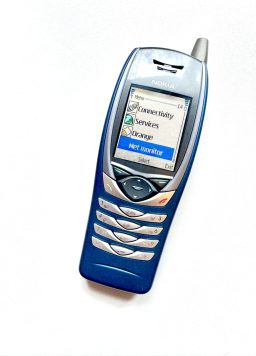
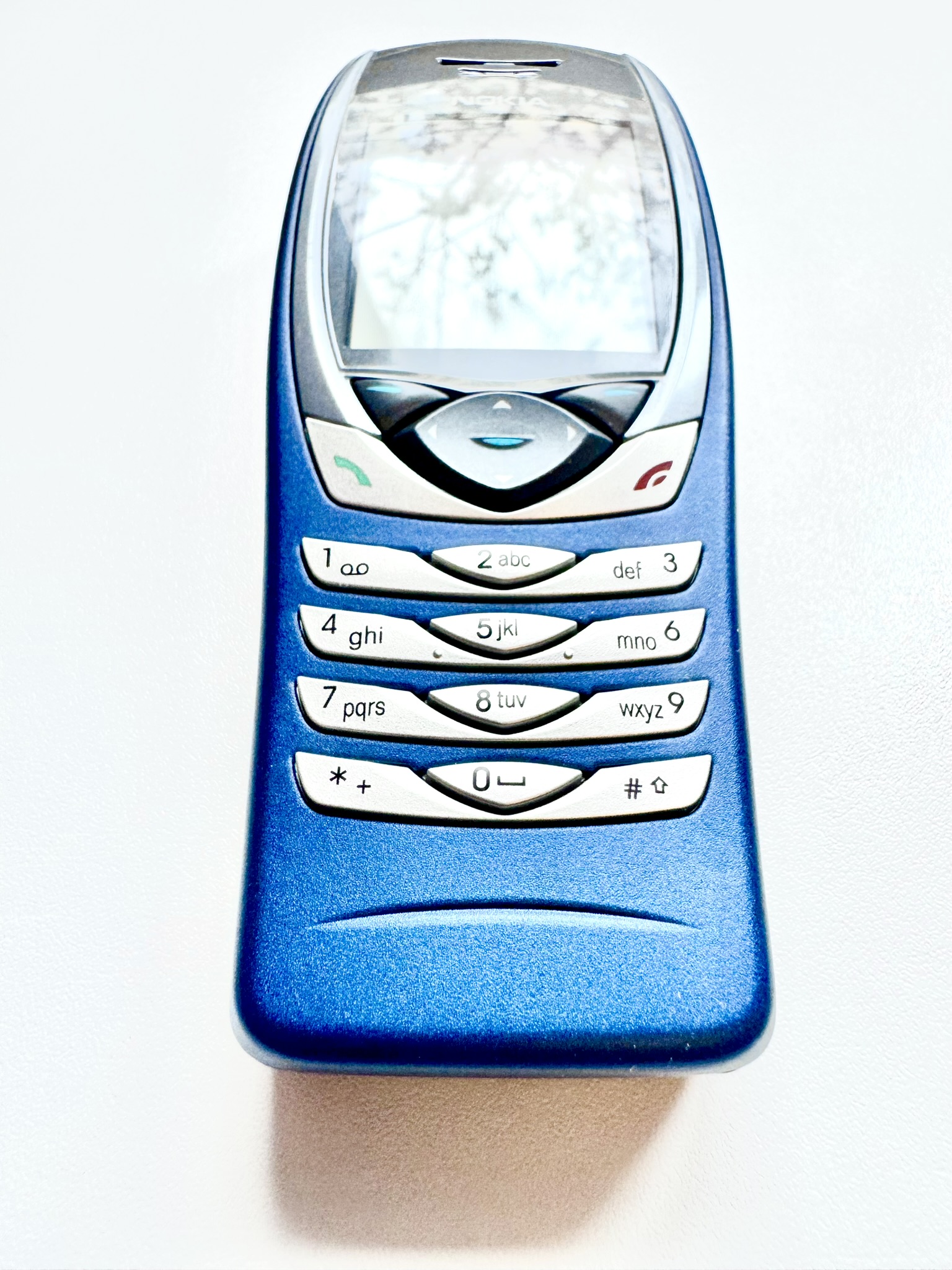
Nokia 6650 Prototype B1 6.2 : The lost first Nokia’s 3G Phone | Unreleased Black and Blue Colour
Quick ViewThe Nokia 6650 Prototype B1 6.2 represents one of the most important and fragile transition moments in Nokia history. This device is not just an early unit, but a full internal engineering prototype that captures the very first attempt to bring 3G technology into a classic Nokia candybar form factor.
An engineering device, not a consumer phone
The rear label clearly identifies this unit as Nokia internal property, explicitly marked PROTO and Made in Finland. The device uses a placeholder model designation XXXX, a standard practice for Nokia engineering hardware that was never approved for commercial sale. Hardware identifiers such as B1.6.2 and HWID 4122 place this unit deep inside Nokia internal testing cycles, well before mass production validation.
These labels were never meant to survive outside Nokia labs. Their presence confirms this phone was used strictly for internal testing, radio validation, and early software integration rather than marketing or carrier trials.
The unreleased early design language
This prototype showcases design elements that never reached the market. The blue front cover was never commercially released, while the black rear housing with its distinctive camera ornament remains completely unique to early prototype builds. When the Nokia 6650 eventually launched, it appeared only in a dark green colorway for both front and back, making this blue and black combination a lost design direction.
The body shape, materials, and external antenna confirm this device as the final Nokia candybar with an external antenna, closing an entire design era.
Early software and version identity
The software screen reveals version Vp1.301 dated 30-09-02, running on platform NHM-1 with PRI P1.1. This places the firmware only days after the official unveiling of the Nokia 6650 on 26 September 2002. The Vp prefix identifies a prototype firmware branch, used internally before public release software was finalized.
This version is not a commercial build and was never distributed outside Nokia engineering teams. It represents an unstable development snapshot used for functional validation rather than end user experience.
The startup warning and the two minute limitation
On boot, the phone displays a rare internal warning message stating that this is a Nokia prototype intended only for testing use, and that the software must be updated by the end of November 2002. This message is exceptionally rare and confirms the temporary nature of the firmware installed on the device.
Additionally, this prototype is restricted to a two minute operational window, a known internal safeguard used by Nokia to prevent prolonged use of unfinished hardware outside controlled environments. This limitation reinforces the fact that this unit was never meant to operate as a normal phone.
Why it truly matters
This prototype is the missing link between Nokias 2G legacy and its first step into the 3G world. It captures an unreleased design, unfinished software, and internal safeguards that almost never survive. More than a phone, it is a frozen engineering moment, documenting how Nokia experimented, tested, and iterated before rewriting its own future.
-


Nokia 6700c
Quick ViewThe Nokia 6700 classic is a mobile phone made by Nokia and successor of the 6300 and 6500 classic. It was announced in January 2009 and arrived on the eur;opean market in June that year. It has a stainless steel body and a chrome-covered keypad. Note that the 6700 classic is quite different from the Nokia 6700 slide, which is based on the higher powered Symbian-based Series 60 operating system.
-


Nokia 6708: Nokia’s Only BenQ-Engineered Touchscreen Anomaly
Quick ViewThe Nokia 6708 (RM-139) is a China-market smartphone released in 2005 during Nokia’s experimental touchscreen era. Unlike any other Nokia device, the 6708 is not built on Nokia’s own S60/S40 architecture – instead, it is based on the BenQ P31, using UIQ 2.1 on Symbian 7.0, a TI OMAP processor, and a stylus-driven 2.7″ resistive touchscreen.
Nokia redesigned the exterior, adjusted the UI elements, and released it exclusively to the Chinese market, where both Nokia and BenQ already had strong local footprints. Because of this limited and unusual partnership, the 6708 never appeared in eur;ope or the US and is extremely rare outside Asia.
With its hybrid DNA – Nokia branding + BenQ internals + UIQ touchscreen – the 6708 stands out as a one-off anomaly in Nokia’s entire catalog and is highly sought after by collectors who focus on prototypes, regional exclusives, and crossover devices.
-


Nokia 6720c
Quick ViewThe Nokia 6720 is a mid-range Symbian OS smartphone released by Nokia. It was unveiled to public in Barcelona and Singapore on February 16, 2009.. It is the successor of the Nokia 6220 classic and features several improvement over its predecessor, such as the addition of A-GPS and noise cancellation. Like the 6220, it offers features comparable to the higher end models, although the Xenon flash previously featured in the 6220 is now replaced by a conventional LED flash.