Showing 1–12 of 14 results
-


B&O 9800
Quick ViewBattery chargers for mobile phones are not the most exciting objects in the world, but Bang & Olufsen have a continual habit of making a virtue out of what others see as ordinary. By combining the battery charger with a specially designed holder, BeoCom 9800 suddenly became a mobile phone that users really wanted others to see!
Weighing less than 100 grams and able to fit snugly in a pocket, the BeoCom 9800 mobile phone was one of the world’s smallest cellular phones when it was introduced, with an equally impressive list of features. Tell it the name of the person you wish to telephone and BeoCom 9800 dialled it. The inclusive BeoCharger combined holder and battery charger in an attractive package.
Features: Caller ID; Call Forward; SMS; Voice Dial; Call Duration; Call Hold; redial function for last 10 numbers; 90 minutes’ battery talk time with 100 hours standby; graphic display; keypad lock; clock; data/fax connection; 100g with standard battery
Accessories: BeoCharger; extra battery; hands-free car kit
-


-
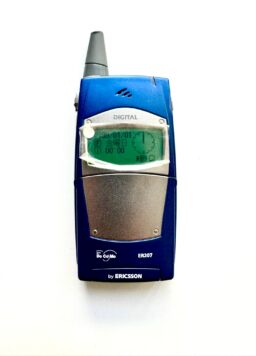
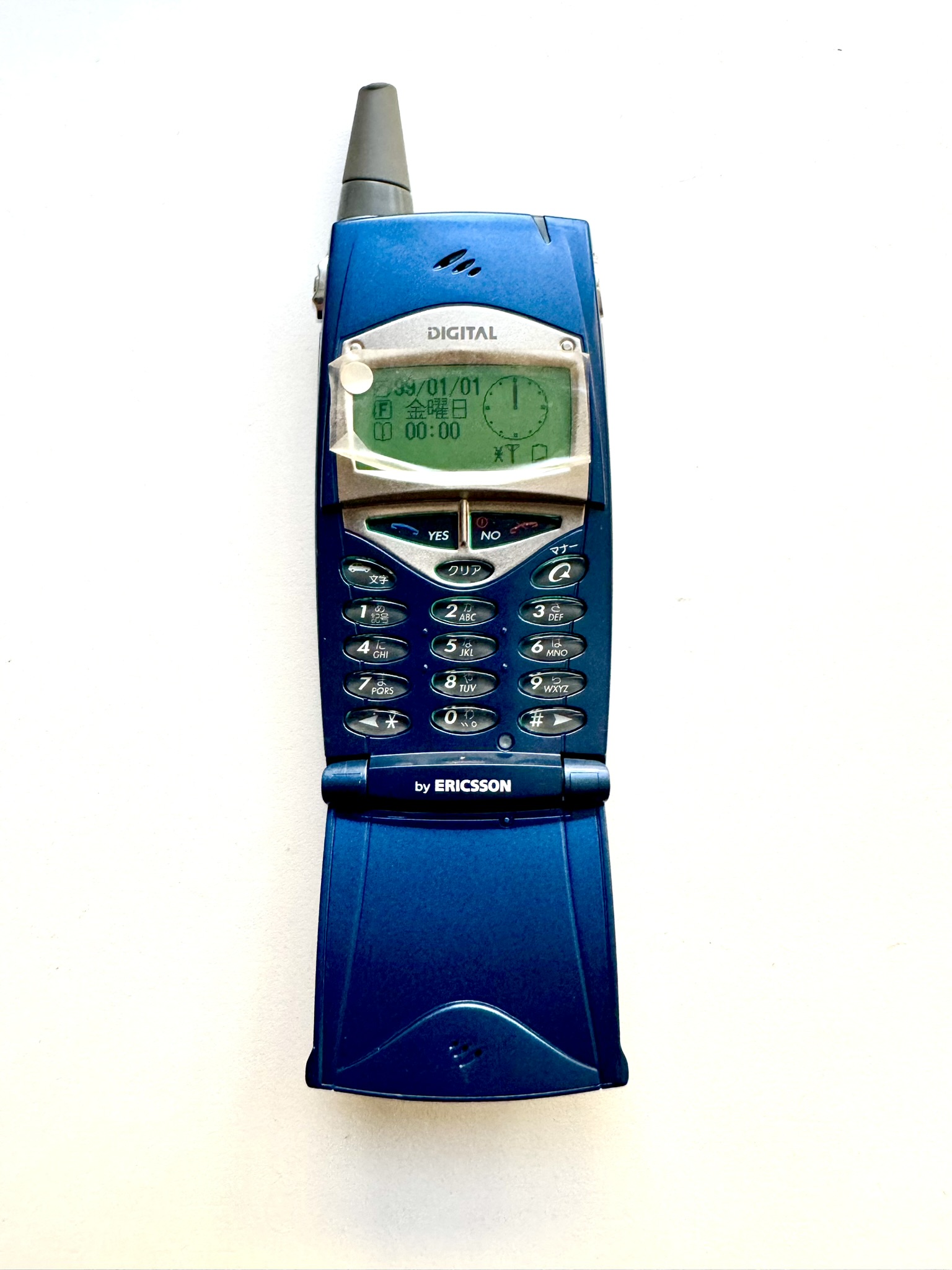
Ericsson ER207 (NTT DoCoMo): Ultra-Rare Japan-Only Release
Quick ViewA remarkable and extremely rare Japan-exclusive Ericsson ER207, produced in August 1999 for NTT DoCoMo’s PDC network. This model was never sold internationally and represents Ericsson’s transitional era when the company tailored unique hardware specifically for the Japanese market – often completely different from their global product line.
The ER207 embodies classic late-90s Japanese mobile design: compact, angular, antenna-based and featuring the distinctive “DIGITAL” logo across the display window. Unlike mainstream Ericsson models of the same era, the ER207 employed Japan’s proprietary PDC 800/1500 MHz system, resulting in a device architecture not compatible with GSM and making it fundamentally different from eur;opean Ericsson phones. Unit is accompanied by original accessories, including the Japan-style hand strap, a collectible piece of its own that reflects the cultural design philosophy of late-90s Japanese phones, where personalization and wearable portability were key features. This makes the device not just rare – but historically significant as part of the very limited Ericsson-DoCoMo collaboration portfolio.
-


Nokia 3210 – The Youth Icon
Quick ViewThe Nokia 3210 is one of the most important mobile phones ever made, a device that redefined the industry and introduced a new era of mobile culture. Released in 1999, it was the first Nokia phone designed specifically for young users, with a focus on style, entertainment, and ease of use. It introduced T9 predictive text, internal antenna design, customizable Xpress-On covers, and three built-in games that helped shape mobile entertainment.
The 3210 is historically important as the first widely produced Nokia with a true internal antenna, a major step that defined the design of every Nokia released afterward. This engineering milestone allowed Nokia to eliminate the external antenna stub while maintaining strong GSM reception, setting a new standard for mobile phone design across the entire industry.
This BNIB unit represents the 3210 at its absolute best. With its lightweight form, strong reception, long battery life, and classic Nokia durability, the 3210 became a global phenomenon, selling around 160 million units worldwide. Its internal antenna was a major engineering achievement, eliminating the need for external protruding parts and contributing to its clean, modern look.
Customizable covers made the 3210 a fashion statement. The included green Xpress-On cover is a less common variant that adds even more collector value to this unit. Because the 3210 was heavily used by millions of people for years, finding a new-in-box example is extremely rare, and such units are now considered valuable pieces of mobile history.
The Nokia 3210 remains a cultural icon and a milestone in Nokia’s development. This BNIB example is a perfect representation of one of the most influential handsets ever produced and a standout addition to any serious mobile phone collection.
-


Nokia 8210
Quick ViewAt the time, it was the smallest, lightest Nokia mobile phone on the market,thus its selling point was based on its design and customization, with removable Xpress-on covers
-

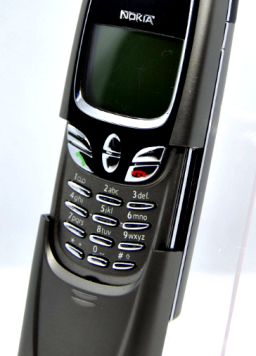
Nokia 8850
Quick ViewThe Nokia 8850 is a mobile phone handset manufactured by Nokia. It was a light alloy-bodied enhanced version of Nokia 8210 model with slider protection of the keypad and white lighting of the keypad and screen. The 8850 is considered to be an un-repairable phone, thus resulting in very few active handsets in the market.It was introduced as a successor of an earlier model, the chrome phone Nokia 8810. It was succeeded by the Nokia 8910, which was released in 2002.
-
Nokia 8850 Gold
Quick ViewThe Nokia 8850 is a mobile phone handset manufactured by Nokia. It was a light alloy-bodied enhanced version of Nokia 8210 model with slider protection of the keypad and white lighting of the keypad and screen. The 8850 is considered to be an un-repairable phone, thus resulting in very few active handsets in the market.It was introduced as a successor of an earlier model, the chrome phone Nokia 8810. It was succeeded by the Nokia 8910, which was released in 2002.
-


-


Siemens SL10 D
Quick ViewThe?Siemens SL10?is a sliding?mobile phone?with a four-color?screen?(red, green, blue, and white). It was the second mobile phone with a multicolor screen after the Siemens S10 and the first sliding?mobile phone


