Showing all 12 results
-
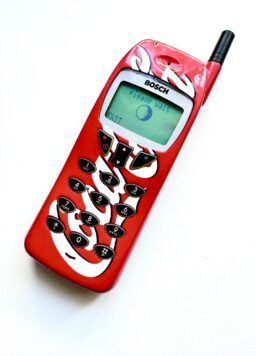
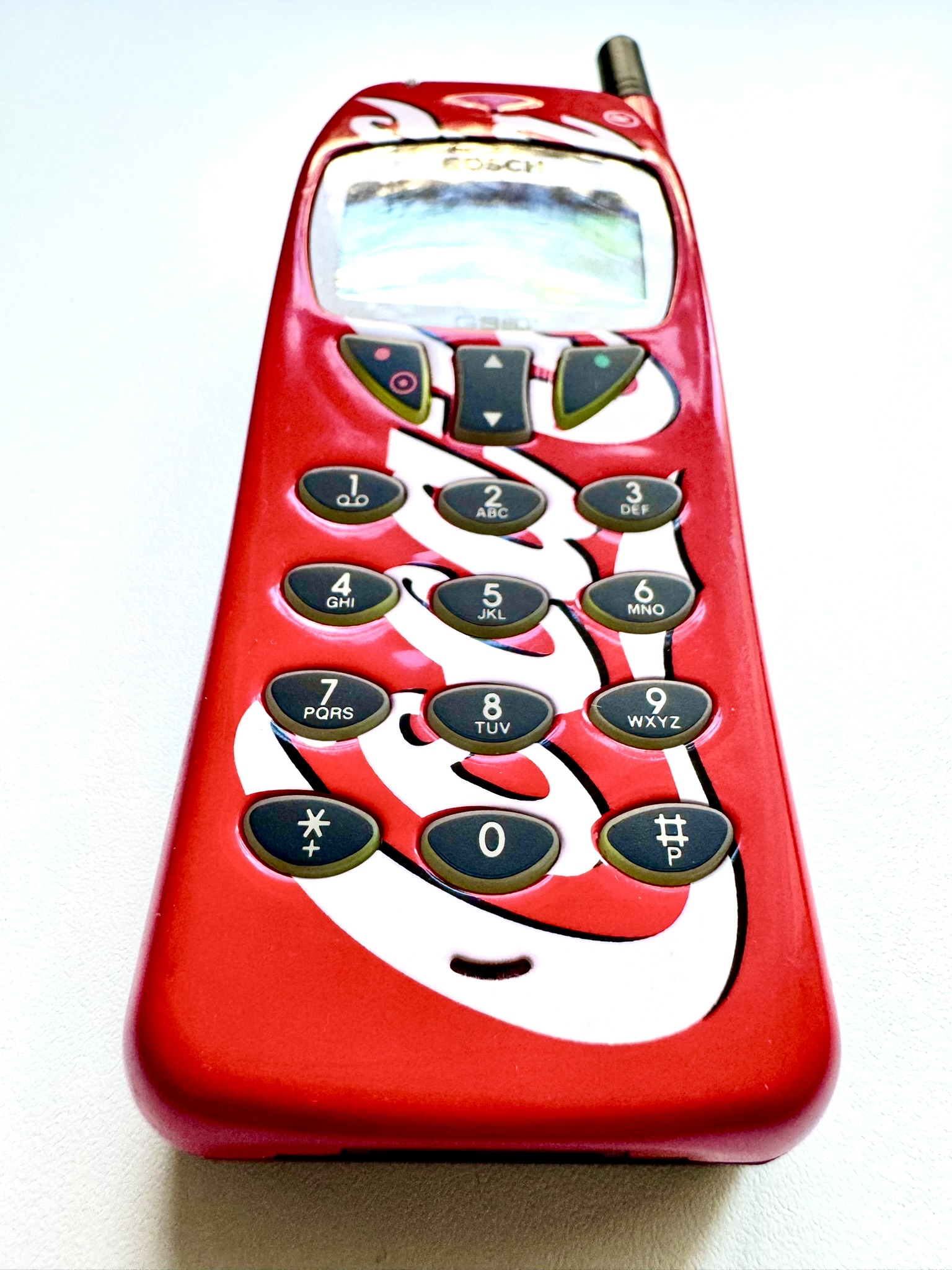
Bosch 608 | Coca Cola Edition
Quick ViewBosch 608 Coca-Cola Edition – A Taste of the ’90s
When mobile phones had personality and brand collaborations were something truly special, the Bosch 608 Coca-Cola Edition stood out as an unusual combination of mobile technology and pop culture.
Bringing together Bosch’s unmistakable late-1990s mobile phone design and Coca-Cola’s iconic branding, this special edition captures an era when mobile phones were becoming more than communication devices – they were also a way to express individuality.
Today, this unit represents a fascinating piece of mobile phone nostalgia, where two completely different worlds came together to create something memorable.
Not just a mobile phone. A little piece of ’90s pop culture.
-


Bosch 908
Quick ViewClap phone from Bosch back in 1998. It had a real analog modem inside for communication
-


Hagenuk F10 Ferrari Edition – Giallo Modena
Quick ViewThis special Ferrari edition where only given to people who bought a Ferrari back in the day. The phone operates on GSM 900MHz.
-
Hagenuk F10 Ferrari Edition – Rosso Corsa
Quick ViewThis special Ferrari edition where only given to people who bought a Ferrari back in the day. The phone operates on GSM 900MHz.
-


Motorola StarTAC 130: The Business Clip-On Set
Quick ViewThe Motorola StarTAC 130 represents the mature evolution of the most iconic clamshell mobile phone line ever created. Released in the late 1990s, the StarTAC 130 refined the GSM performance, stability, and usability of earlier models while preserving the legendary compact flip design that made the StarTAC the most influential mobile phone of its era. As one of the most widely used business phones of its time, the 130 became a symbol of professional mobility during the transition into the digital GSM age.
This unit is in excellent preserved condition and remains fully functional, a rarity considering that most StarTAC 130 devices were used heavily throughout their service life. The phone retains the clean lines, compact proportions, curved upper housing, responsive keypad, and trademark Motorola RF performance that define the late generation StarTAC experience.
What elevates this set far beyond the typical StarTAC 130 is the inclusion of an extremely rare BNIB Motorola Clip-On Organizer. This accessory was produced in small numbers and marketed mainly toward corporate users. It clipped directly onto the phone, offering storage for small notes, papers, and business cards, while giving the device a more professional, utility oriented profile. These organizers were rarely kept, often cracked or discarded, and almost never preserved in unused condition. Finding one BNIB is exceptionally uncommon, and having it paired with a clean StarTAC 130 makes this configuration significantly more collectible.
The Clip-On Organizer was part of Motorola’s push to position the StarTAC line as a full business mobility solution. While leather pouches and holsters were common accessories, the organizer was different: it was designed to integrate directly with the phone using the same rear mounting system as extended batteries. Its rigid construction, matte business finish, and direct clip mechanism made it a unique product that combined phone protection with practical office functionality. This accessory adds strong historical authenticity to the set, reflecting how professionals equipped their devices during the height of the StarTAC era.
From a technical perspective, the StarTAC 130 introduced later generation internal improvements compared to earlier models such as the 70 and 85. These refinements included improved PCB grounding, more stable GSM 900 and 1800 radio stages, better power management, reinforced internal structures around high stress points, and a more durable keypad dome sheet. These upgrades made the 130 one of the most reliable and consistent StarTAC models ever produced.
As part of the StarTAC lineage, the 130 carries the heritage of the original 1996 StarTAC, the first true clamshell phone in mobile history. The upward folding flip mechanism, compact size, slim antenna, and minimalist industrial design reshaped the mobile world and sold more than 60 million units globally. Even decades later, the StarTAC remains one of the most recognizable and culturally significant mobile phones ever built.
For collectors, this StarTAC 130 paired with a BNIB Clip-On Organizer stands out as a rare and highly desirable configuration. The phone delivers the mature, stable hardware platform of the late StarTAC generation, while the unused organizer provides an accessory that is rarely found intact, let alone in original packaging. Together they form a complete, historically accurate business set from Motorola’s peak period of design and engineering.
This StarTAC 130 – The Business Organizer Set is not just a preserved phone, but a fully authentic snapshot of professional mobile equipment from the late 1990s. It is a valuable and uncommon piece of Motorola history and a distinguished addition to any serious vintage mobile collection.
-

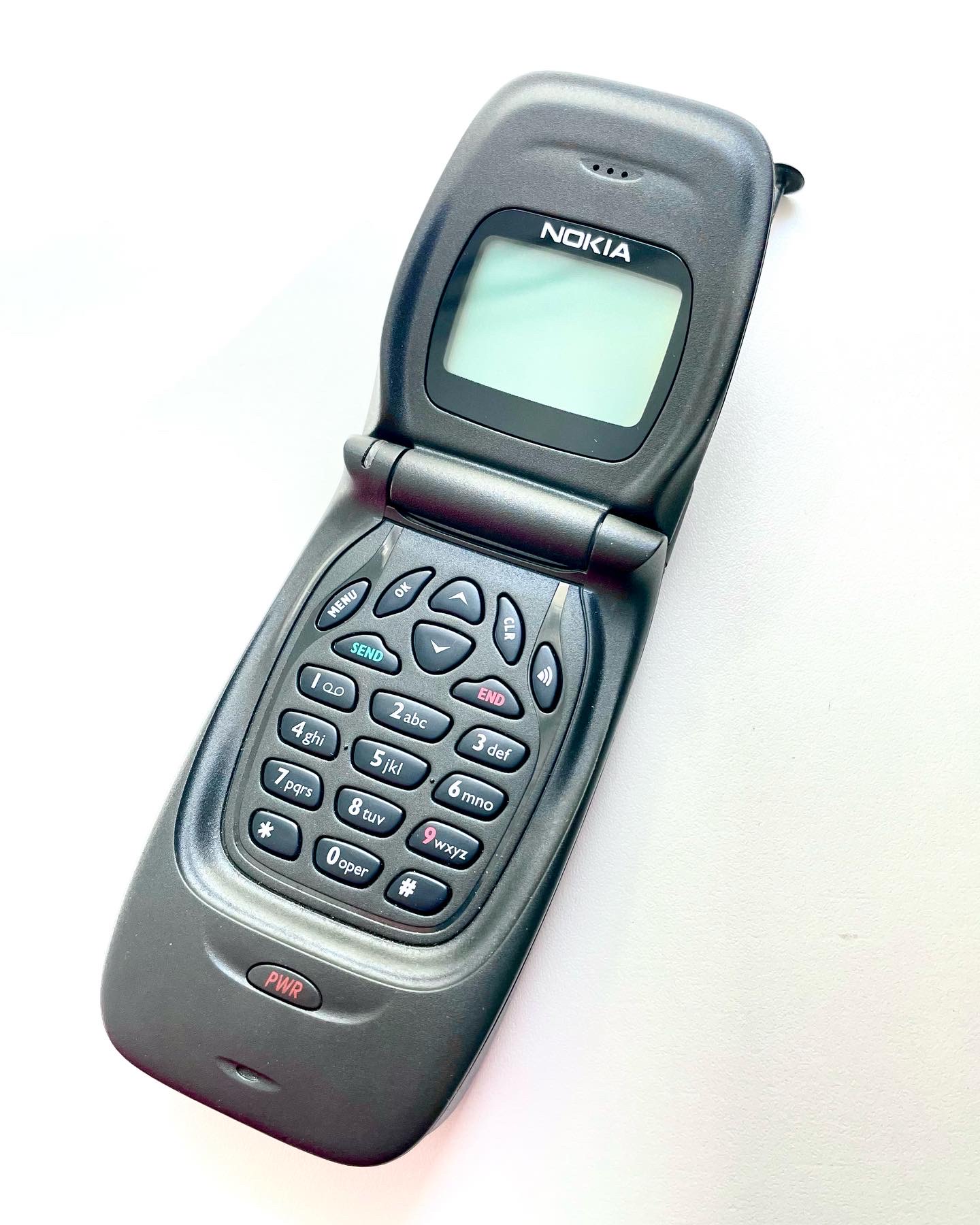
Nokia 282 – The First Style Flip
Quick ViewThe Nokia 282 is the latest example of style from the company that first introduced fashion to the world of cellular phones. And, since good looks are only half the solution, the Nokia 282 also includes all the features and performance that people have come to expect from a Nokia phone.
This lightweight folding phone weighs only 130 g and comes in a range of sophisticated colours, including Brushed Pewter, Ruby Red, Velvet Indigo and Satin Silver. With a standard battery you’ll be able to talk for up to 100 minutes, or leave your phone on standby for up to 24 hours. You can also select from 12 ringing tune, and where carrier supported, you can even assign a special ringing tune to any number which will allow you to easily recognize a VIP caller.
The Nokia 282 has plenty of shortcuts to save you time, including one-touch access to your phone book and voicemail, and even one-touch dialing. And, with the profiles key, it is easy to change your ring settings to fit your environment. When you’re in a meeting, choose the discrete vibrating alert, or if you’re someplace noisy, switch to loud.
-


Nokia 3110
Quick ViewThe 3110 is a GSM mobile phone handset manufactured by Nokia in Hungary, introduced at CEBIT in March 1997.The 3110 is notable as the first Nokia handset to feature the ‘Navi-Key’ (a.k.a. D-Pad) menu navigation system. The Navi-Key was featured heavily on Nokia handsets, especially the entry-level models such as the Nokia 1100 in the following years. Unlike its successor, the 3210, and subsequent handsets of similar design, the 3110 had an external antenna. The phone was available with a slim, standard or vibrating battery. It could only be used on a GSM-900 network. The 3110 shared the platform and accessories of the Nokia 8110 “banana phone”. The model number was reused by Nokia in 2007 when the company launched the Nokia 3110 classic. The 3110 Classic sports a candybar form factor similar to that of the 3110, but adds modern features such as Bluetooth, camera functionality, audio and video playback and recording, and packet data over EDGE, in addition to tri-band functionality. Unlike subsequent 3000 series mobile phones, its display is not PCD8544 based. This is a special edition made for VW AG, it has red light and LI ION battery
-


Nokia 3110 Blue VW Edition
Quick ViewThe 3110 is a GSM mobile phone handset manufactured by Nokia in Hungary, introduced at CEBIT in March 1997.The 3110 is notable as the first Nokia handset to feature the ‘Navi-Key’ (a.k.a. D-Pad) menu navigation system. The Navi-Key was featured heavily on Nokia handsets, especially the entry-level models such as the Nokia 1100 in the following years. Unlike its successor, the 3210, and subsequent handsets of similar design, the 3110 had an external antenna. The phone was available with a slim, standard or vibrating battery. It could only be used on a GSM-900 network. The 3110 shared the platform and accessories of the Nokia 8110 “banana phone”. The model number was reused by Nokia in 2007 when the company launched the Nokia 3110 classic. The 3110 Classic sports a candybar form factor similar to that of the 3110, but adds modern features such as Bluetooth, camera functionality, audio and video playback and recording, and packet data over EDGE, in addition to tri-band functionality. Unlike subsequent 3000 series mobile phones, its display is not PCD8544 based. This is a special edition made for VW AG, it has red light and LI ION battery
-


Nokia 3110 Orange
Quick ViewThe 3110 is a GSM mobile phone handset manufactured by Nokia in Hungary, introduced at CEBIT in March 1997.The 3110 is notable as the first Nokia handset to feature the ‘Navi-Key’ (a.k.a. D-Pad) menu navigation system. The Navi-Key was featured heavily on Nokia handsets, especially the entry-level models such as the Nokia 1100 in the following years. Unlike its successor, the 3210, and subsequent handsets of similar design, the 3110 had an external antenna. The phone was available with a slim, standard or vibrating battery. It could only be used on a GSM-900 network. The 3110 shared the platform and accessories of the Nokia 8110 “banana phone”. The model number was reused by Nokia in 2007 when the company launched the Nokia 3110 classic. The 3110 Classic sports a candybar form factor similar to that of the 3110, but adds modern features such as Bluetooth, camera functionality, audio and video playback and recording, and packet data over EDGE, in addition to tri-band functionality. Unlike subsequent 3000 series mobile phones, its display is not PCD8544 based. This is a special edition made for VW AG, it has red light and LI ION battery
-


Nokia 3810: The Lost Asian Shadow of the 3110
Quick ViewNokia 3810 is one of the most obscure and region-locked handsets Nokia ever released, a model that at first sight looks like a Nokia 3110 from the late 90s, but in reality is a completely different device built specifically for the Southeast Asian market. Created around late 1998 to early 1999 for operators like Globe Telecom in the Philippines and Singtel in Singapore, it was never part of Nokia’s global roadmap and never appeared in eur;opean or American catalogs.
Internally, the 3810 belongs to the extended NHE-8A platform, a rare fork of the 3110 architecture that Nokia used only for operator-specific customizations. Unlike typical localized firmware builds, this model has a modified PCB layout, different RF filters, region-specific power amplifiers, and firmware adjusted for hot and congested GSM-900 networks in Asia. The firmware also contains unique operator menus, a different startup behavior, and a SIM Toolkit implementation that the original 3110 did not have.
Visually, the 3810 shares the silhouette of the 3110, but key differences immediately confirm it as its own device. It has a redesigned navigation cluster, different soft keys, a unique lower mask, and a housing made from a thicker, more rubberized plastic type. These material changes were intentional, allowing the phone to survive the high humidity and heat typical of Southeast Asia. The keypad layout is also subtly different, confirming that this is not a housing replacement but a dedicated mold used only for this variant.
The 3810 was priced below the 5110 and slightly below the original 3110 in the APAC region, typically selling around PHP 7000 to 9000, often bundled with prepaid or SIM activation packages. Because Nokia kept production extremely limited and distributed the model only through operator channels, most units were used heavily and eventually scrapped. Almost none were exported, and very few examples have survived in clean or working condition. Today it stands as one of the rarest late 90s Nokias, more elusive than many prototypes, and almost never seen in Western collections.
The unit presented here is a remarkable surviving example, displaying Globe firmware on boot and all the unique hardware traits of the genuine 3810 platform. More than just a variant, it represents a hidden branch of Nokia history, a fully official model that Nokia itself barely acknowledged and one that existed only because regional operators demanded a slightly more modern, network-optimized alternative to the aging 3110. Devices like this highlight how complex Nokia’s APAC strategy truly was and why some of the rarest Nokias were never sold outside their home markets.
-


Nokia Ringo 3
Quick ViewThe Nokia rinGo was designed to be easy to use straight out of the box and was cheap to buy, due to special mobile carrier tariffs.[An ETACS version of the rinGo with minor design changes was launched in 1997 in the United Kingdom and Austria. It was the UK’s first pay as you go Nokia handset through Vodafone’s pay as you talk package. It was also sold in Thailand under the name Wave900. In press releases it was also called a ‘concept’, a way of easily buying and using a mobile phone without operator registration. Nokia unusually created a unique “rinGo” brand and logo for it. ater in October 1998 a third (NHX-7) model was released for ETACS in Italy and Spain (the latter via operator Moviline). It featured the “Navi-key” like on the GSM Nokia 3110 and Nokia 5110 and had its top antenna positioned in the middle. Nokia rinGo 3 The phones have the capacity to store about 60 contacts. Calculator, Watch and Calendar were pre installed on the handset.
Nokia marketed original rinGo targeting women and children. However it gained a negative reputation and in Sweden earned the nickname “bimbo phone”, leading to low sales.Interest and popularity of the rinGo quickly faded and it has been largely forgotten since.
-


Siemens C10D
Quick ViewThe Siemens C10 is a mobile phone made by Siemens in December 1997. The phone was available in four colours: Blue, yellow, red and grey. The C10 had a green backlit display capable of showing three lines. It weighed 165 g with battery and 117 g without.