

">

Showing all 11 results
-
Ericsson Futaba | Unreleased Prototype
Quick View💎 Rarity Index: X (Mystical Prototype)
👁 Evaluation in my collection: BNIB – 10/10
⏱ Life timer: 0m | 📦 Boxed: NO
📅 Release Year: 2000 | 💰 Release Price: N/A
📊 Units Sold: 0
📰 Why this phone matters: Ericsson A2618 offers WAP and SMS technology, it becomes the fourth Ericsson mobile phone with WAP function (the other belongs to MC218, R320 and R380).Based on a new platform ‘Michelle’, it features a sensuous “S-curve” design and contains the latest developments in software and functionality.
The address book could store up to 100 telephone numbers and associated names in the phone’s memory with voice activated dialling and short cut keypad dialling for the first 9 entries. The call lists recorded the last 20 dialled, answered or missed calls.
The A2618s included time and date functions, an alarm clock, a stop watch, call timers and basic function calculator. It could also send and receive SMS text messages and allowed levels of personalisation by selecting from a range of pre-loaded ring tone melodies, by composing your own ring tone and by changing the external covers.
Three games were also provided on the phone, Tetris, Erix and E-Maze. Finally, limited Internet access was provided to mobile services using the Wireless Application Protocol (WAP) over an SMS bearer.
📝 Reviews when released: Ericssoners 🔗
-
Ericsson Futaba | Unreleased Prototype
Quick View📦 Collector-to-Collector Transaction
This item is from a private collection and sold as-is for collectors only. All devices have been verified for authenticity and condition as described, but no warranty or guarantee is provided. This is a private sale between individuals and not a commercial business transaction.
💎 Rarity Index: X (Mystical Prototype)
👁 Evaluation: BNIB – 10/10
⏱ Life timer: 0m 📦 Boxed: NO
📰 About this collectible: Ericsson A2618 offers WAP and SMS technology, it becomes the fourth Ericsson mobile phone with WAP function (the other belongs to MC218, R320 and R380).Based on a new platform ‘Michelle’, it features a sensuous “S-curve” design and contains the latest developments in software and functionality.
The address book could store up to 100 telephone numbers and associated names in the phone’s memory with voice activated dialling and short cut keypad dialling for the first 9 entries. The call lists recorded the last 20 dialled, answered or missed calls.
The A2618s included time and date functions, an alarm clock, a stop watch, call timers and basic function calculator. It could also send and receive SMS text messages and allowed levels of personalisation by selecting from a range of pre-loaded ring tone melodies, by composing your own ring tone and by changing the external covers.
Three games were also provided on the phone, Tetris, Erix and E-Maze. Finally, limited Internet access was provided to mobile services using the Wireless Application Protocol (WAP) over an SMS bearer.
✓ Verification Checklist
Authenticity & Condition:
– Originality verification (exterior, labels)
– Matching IMEI (box, label, motherboard)
– Physical condition assessment (scratches, cracks, screws)Functional Testing:
– Powers on
– Display functionality
– Camera (when applicable)
– Vibration mechanism (when applicable)
– Security code
– Charging
– Network connectivity
– Call functionality including speaker (non-BNIB units on European networks)Additional specific tests available upon request.
-
Ericsson Futaba | Unreleased Prototype
Quick View📦 Collector-to-Collector Transaction
This item is from a private collection and sold as-is for collectors only. All devices have been verified for authenticity and condition as described, but no warranty or guarantee is provided. This is a private sale between individuals and not a commercial business transaction.
💎 Rarity Index: X (Mystical Prototype)
👁 Evaluation: BNIB – 10/10
⏱ Life timer: 0m 📦 Boxed: NO
📰 About this collectible: Ericsson A2618 offers WAP and SMS technology, it becomes the fourth Ericsson mobile phone with WAP function (the other belongs to MC218, R320 and R380).Based on a new platform ‘Michelle’, it features a sensuous “S-curve” design and contains the latest developments in software and functionality.
The address book could store up to 100 telephone numbers and associated names in the phone’s memory with voice activated dialling and short cut keypad dialling for the first 9 entries. The call lists recorded the last 20 dialled, answered or missed calls.
The A2618s included time and date functions, an alarm clock, a stop watch, call timers and basic function calculator. It could also send and receive SMS text messages and allowed levels of personalisation by selecting from a range of pre-loaded ring tone melodies, by composing your own ring tone and by changing the external covers.
Three games were also provided on the phone, Tetris, Erix and E-Maze. Finally, limited Internet access was provided to mobile services using the Wireless Application Protocol (WAP) over an SMS bearer.
✓ Verification Checklist
Authenticity & Condition:
– Originality verification (exterior, labels)
– Matching IMEI (box, label, motherboard)
– Physical condition assessment (scratches, cracks, screws)Functional Testing:
– Powers on
– Display functionality
– Camera (when applicable)
– Vibration mechanism (when applicable)
– Security code
– Charging
– Network connectivity
– Call functionality including speaker (non-BNIB units on European networks)Additional specific tests available upon request.
-
Motorola Aura R1 Diamond: The Motorola Crownpiece
Quick View💎 Rarity Index: S (Ultra Rare)
⭐ WOW Factor: A fully mechanical, diamond-framed phone with exposed gears and sapphire glass, the Motorola AURA Diamond is less a handset and more a wearable piece of moving luxury engineering.
👁 Evaluation in my collection: Great – 9/10
⏱ Life timer: N/A | 📦 Boxed: NO
📅 Release Year: 2009 | 💰 Release Price: ~5000$
📊 Units Sold: ~20k
📰 Why this phone matters: The Motorola AURA Diamond represents one of the most uncompromising luxury phones ever created, conceived at the intersection of mobile technology and mechanical watchmaking during the final years of the feature phone era. Evolving from the original AURA concept, the Diamond edition elevates the design through a bezel set with real diamonds, framing a circular sapphire crystal display and immediately setting the device apart from anything produced for the mass market. Beneath the sapphire, a fully exposed mechanical gear system is visible at all times, allowing the user to observe the precision components in motion whenever the phone is rotated open or closed, transforming a simple interaction into a deliberate mechanical experience.The chassis is crafted from stainless steel with a combination of polished and brushed finishes, while the rear panel features a finely textured metal surface that emphasizes durability and craftsmanship over decorative excess. A gold-accented central navigation wheel anchors the keypad and reinforces the watch-inspired design language, complemented by precisely machined screws and engraved internal components visible during disassembly. Unlike conventional sliding or clamshell phones, the AURA Diamond uses a smooth rotating opening mechanism engineered to withstand thousands of cycles, echoing the construction standards of high-end timepieces rather than consumer electronics.
Produced in extremely limited numbers and sold through select luxury channels, the AURA Diamond was never intended to compete on specifications or software features. Instead, it was designed as a statement object, prioritizing materials, mechanical precision, and exclusivity above all else. Its high launch price, limited availability, and unconventional engineering ensured that few were ever sold, and even fewer survive today in complete and original condition. As a result, the Motorola AURA Diamond stands as a rare artifact from a moment when mobile phones briefly crossed into the realm of mechanical art, making it a true collector-grade icon of luxury mobile design.
📝 Reviews when released: Cnet.Com 🔗
-
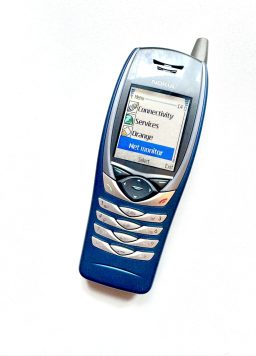
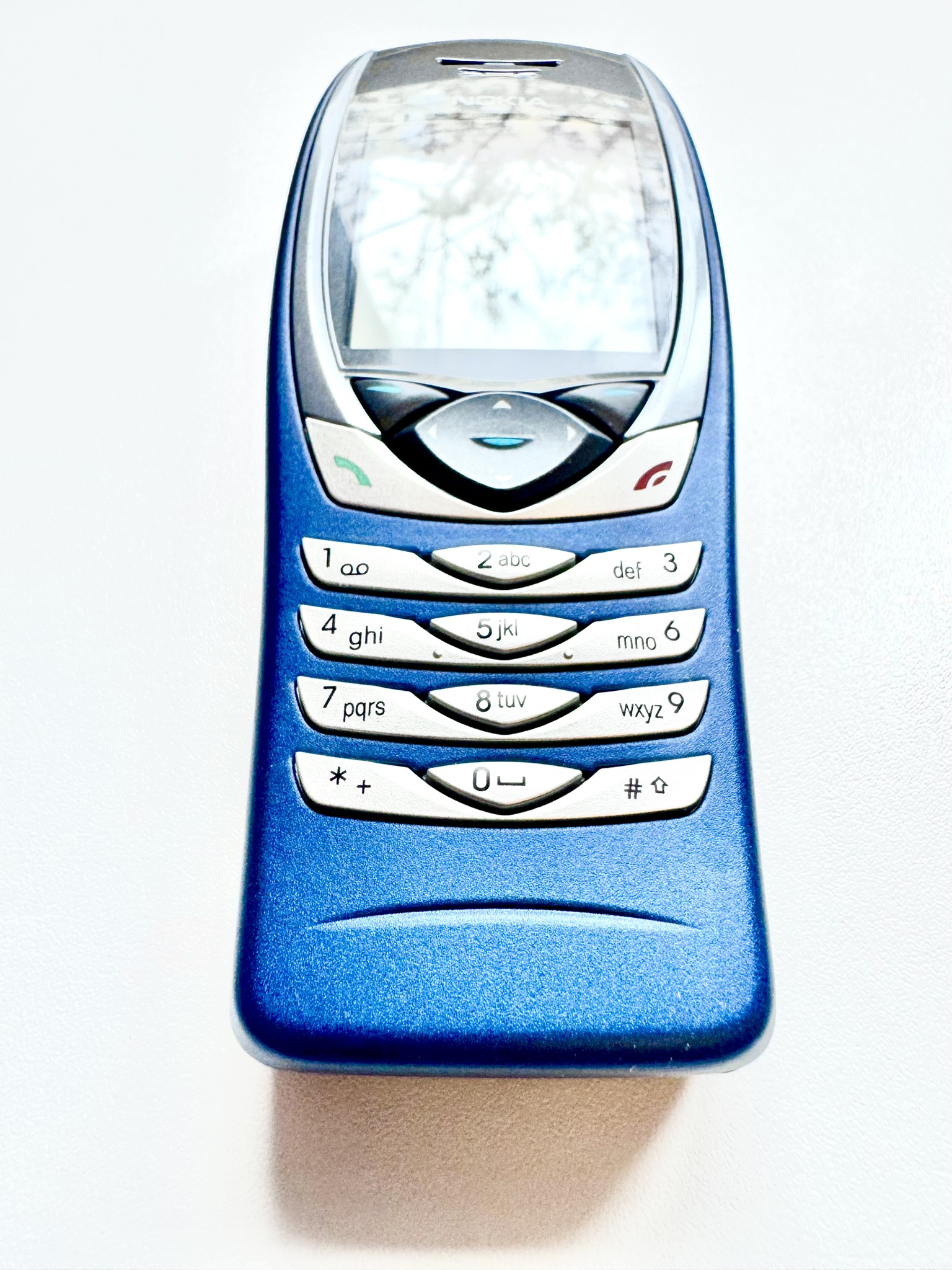
Nokia 6650 Prototype B1 6.2 : The lost first Nokia’s 3G Phone | Unreleased Black and Blue Colour
Quick View💎 Rarity Index: X (Mystical Prototype)
⭐ WOW Factor: The first Nokia 3G phone
👁 Evaluation in my collection: Good – 8.5/10
🕵 Nokia Codename: Kenny
⏱ Life timer: 2m | 📦 Boxed: NO
📅 Release Year: 2002 | 💰 Release Price: N/A
📊 Units Sold: 100k (final units)
📰 Why this phone matters: The Nokia 6650 Prototype B1 6.2 represents one of the most important and fragile transition moments in Nokia history. This device is not just an early unit, but a full internal engineering prototype that captures the very first attempt to bring 3G technology into a classic Nokia candybar form factor.An engineering device, not a consumer phone
The rear label clearly identifies this unit as Nokia internal property, explicitly marked PROTO and Made in Finland. The device uses a placeholder model designation XXXX, a standard practice for Nokia engineering hardware that was never approved for commercial sale. Hardware identifiers such as B1.6.2 and HWID 4122 place this unit deep inside Nokia internal testing cycles, well before mass production validation.
These labels were never meant to survive outside Nokia labs. Their presence confirms this phone was used strictly for internal testing, radio validation, and early software integration rather than marketing or carrier trials.
The unreleased early design language
This prototype showcases design elements that never reached the market. The blue front cover was never commercially released, while the black rear housing with its distinctive camera ornament remains completely unique to early prototype builds. When the Nokia 6650 eventually launched, it appeared only in a dark green colorway for both front and back, making this blue and black combination a lost design direction.
The body shape, materials, and external antenna confirm this device as the final Nokia candybar with an external antenna, closing an entire design era.
Early software and version identity
The software screen reveals version Vp1.301 dated 30-09-02, running on platform NHM-1 with PRI P1.1. This places the firmware only days after the official unveiling of the Nokia 6650 on 26 September 2002. The Vp prefix identifies a prototype firmware branch, used internally before public release software was finalized.
This version is not a commercial build and was never distributed outside Nokia engineering teams. It represents an unstable development snapshot used for functional validation rather than end user experience.
The startup warning and the two minute limitation
On boot, the phone displays a rare internal warning message stating that this is a Nokia prototype intended only for testing use, and that the software must be updated by the end of November 2002. This message is exceptionally rare and confirms the temporary nature of the firmware installed on the device.
Additionally, this prototype is restricted to a two minute operational window, a known internal safeguard used by Nokia to prevent prolonged use of unfinished hardware outside controlled environments. This limitation reinforces the fact that this unit was never meant to operate as a normal phone.
Why it truly matters
This prototype is the missing link between Nokias 2G legacy and its first step into the 3G world. It captures an unreleased design, unfinished software, and internal safeguards that almost never survive. More than a phone, it is a frozen engineering moment, documenting how Nokia experimented, tested, and iterated before rewriting its own future.
📝 Reviews when released: N/A 💔
-
Nokia N71 Prototype F5.0 | Unreleased white and purple colour
Quick View💎 Rarity Index: X (Mystical Prototype)
⭐ WOW Factor: The first Nokia joint-first clamshell smartphone
👁 Evaluation in my collection: Great – 9.5/10
🕵 Nokia Codename: Isetta
⏱ Life timer: 0m | 📦 Boxed: NO
📅 Release Year: 2005 | 💰 Release Price: ~400 €
📊 Units Sold: ~500k (final units)
📰 Why this phone matters: The Nokia N71 is a smartphone announced by Nokia on November 2, 2005 and released in June 2006. It was Nokia’s joint-first clamshell smartphone, like the N92 announced on the same day. The N71 runs on Symbian OS v9.1 (S60 3rd Edition).📝 Reviews when released: Mobile Review 🔗
-


Nokia N91 4GB
Quick View💎 Rarity Index: B (Uncommon)
⭐ WOW Factor: The first ever phone encompassing a 4 GB internal hard drive allowing storage for 3.000 songs (the 8 GB revision came later), Tthe first Nokia phone to run on Symbian 9.1.
👁 Evaluation in my collection: Great – 9.5/10
🕵 Nokia Codename: Thunder
⏱ Life timer: 188h | 📦 Boxed: NO
📅 Release Year: 2007 | 💰 Release Price: ~700 $
📊 Units Sold: ~400k
📰 Why this phone matters: The Nokia N91 is a smartphone produced by Nokia as part of their Nseries line of portable devices. It was announced on April 27, 2005 along with N70 and N90 as the first three Nseries devices. The N91 ran on Symbian-based S60 3rd Edition (the first to run on Symbian 9.1). It was the first ever phone encompassing a 4 GB internal hard drive, allowing storage for 3,000 songs (an 8 GB revision came later). The N91 is highly focused on music, with dedicated music keys on the front which slide down to reveal the keypad. It also featured the industry-standard 3.5 mm headphone jack, and was anticipated as a major challenger to Apple, whose iPod dominated the industry. The design of the N91 is based on stainless steel with a matte finish.
The N91 became one of 2005’s most anticipated phones, however it suffered from a long delay of release. It was expected to begin shipping by the end of 2005; but in September that year the device was delayed till 2006.In February 2006, it was delayed yet again due to software issues, pushing the release to Q2.Finally in April 2006 it was first released to consumers, a full year after announcement.
Nevertheless, N91 won the ‘Most Innovative Product’ and ‘Most Technologically Advanced Product’ award in recognition of its true multimedia music experience, added together with its high-end smartphone capabilities.In advertisements for the phone, Nokia recommended Bose and Sennheiser headphones. Its sound output is considered by many to be of very high quality and very loud.📝 Reviews when released: Mobile Review 🔗
-
Nokia N93i Black
Quick View💎 Rarity Index: S (Ultra Rare)
⭐ WOW Factor: The first Nokia phone seen in the movie Transformers in 2007
👁 Evaluation in my collection: BNIB – 10/10
🕵 Nokia Codename: Gundam Shrink
⏱ Life timer: 08s | 📦 Boxed: NO
📅 Release Year: 2007 | 💰 Release Price: ~750 €
📊 Units Sold: ~500k
📰 Why this phone matters: The Nokia N93i in Black is one of those Nokia colourways that completely redefines the device character. While the silver version feels openly consumer facing, the deep glossy piano black finish gives this model a far more discreet executive and almost prototype grade presence. This is a look that was never widely seen in circulation and is precisely why experienced collectors actively hunt for it. Introduced in early 2007, the N93i did exist in several colours, but the black variant was produced and distributed in noticeably smaller quantities and appears far less frequently on the secondary market, especially in untouched condition. This particular unit is especially remarkable as it shows 0 minutes and 0 seconds on the internal call timer, a detail that strongly suggests the device was never used beyond factory testing and places it closer to a preserved time capsule than a typical collectible phone. In the current collector landscape, where most surviving N93i units show heavy wear, replaced housings, or visible usage, an unused black N93i stands out as a rare survivor from Nokia peak design era, representing a moment when premium materials, restrained colour choices, and long term durability defined what a flagship device was meant to be.📝 Reviews when released: Mobile Review 🔗
-
Nokia N96 Prototype B3.0 | Unreleased N00 label
Quick View💎 Rarity Index: S (Ultra Rare)
👁 Evaluation in my collection: Great – 9.7/10
🕵 Nokia Codename: Lumiere
⏱ Life timer: 136h | 📦 Boxed: NO
📅 Release Year: 2008 | 💰 Release Price: ~500 €
📊 Units Sold: ~3M (final units)
📰 Why this phone matters: Nokia N96 is a high-end smartphone, announced by Nokia on February 11, 2008 at the Mobile World Congress in Barcelona, part of the Nseries line.The N96 runs on the updated Symbian OS v9.3 (S60 3rd Edition, FP2). It is compatible with the N-Gage 2.0 gaming platform and also has a DVB-H television tuner.
Compared to the popular Nokia N95 8GB, the N96 has a doubled flash storage capacity (16 gigabytes), dual LED flash in the camera, and has a slimmer design. However critics had negative views on the N96’s battery life and user-unfriendlyness and its downgraded CPU clock speed raised questions.It was one of 2008’s most anticipated mobile phones, but its launch was delayed and was only widely available from October 2008.It is thus considered to have been a commercial failure.Critics felt that the Nokia N85 provided more new additions compared to the N96 for much cheaper.📝 Reviews when released: Mobile Review 🔗
-
Nokia X5-01 Blue
Quick View📦 Collector-to-Collector Transaction
This item is from a private collection and sold as-is for collectors only. All devices have been verified for authenticity and condition as described, but no warranty or guarantee is provided. This is a private sale between individuals and not a commercial business transaction.
💎 Rarity Index: S (Ultra Rare)
⭐ WOW Factor: Its bold square format and hidden QWERTY slider gave it the feel of a tiny social gadget rather than a classic phone – a concept Nokia never repeated again.
👁 Evaluation: BNIB – 10/10
🕵 Nokia Codename: Pico
⏱ Life timer: 0 📦 Boxed: YES
📰 About this collectible: A rare BNIB Nokia X5-01 in Pink, one of Nokia’s most unconventional designs – a compact square slider built for music lovers and messaging addicts. Its unique form factor hid a full QWERTY keyboard under a smooth slide mechanism, while the 5 MP camera, dedicated music controls, and loud stereo output made it stand out in Nokia’s lineup.More than just a phone, the X5-01 was created as a social companion: pocket-small, instantly recognizable, and designed to be both playful and functional. The metallic pink finish makes this variant even more collectible, especially in untouched BNIB condition.
A small device with surprising personality – blending a bold square design, a clever QWERTY slider, and a strong multimedia engine in a way no other Nokia ever attempted.
✓ Verification Checklist
Authenticity & Condition:
– Originality verification (exterior, labels)
– Matching IMEI (box, label, motherboard)
– Physical condition assessment (scratches, cracks, screws)Functional Testing:
– Powers on
– Display functionality
– Camera (when applicable)
– Vibration mechanism (when applicable)
– Security code
– Charging
– Network connectivity
– Call functionality including speaker (non-BNIB units on European networks)Additional specific tests available upon request.
-
Sony Ericsson Radiden SO213iWR
Quick View💎 Rarity Index: S (Ultra Rare)
⭐ WOW Factor: It was notable for being the first Sony Ericsson radiophone to include reception for AM, FM, and TV bands (hence the “Radi-den” name
👁 Evaluation in my collection: Great – 9/10
⏱ Life timer: N/A | 📦 Boxed: NO
📅 Release Year: 2005 | 💰 Release Price: ~350$
📊 Units Sold: ~50k
📰 Why this phone matters: The Radiden is not a separate manufacturer but a product name created by Sony Ericsson exclusively for the Japanese market, and this particular device is the Sony Ericsson Radiden SO213iWR, released in late 2005 for NTT DoCoMo only, making it a true Japan domestic model that was never intended for export or international sales. The name Radiden comes from a contraction of the Japanese words for radio and telephone and was used by Sony Ericsson to highlight the phone primary purpose rather than its telephony features. This is not a normal mobile phone with a radio function added as an afterthought. It is a fully dedicated multi band radio receiver that happens to include mobile connectivity, featuring TV radio, FM radio, and AM radio through a standalone tuner module that can operate independently of the cellular network, meaning the radio works even with no SIM activity and minimal phone usage. At a time when most phones were simplifying hardware, this device went in the opposite direction by integrating a real broadcast receiver with physical preset buttons, a separate radio display, and ergonomics closer to a portable radio than a handset. Sony Ericsson leveraged its deep background in consumer electronics and broadcasting hardware for this model, something very few mobile manufacturers could do at the time. The Radiden line was aimed at commuters and emergency use cases in Japan where live broadcast access was considered essential, especially during natural disasters. Its strict DoCoMo only certification, Japanese language interface, and domestic regulatory markings confirm it as a Japan only experiment in hybrid hardware design, and today it stands as one of the most unusual crossover devices ever released under the Sony Ericsson name, combining mobile telephony and independent broadcast radio in a way that has never been repeated since.📝 Reviews when released: N/A 💔