

">

Showing 1–12 of 22 results
-
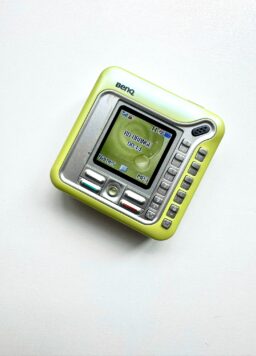
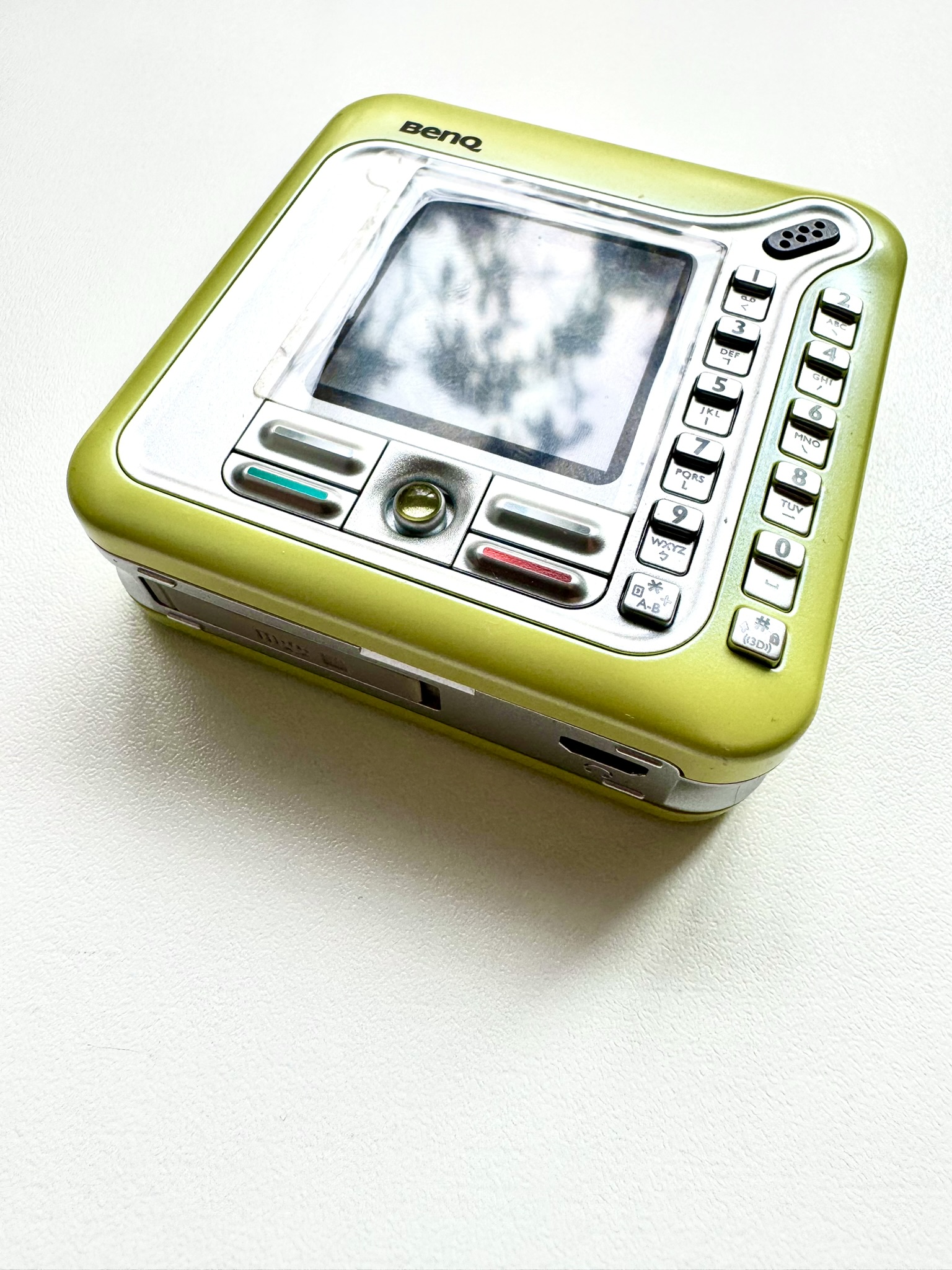
Benq Z2: Compact music phone
Quick View💎 Rarity Index: A (Rare)
⭐ WOW Factor: Designed as a music player and mini-game console first, and only secondly as a phone
👁 Evaluation in my collection: New – 10/10
⏱ Life timer: 0 | 📦 Boxed: NO
📅 Release Year: 2005 | 💰 Release Price: N/A
📊 Units Sold: ~250k
📰 Why this phone matters: BenQ-Siemens Z2 – Ultra-Rare Square Music Phone (Made in Taiwan) – New, No BoxThe BenQ-Siemens Z2 is one of the most unconventional and hard-to-find mobile phones ever produced by the brand. Released in very limited quantities around 2005, it features a distinctive square body, a side-mounted alphanumeric keypad, and a design language inspired more by early MP3 players and mini handheld consoles than by traditional phones.
Manufactured in Taiwan and introduced during the transition period just before the full BenQ-Siemens merger branding shift, the Z2 stands apart as a niche, short-lived model that never saw broad distribution. Today it is considered one of the rarest commercial BenQ / BenQ-Siemens devices.
This unit is new, showing no signs of prior use, but comes without its original box.
📝 Reviews when released: Engadget.com 🔗
-
Ericsson ER207 (NTT DoCoMo): Ultra-Rare Japan-Only Release
Quick View💎 Rarity Index: S (Ultra Rare)
⭐ WOW Factor: The Ericsson ER207 is not just rare – it’s a portal into a hidden chapter of mobile history.
👁 Evaluation in my collection: Good – 9/10
⏱ Life timer: N/A | 📦 Boxed: NO
📅 Release Year: 1999 | 💰 Release Price: 200 €
📊 Units Sold: ~60k
📰 Why this phone matters: A remarkable and extremely rare Japan-exclusive Ericsson ER207, produced in August 1999 for NTT DoCoMo’s PDC network. This model was never sold internationally and represents Ericsson’s transitional era when the company tailored unique hardware specifically for the Japanese market – often completely different from their global product line.The ER207 embodies classic late-90s Japanese mobile design: compact, angular, antenna-based and featuring the distinctive “DIGITAL” logo across the display window. Unlike mainstream Ericsson models of the same era, the ER207 employed Japan’s proprietary PDC 800/1500 MHz system, resulting in a device architecture not compatible with GSM and making it fundamentally different from eur;opean Ericsson phones.
Unit is accompanied by original accessories, including the Japan-style hand strap, a collectible piece of its own that reflects the cultural design philosophy of late-90s Japanese phones, where personalization and wearable portability were key features.
This makes the device not just rare – but historically significant as part of the very limited Ericsson-DoCoMo collaboration portfolio.📝 Reviews when released: Ericssoners 🔗
-


Ericsson T28s Marble Beige: The Ultra Slim Business Legend
Quick View💎 Rarity Index: S (Ultra Rare)
⭐ WOW Factor: The lightest handset on the market in 1999
👁 Evaluation in my collection: Great – 9.8/10
⏱ Life timer: N/A | 📦 Boxed: YES
📅 Release Year: 1999 | 💰 Release Price: N/A
📊 Units Sold: ~150k
📰 Why this phone matters: This BNIB Ericsson T28s in Marble Beige stands as one of the finest surviving examples of Ericsson’s late-1990s engineering excellence, preserved exactly as a high-tier executive customer would have received it in 1999. All accessories remain sealed, including original charger, ultra-slim battery, carrying case, headset, and Greek-market manual, confirming the set as fully untouched retail inventory. The handset itself is flawless, showing zero oxidation on the metal hinge, zero aging on the keypad, and a perfectly preserved LCD protective film.Manufactured in Sweden during production week 99W48, this unit belongs to the earliest and most sought-after manufacturing batch, a period when Ericsson’s Scandinavian plants produced their highest-precision casings and hinge systems. The Marble Beige finish, the rarest official color for the T28 range, displays uniform pigment with no signs of yellowing, coating shift, or micro-wear. This particular finish was produced in extremely limited quantities, intended for boutique retail channels and premium corporate contracts rather than mass distribution.
As the lightest mobile phone in the world at launch, weighing only 83 grams, the T28s broke new engineering ground. It was the first commercial handset to utilize lithium polymer battery technology, a breakthrough that allowed Ericsson to achieve its groundbreaking slimness while maintaining strong standby performance. The T28 family helped set the design trajectory for the R320, R380, and later R520 series, all of which inherited its battery architecture and minimalist Scandinavian design language.
The T28s was priced dramatically higher than Ericsson’s T10 and T18 models, often exceeding triple their cost. This was deliberate: the T28s was positioned as a business instrument rather than a consumer phone. Its user base consisted of executives, financial professionals, international travelers, and early mobile adopters who valued style and compactness over mass-market features. In the United States it became one of the most successful premium handsets of its time, appearing in advertising campaigns, airport lounges, and business environments where elegance and miniaturization were the primary selling points.
The hinge mechanism, a defining feature of the T28s, was engineered with a spring-loaded stainless-steel latch designed for long-term durability. Many surviving used devices exhibit hinge fatigue or paint cracking, making BNIB examples exceptionally rare. This unit’s hinge remains factory-tight, demonstrating the precision of Swedish production during the late 1990s.
Additionally, the T28s was one of Ericsson’s earliest phones to implement a multi-market strategy with multiple radio variants: T28s for international GSM900/1800, T28z for GSM1900 North America, T28 World for GSM900/1900 dual-band, and T28sc for the Chinese character market. Among these, the T28s Marble Beige remains the most elusive due to its limited distribution and fragility of finish. Collectors widely consider Marble Beige the crown jewel of the T28 line, especially in factory-fresh condition.
With all documentation intact, sealed accessories, and a pristine handset untouched since production, this set stands as a museum-grade time capsule from the era when eur;opean engineering dominated mobile phone design. It captures the technological threshold between classic feature phones and the upcoming intelligent device revolution, making it one of the most historically meaningful Ericsson collectibles in existence.
📝 Reviews when released: Profit Warning 🔗
-
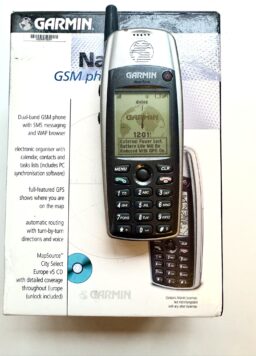
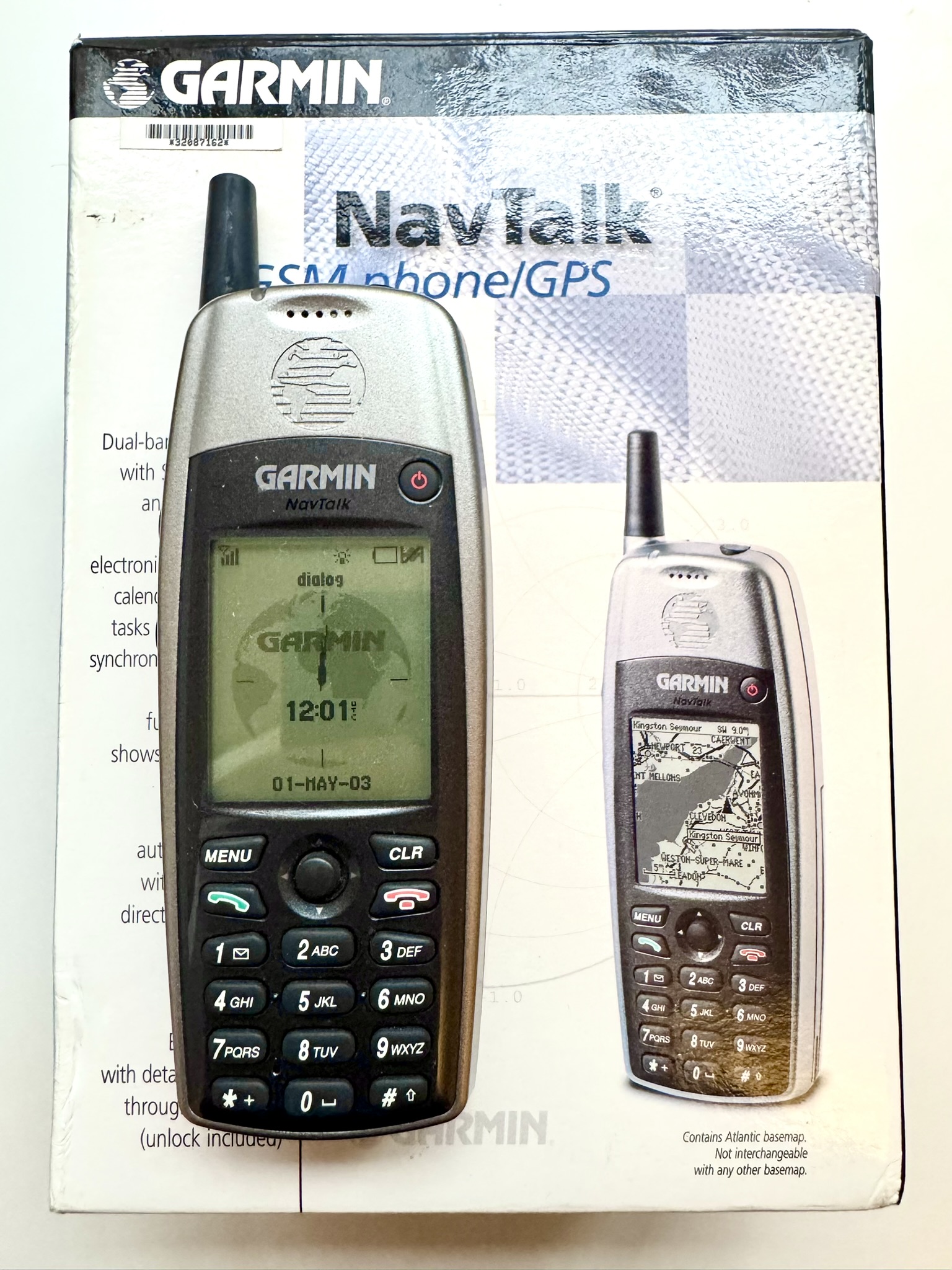
Garmin NavTalk GSM: Navigation Meets GSM
Quick View💎 Rarity Index: A (Rare)
⭐ WOW Factor: One of the first GPS phones ever made, predating modern smartphones
👁 Evaluation in my collection: Great – 9.5/10
⏱ Life timer: N/A | 📦 Boxed: YES
📅 Release Year: 2002 | 💰 Release Price: 600-800 $
📊 Units Sold: ~30k
📰 Why this phone matters: The Garmin NavTalk GSM is one of the most unusual and forward-thinking mobile devices ever created, combining a full GSM phone with a complete Garmin GPS receiver years before smartphones existed. Released in the early 2000s in extremely small numbers, the NavTalk GSM offered true satellite navigation, waypoint management, coordinate tools, map display, and even GPS-enhanced SMS at a time when mobile phones were still primarily used for calls and messages.This unit is fully working, full box, and includes functional maps, making it exceptionally rare among surviving examples. The device was engineered in Olathe, Kansas and manufactured in Taiwan, using Garmin’s proprietary GPS engine integrated with a dual-band GSM system. Its large monochrome screen, robust keypad, external antenna, and rugged body reflect Garmin’s roots in professional navigation equipment far more than consumer mobile phones.
The NavTalk GSM stands as a landmark in mobile history: one of the earliest true GPS phones ever produced and the only GSM handset Garmin ever made. Decades later, it remains a fascinating and highly collectible hybrid, representing an ambitious moment when navigation technology and mobile communication first converged into a single device.
📝 Reviews when released: N/A 💔
-
Jphone J-PE02 by Pioneer: Early Touch Era Legend
Quick View💎 Rarity Index: S (Ultra Rare)
⭐ WOW Factor: J-PE02 is one of the earliest touch interaction phones ever sold commercially
👁 Evaluation in my collection: New – 10/10
⏱ Life timer: 0 | 📦 Boxed: YES
📅 Release Year: 1999 | 💰 Release Price: N/A
📊 Units Sold: ~60k
📰 Why this phone matters: The Pioneer J-PE02 is one of the most unusual and forward-thinking handsets ever released on the Japanese market. Built by Pioneer Corporation and sold under the J-Phone Group in November 1999, this device represents a rare moment in phone history when non-telecom consumer electronics giants dabbled in mobile innovation. The result was a handset decades ahead of its time.Unlike the compact keypad phones of its era, the J-PE02 centered around a large front display designed for touch-style navigation, making it one of the very earliest commercially sold phones to experiment with stylus and screen-based input. This concept predates mainstream touch devices by years and shows how aggressively the Japanese market was pushing the boundaries of mobile interaction.
The design reflects Pioneers background in multimedia and in-car navigation: a clean silver housing, oversized screen, minimalist buttons, and an interface tailored for J-Sky internet services, early emoji support, and primitive web portals. Internally, the phone uses Pioneers PI-A4 platform, with full Japanese radio and telecom certifications confirming the unit as a late 1999 retail model.
This unit is fully working and BNIB, an exceptionally rare combination given Japans strict device recycling laws that eliminated most PDC-era phones from circulation. Having both pristine physical condition and functional electronics makes it an extraordinary survivor of a forgotten technological branch. It also stands as one of the few Pioneer-branded phones ever made, giving it a unique place in mobile history.
With its experimental touch-driven design, oversized screen, and deep ties to the pre-camera-phone era of J-Phone, the Pioneer J-PE02 remains a landmark collectible. It captures a pivotal moment before Sharp released the worlds first camera phone, reflecting the bold innovation race that defined Japans mobile golden age.
📝 Reviews when released: N/A 💔
-
Mobiado 712 Dream Sapphire: The Last True Sapphire Bar
Quick View💎 Rarity Index: S (Ultra Rare)
⭐ WOW Factor: Real sapphire crystal on both the front and back, a fully CNC-machined aluminum chassis, individual sapphire keys, and hand assembly in Canada make the 712 Dream one of the last true mechanical luxury phones. It represents the final sapphire-bar generation before Mobiado shifted to newer production methods, which is why it remains one of the most sought-after models among collectors.
👁 Evaluation in my collection: As New – 9.9/10
⏱ Life timer: 5min | 📦 Boxed: NO
📅 Release Year: 2010 | 💰 Release Price: 3500$
📊 Units Sold: 750
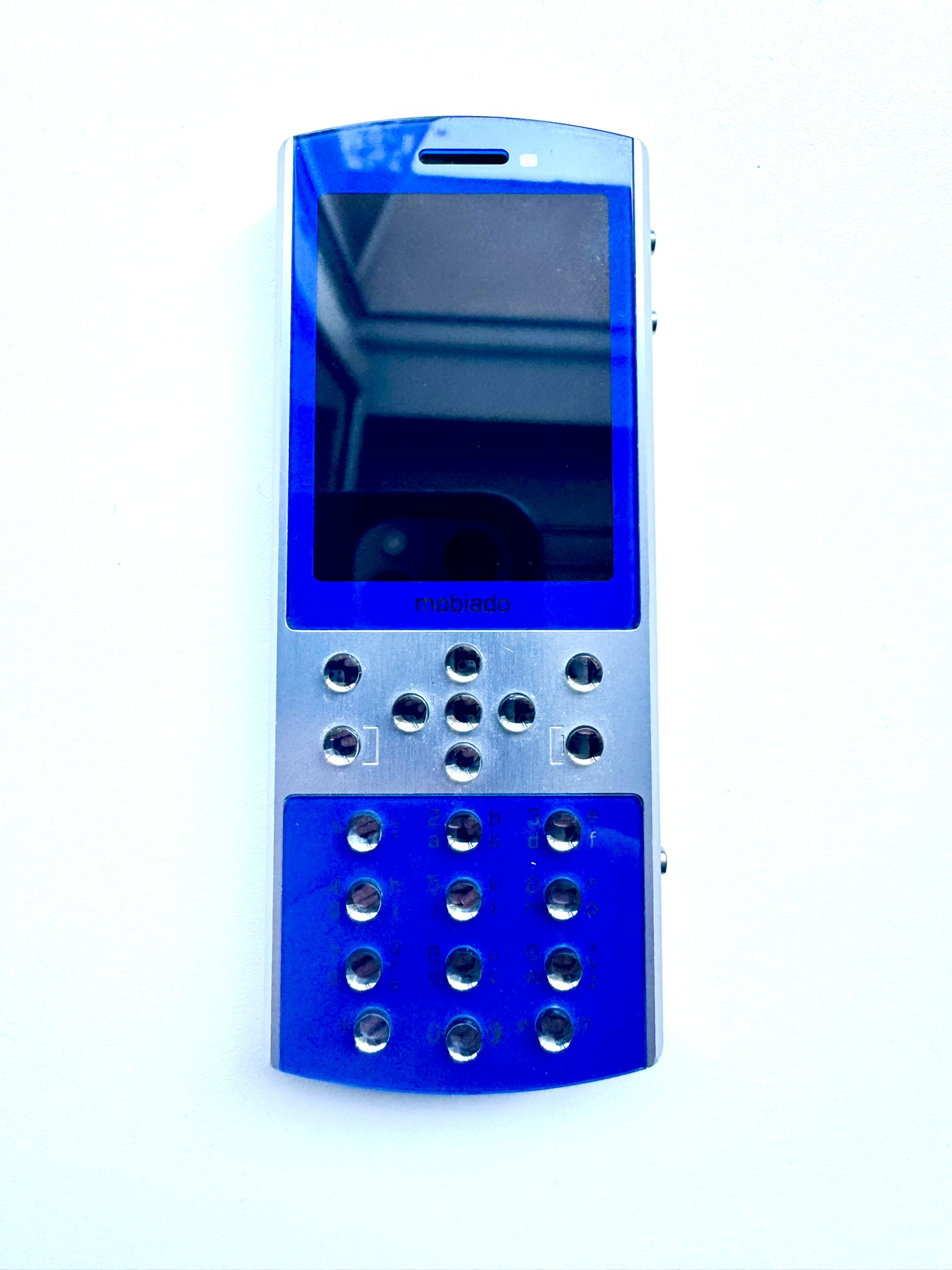
📰 Why this phone matters: The Mobiado Classic 712 Dream is the embodiment of mechanical luxury in mobile design, created at a time when perfection, materials, and craftsmanship mattered more than specifications or software trends. Built entirely by hand in Canada, the 712 Dream belongs to the last generation of Mobiado phones produced using traditional artisanal methods, before luxury mobile design shifted toward modern smartphones and simplified manufacturing processes.At its core, the phone is based on the proven Nokia 6700 classic hardware platform, selected for its stability, longevity, and refined performance. Mobiado stripped the device down to its essential electronics and rebuilt it as a precision object. The entire exterior was replaced with a CNC-milled aluminum chassis, sapphire crystal panels on both the front and rear, and a keypad made of individual sapphire keys, each secured with exposed stainless steel screws. Ceramic side inserts and meticulously machined details reinforce the industrial, almost architectural character of the design.
Every surface, edge, and material was chosen to convey permanence. The sapphire panels offer a cold, dense feel and a unique light refraction, while the exposed mechanical elements celebrate construction rather than conceal it. The Dream variant elevated this philosophy further by introducing colored sapphire, heraldic engraving, and artistic finishing details produced in extremely small numbers, resulting in subtle variations between individual units.
More than a luxury phone, the Classic 712 Dream is a statement of intent. It represents a moment when mobile devices were designed as lasting objects, built to be admired, handled, and preserved. Often regarded as the last true sapphire-bar Mobiado, it stands today as a benchmark for mechanical perfection in the era of luxury feature phones.
📝 Reviews when released: N/A 💔
-


Motorola StarTAC 130: The Business Clip-On Set
Quick View💎 Rarity Index: C (Common)
👁 Evaluation in my collection: Good – 9/10
⏱ Life timer: N/A | 📦 Boxed: NO
📅 Release Year: 1998 | 💰 Release Price: More than 1000 $
📊 Units Sold: ~1.5M
📰 Why this phone matters: The Motorola StarTAC 130 represents the mature evolution of the most iconic clamshell mobile phone line ever created. Released in the late 1990s, the StarTAC 130 refined the GSM performance, stability, and usability of earlier models while preserving the legendary compact flip design that made the StarTAC the most influential mobile phone of its era. As one of the most widely used business phones of its time, the 130 became a symbol of professional mobility during the transition into the digital GSM age.This unit is in excellent preserved condition and remains fully functional, a rarity considering that most StarTAC 130 devices were used heavily throughout their service life. The phone retains the clean lines, compact proportions, curved upper housing, responsive keypad, and trademark Motorola RF performance that define the late generation StarTAC experience.
What elevates this set far beyond the typical StarTAC 130 is the inclusion of an extremely rare BNIB Motorola Clip-On Organizer. This accessory was produced in small numbers and marketed mainly toward corporate users. It clipped directly onto the phone, offering storage for small notes, papers, and business cards, while giving the device a more professional, utility oriented profile. These organizers were rarely kept, often cracked or discarded, and almost never preserved in unused condition. Finding one BNIB is exceptionally uncommon, and having it paired with a clean StarTAC 130 makes this configuration significantly more collectible.
The Clip-On Organizer was part of Motorola’s push to position the StarTAC line as a full business mobility solution. While leather pouches and holsters were common accessories, the organizer was different: it was designed to integrate directly with the phone using the same rear mounting system as extended batteries. Its rigid construction, matte business finish, and direct clip mechanism made it a unique product that combined phone protection with practical office functionality. This accessory adds strong historical authenticity to the set, reflecting how professionals equipped their devices during the height of the StarTAC era.
From a technical perspective, the StarTAC 130 introduced later generation internal improvements compared to earlier models such as the 70 and 85. These refinements included improved PCB grounding, more stable GSM 900 and 1800 radio stages, better power management, reinforced internal structures around high stress points, and a more durable keypad dome sheet. These upgrades made the 130 one of the most reliable and consistent StarTAC models ever produced.
As part of the StarTAC lineage, the 130 carries the heritage of the original 1996 StarTAC, the first true clamshell phone in mobile history. The upward folding flip mechanism, compact size, slim antenna, and minimalist industrial design reshaped the mobile world and sold more than 60 million units globally. Even decades later, the StarTAC remains one of the most recognizable and culturally significant mobile phones ever built.
For collectors, this StarTAC 130 paired with a BNIB Clip-On Organizer stands out as a rare and highly desirable configuration. The phone delivers the mature, stable hardware platform of the late StarTAC generation, while the unused organizer provides an accessory that is rarely found intact, let alone in original packaging. Together they form a complete, historically accurate business set from Motorola’s peak period of design and engineering.
This StarTAC 130 – The Business Organizer Set is not just a preserved phone, but a fully authentic snapshot of professional mobile equipment from the late 1990s. It is a valuable and uncommon piece of Motorola history and a distinguished addition to any serious vintage mobile collection.
📝 Reviews when released: N/A 💔
-


Motorola StarTAC 70 “Rainbow Edition”: The Ultra-Rare Multicolor Icon of the GSM Era
Quick View💎 Rarity Index: S (Ultra Rare)
⭐ WOW Factor: A factory-produced StarTAC in full multicolor Rainbow livery is one of the most elusive special editions Motorola ever released.
👁 Evaluation in my collection: BNIB – 10/10
⏱ Life timer: N/A | 📦 Boxed: YES
📅 Release Year: 1996 | 💰 Release Price: More than 1000 $
📊 Units Sold: ~30k
📰 Why this phone matters: The Motorola StarTAC 70 Rainbow Edition is not just rare, it is one of the hardest to find and most aggressively hunted special editions ever created in the StarTAC lineage. Even among collectors of 90s GSM icons, the Rainbow sits in a tier of its own, a true ultra variant that almost never appears in genuine form. While over 60 million StarTACs were sold worldwide, the authentic Rainbow Edition represents a microscopic fraction of production, making it one of Motorola’s most elusive and valuable designs.Born from Motorola’s brief but daring attempt to break into the youth market, the Rainbow Edition abandoned every established rule. Instead of corporate black, it exploded in a palette of red, green, blue and yellow molded plastics. This was not a repaint or a gimmick. These colors were factory produced, region specific, and offered only in small numbers through select operators such as MoviStar and Telefonica. The visual impact was radical, and at a time dominated by monochrome Nokia bricks, this phone looked like nothing else on Earth.
The Rainbow was a commercial anomaly, too bold for the mainstream and too ahead of its time for conservative users, and because of that, extremely few survived. Its scarcity has driven collectors into near obsessive authentication hunts, especially with the flood of counterfeits and repainted shells that appeared over the years. Genuine units, with original multi tone housings and correct operator branding, are considered trophy level acquisitions.
This device is BNIB and fully functional, preserved in a condition that is virtually unheard of for this variant. And even more extraordinary, there are two BNIB Rainbow StarTAC 70 units in the collection. Owning even one authentic Rainbow is already almost impossible. Having two boxed originals elevates the rarity to a level normally reserved for museum archives or private corporate vaults.
The original box, with its dramatic rainbow arc and cosmic blue background, was produced only for this version, reinforcing how intentionally Motorola treated this colorway. Everything about this edition was designed to break conventions and redefine what a mobile phone could look like.
Today, the StarTAC 70 Rainbow Edition is considered one of the most desirable, visually unique and aggressively rare special editions ever created in the early GSM era. It is not just a phone, it is a declaration of design rebellion, a historical anomaly, and a centerpiece for any serious collector of mobile icons.
📝 Reviews when released: N/A 💔
-
Nokia 3128 Prototype “ID SAMPLE”: BenQ Hybrid | Unreleases Colour Light Blue
Quick View💎 Rarity Index: X (Mystical Prototype)
⭐ WOW Factor: Represents a short-lived moment when BenQ attempted to showcase its ability to deliver a complete UI solution, hoping to convince Nokia that full software outsourcing for low-cost devices was feasible.
The existence of this device is proof of a BenQ-driven initiative, briefly evaluated and ultimately rejected by Nokia.
Only a handful of such BenQ UI?on?Nokia hardware identity samples were ever created, making surviving units exceptionally rare.👁 Evaluation in my collection: New – 10/10
🕵 Nokia Codename: Kirin
⏱ Life timer: 0 | 📦 Boxed: NO
📅 Release Year: 2003 | 💰 Release Price: ~300 $
📊 Units Sold: ~15M (final units)
📰 Why this phone matters: This device is one of the strangest, most intriguing Nokia 3128 variants ever uncovered. Externally it follows the familiar engineering path of the 3128 platform, but once powered on, everything breaks the pattern. There is no Nokia branding in the software, no Nokia splash screen, no Series 40 heritage, instead it boots into a BenQ-style interface, complete with custom icons, Chinese menu structures, and UI elements never found on any released Nokia product.The label inside reads “ID SAMPLE”, marking it as a pre-production identity unit used for internal validation during Nokia’s ODM sourcing phase. These ID Samples were not mass-produced, not distributed to carriers, and not meant to survive outside the labs. The combination of Nokia hardware and a BenQ firmware stack indicates that this device comes from the period when Nokia briefly explored outsourcing complete handset UI development to third-party Asian manufacturers before ultimately abandoning the idea.
The handwriting is a timestamp from the engineering team: “August 16, 2004.”
It marks when this specific prototype was logged, flashed, or validated.The software screens match early prototypes from unreleased BenQ flip designs, particularly those associated with the never-released BenQ A-Series Asian clamshells, hinting that this firmware was being evaluated on Nokia shells for cost and speed benchmarking. The UI animations, iconography, and color palettes align far more with BenQ’s internal 2004-2005 development than with anything Nokia ever shipped.
A detail that further confirms how early this unit is, the SIM card lock mechanism is completely missing, leaving the slot open and unfinished exactly as seen on raw factory evaluation samples. Even more telling, the device reports an IMEI of 0000000, a clear sign of a pre-IMEI-burning engineering stage where the radio stack and identity fields had not yet been finalized.
The mysterious “cmg” sticker seen on the display is consistent with internal testing labels used during configuration management, marking the unit for firmware staging or UI evaluation. These stickers usually identify a branch, a module, or a build handler inside the engineering workflow and marks it as a monitored experimental build – exactly the kind of anomaly this prototype represents.
All the elements together, the missing SIM lock, the IMEI 0000000, the absent Nokia splash, the BenQ interface, the “ID SAMPLE” marking, the prototype hardware architecture, and the inconsistencies between software and chassis, place this device among the rarest 3128 developmental anomalies, far more unusual than standard prototypes or early F-series units. It is a tangible piece of the abandoned Nokia-BenQ convergence experiments, where Nokia evaluated whether foreign UI stacks could run on their hardware to accelerate low-cost market entry.
A true one-off laboratory hybrid, and one of the most unusual pre-production Nokia 3128 derivatives ever documented.
📝 Reviews when released: N/A 💔
-
Nokia 3208c: The BNIB Hybrid Touch Concept
Quick View💎 Rarity Index: B (Uncommon)
⭐ WOW Factor: One of the only Nokias ever made with a handwriting recognition touch-panel on the keypad – an experimental design exclusive to China.
👁 Evaluation in my collection: BNIB – 10/10
⏱ Life timer: 0 | 📦 Boxed: YES
📅 Release Year: 2009 | 💰 Release Price: ~200 $
📊 Units Sold: ~200k
📰 Why this phone matters: The Nokia 3208c (RM-572) is one of the most unusual and least-known Nokia models ever produced – a China-exclusive, touch-enhanced feature phone released only in select Asian markets and almost never seen in eur;ope today. This unit goes even further: it’s a BNIB (Brand New In Box) example, making it an exceptional collector’s piece given how few survived.What makes it special
The 3208c belongs to Nokia’s experimental lineup developed specifically for the Chinese market, where handwriting recognition and touch input were already mainstream years before global adoption.
Instead of a touchscreen smartphone, Nokia implemented a resistive touch layer on top of a traditional display, paired with a touch-enabled numeric keypad-allowing stylus input for handwriting without abandoning the classic keypad design. This hybrid concept existed only on a handful of China-only Nokias.
📝 Reviews when released: N/A 💔
-
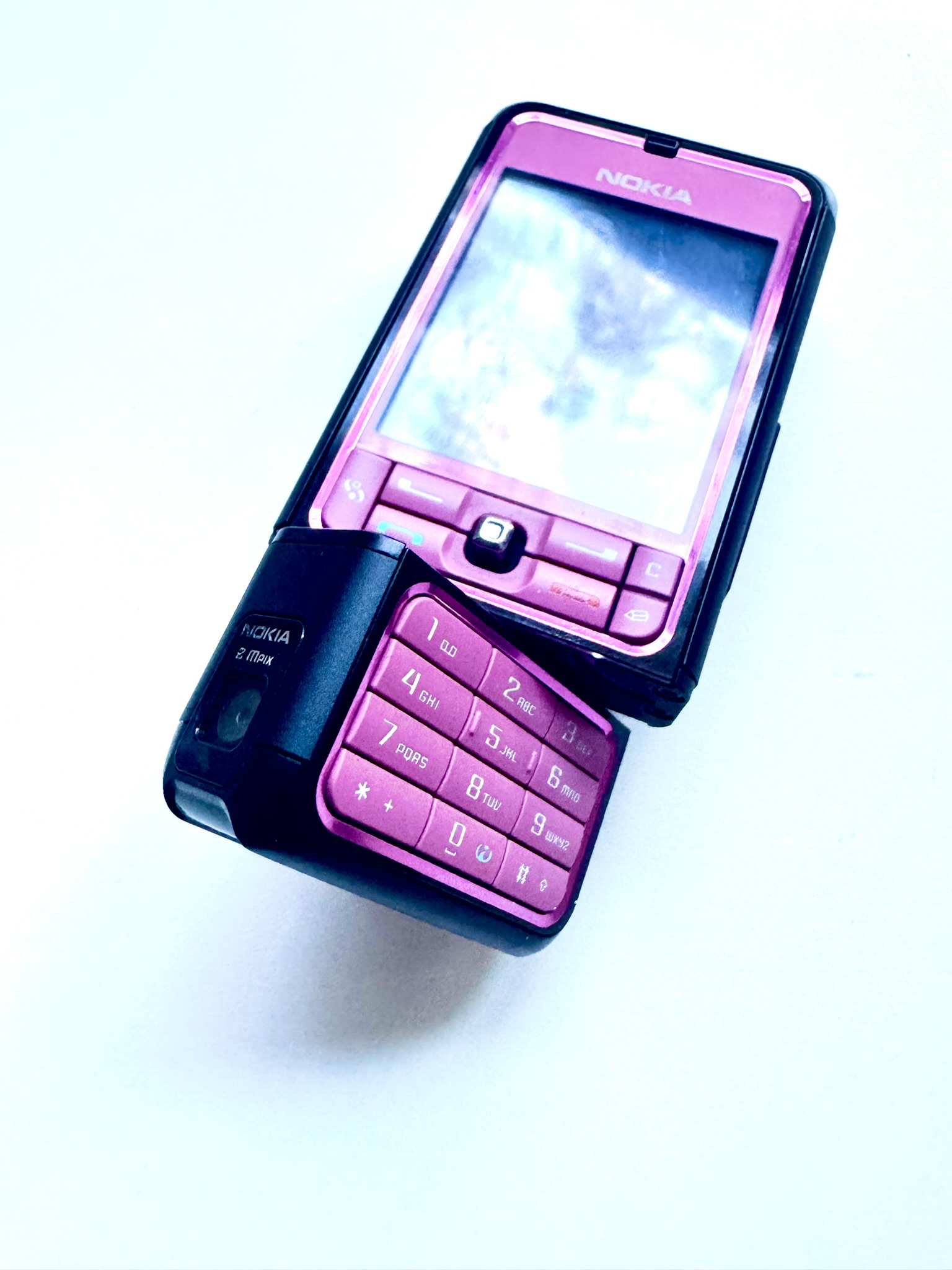
Nokia 3250 Prototype F5.0: Black & Pink
Quick View💎 Rarity Index: S (Ultra Rare)
👁 Evaluation in my collection: Great – 9.8/10
🕵 Nokia Codename: Thunder
⏱ Life timer: 0 | 📦 Boxed: NO
📅 Release Year: 2006 | 💰 Release Price: ~300 €
📊 Units Sold: ~1.5M (final units)
📰 Why this phone matters: Rare Nokia 3250 RM-38 engineering prototype featuring Nokia’s F5/NCT/BDA validation markings. Labeled Prototype – Not for Sale – Property of Nokia and built with pre-production hardware, prototype IMEI, and internal test circuitry. Although the Black & Pink shell reached retail, this device is a true R&D unit used for field testing (F5), Nokia Compatibility Testing (NCT – accessory, firmware, Bluetooth, and sync compatibility validation), and Board Design Assessment (BDA – PCB layout, electrical stability, and radio integrity evaluation). A prototype with NCT + BDA validation tags is exceptionally rare, as these were normally destroyed after evaluation, making this one of the few surviving engineering-stage 3250 units-a remarkable piece of Nokia’s swivel-phone development history.📝 Reviews when released: cNET 🔗
-
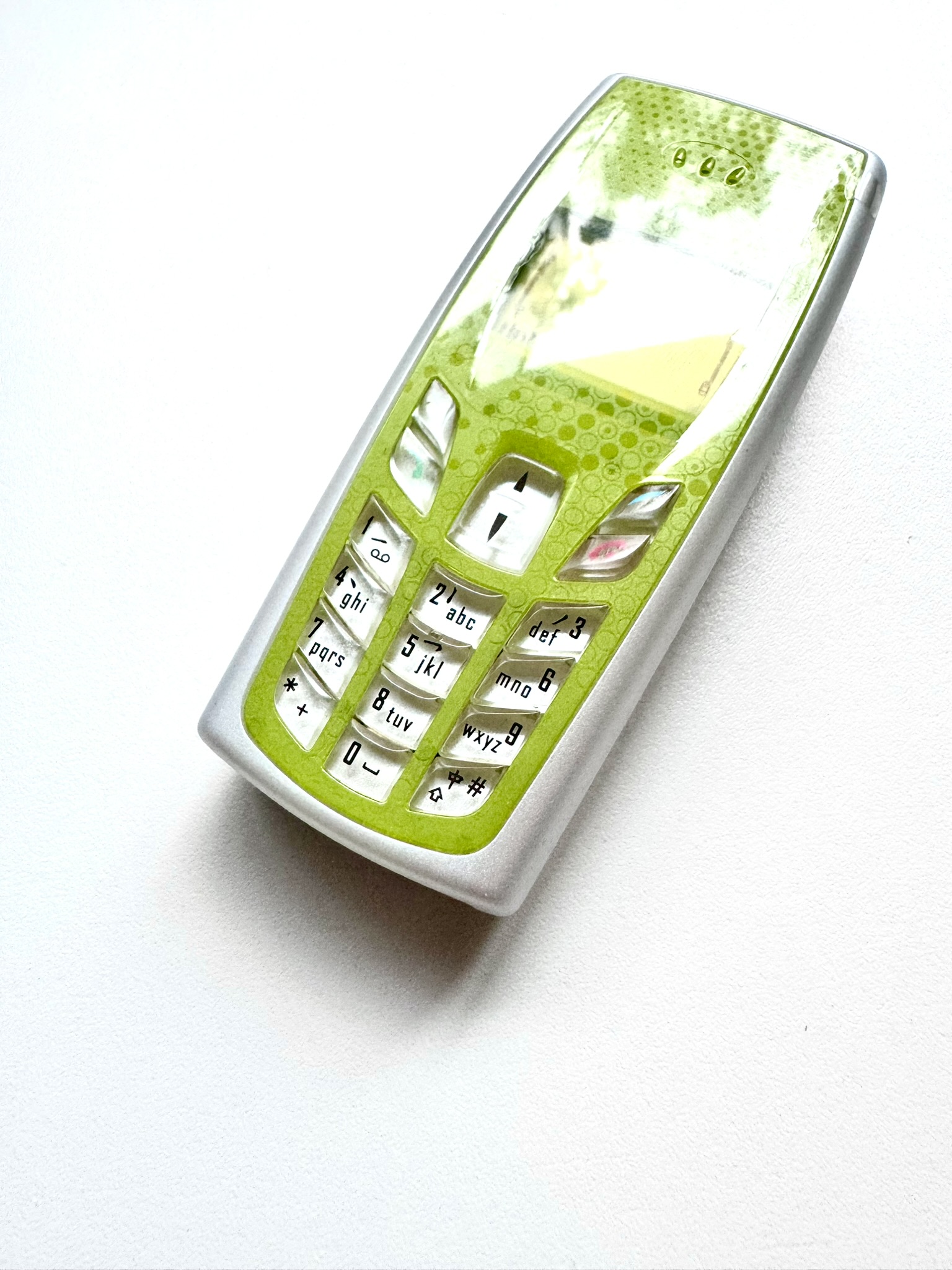
Nokia 3610 Prototype B5.0 : Rare Lime Green Variant
Quick View💎 Rarity Index: S (Ultra Rare)
👁 Evaluation in my collection: Great – 9.5/10
🕵 Nokia Codename: LadyBird
⏱ Life timer: 12h | 📦 Boxed: NO
📅 Release Year: 2002 | 💰 Release Price: 150 €
📊 Units Sold: ~1M (final units)
📰 Why this phone matters: A genuine Nokia 3610 Prototype B5.0 (Type NAM-1), originating from Nokia’s internal late engineering phase. The PROTO B5.0 marking, the blank Model field, and the early-format Nokia R&D label identify it as a true pre-production unit used for hardware validation, firmware testing, and RF checks before the model entered final approval.Although this prototype uses a housing and keypad identical to later retail versions, the internal label and hardware revision confirm its role as an authentic Nokia lab device – produced in small quantities and never intended for commercial distribution.
A compact but historically significant DCT4-era engineering sample, and a solid rarity for any serious Nokia prototype collection.
📝 Reviews when released: N/A 💔